

2006, 1350 State Route 155,
Randolph County, Illinois, 62277
Randolph County, Illinois, 62277
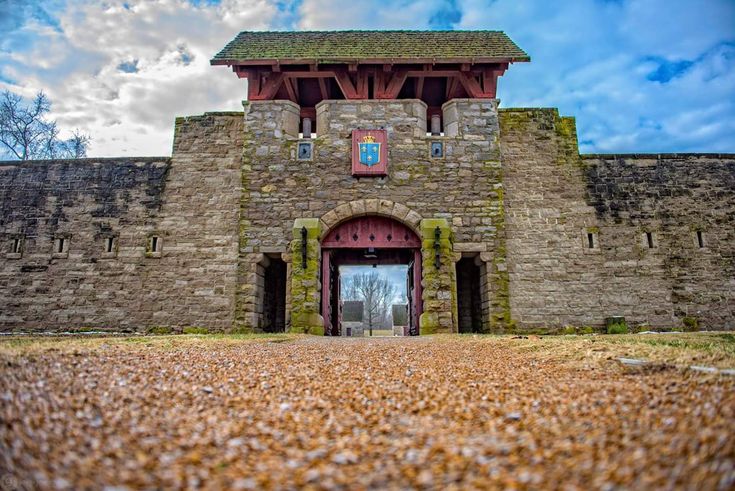
Fort de Chartres State Historic Site Stone Testament to French Imperial Ambition Four miles west of Prairie du Rocher, Illinois, where the American Bottom widens toward the Mississippi River, stands a partially reconstructed stone fort that once embodied French imperial authority across the Illinois Country—Fort de Chartres, named for the infant son of the French regent, erected in the 1750s as the seat of French government and chief military installation in Upper Louisiana. The massive stone structure, built after two successive wooden forts proved inadequate to French ambitions, served for barely a decade before the Treaty of Paris (1763) ceded French territories to Britain, before British occupation itself ended in abandonment, before the river whose presence justified the fort’s location began its patient erosion—collapsing the south wall in 1772 and leaving only ruins to mark where colonial power had been concentrated and then forgotten. Today, within the reconstructed fort walls and the grounds of Fort de Chartres State Historic Site, the powder magazine stands—that original 1750s stone structure widely considered the oldest building in Illinois—proof that some things endure even when empires don’t. The Three Forts: Ambition’s Evolution The story of Fort de Chartres encompasses three distinct structures reflecting French Read more…
: 9:00 am – 4:00 pm
Mon
Closed
Tue
9:00 am – 4:00 pm
Wed
9:00 am – 4:00 pm
Thu
9:00 am – 4:00 pm
Fri
9:00 am – 4:00 pm
Sat
9:00 am – 4:00 pm
Sun
9:00 am – 4:00 pm
4372 Park Road,
Randolph County, Illinois, 62241
Randolph County, Illinois, 62241
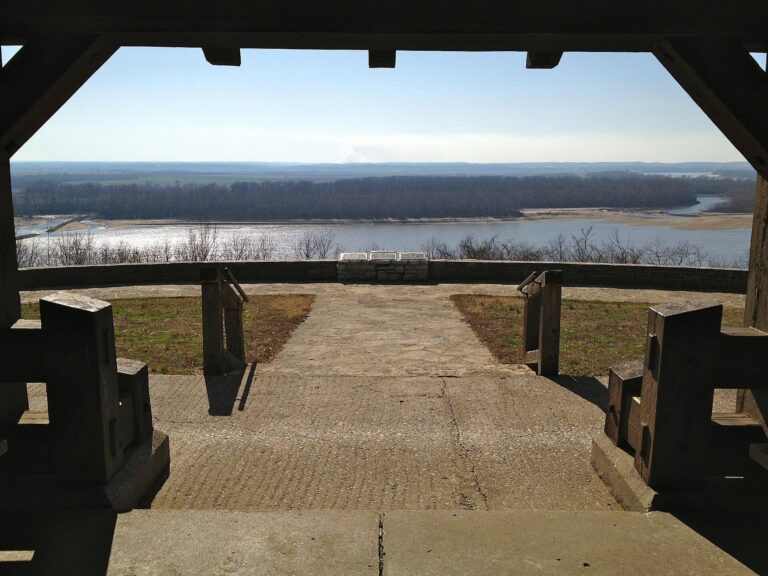
Fort Kaskaskia State Historic Site Near Ellis Grove, Illinois, where the Kaskaskia River meets the Mississippi in a confluence of currents and history, a 200-acre bluff overlooks a landscape that tells a story of grandeur surrendered to nature’s patient theft. Fort Kaskaskia State Historic Site preserves earthen remains—ramparts in rough square formation with bastions at corners—of a small French fort built around 1759 to defend a town that had become, by then, the principal commercial center of the Illinois Country. Yet the river that once made Kaskaskia valuable through commerce eventually made it expendable through erosion: the original town of Old Kaskaskia, thriving on river-rich bottomland, occupied an island that the Mississippi gradually claimed until, by the 1880s-1890s, it was gone—washed away, leaving only memory and earthen traces on a bluff overlooking what had been taken. The Town: From Jesuit Mission to Colonial Capital Kaskaskia begins not as fort but as faith. Jesuit missionaries established a mission at the mouth of the Kaskaskia River in 1703, choosing location for access to the Illinois Confederation peoples whose lands, hunted and farmed for generations, offered spiritual opportunity. Shortly after, French settlers from Quebec and Louisiana began trickling toward the rich, alluvial farmland Read more…
: 7:00 am – 10:00 pm
Mon
7:00 am – 10:00 pm
Tue
7:00 am – 10:00 pm
Wed
7:00 am – 10:00 pm
Thu
7:00 am – 10:00 pm
Fri
7:00 am – 10:00 pm
Sat
7:00 am – 10:00 pm
Sun
7:00 am – 10:00 pm
Kaskaskia Road, Reily Lake,
Randolph County, Illinois, 62241
Randolph County, Illinois, 62241
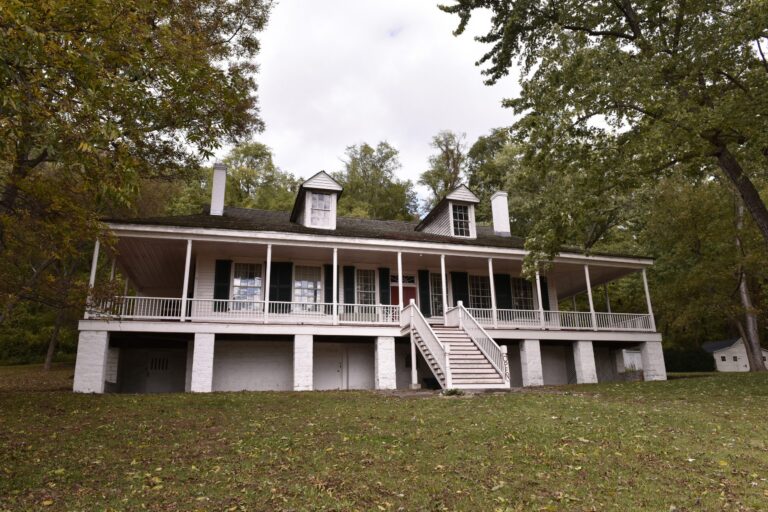
Pierre Menard Home The Louisiana Plantation Home in Southern Illinois Four miles north of Chester, Illinois, where a footpath connects to Fort Kaskaskia State Park and Mississippi River bottomlands stretch below a bluff, stands a French Creole mansion erected around 1802-1815 by a Québécois trader who arrived in the Illinois Country at fifteen and remained to become the first lieutenant governor of Illinois. The Pierre Menard Home—a two-and-a-half-story structure with hipped and dormered roof, wide wraparound galerie supported by sturdy square stone pillars, and proportions suggesting ease and established wealth—represents elegant frontier living at the moment when French colonial commerce was transforming into American territorial governance. Built by master carpenter Joseph Champaigne for Pierre Menard during those transformative early years of the 19th century, the house stands as rare surviving example of Louisiana-type plantation architecture constructed north of Louisiana, proof that French colonial building traditions persisted in the Illinois Country even as political authority shifted beneath them. The Man: From Fifteen-Year-Old Explorer to Lieutenant Governor Pierre Menard was born near Montreal, Quebec, on October 7, 1766—inheritor of French-Canadian identity in an era when French North America was rapidly becoming something else. At fifteen, he arrived in the Illinois Country as Read more…
: 9:00 am – 4:00 pm
Mon
Closed
Tue
Closed
Wed
Closed
Thu
9:00 am – 4:00 pm
Fri
9:00 am – 4:00 pm
Sat
Closed
Sun
9:00 am – 4:00 pm