

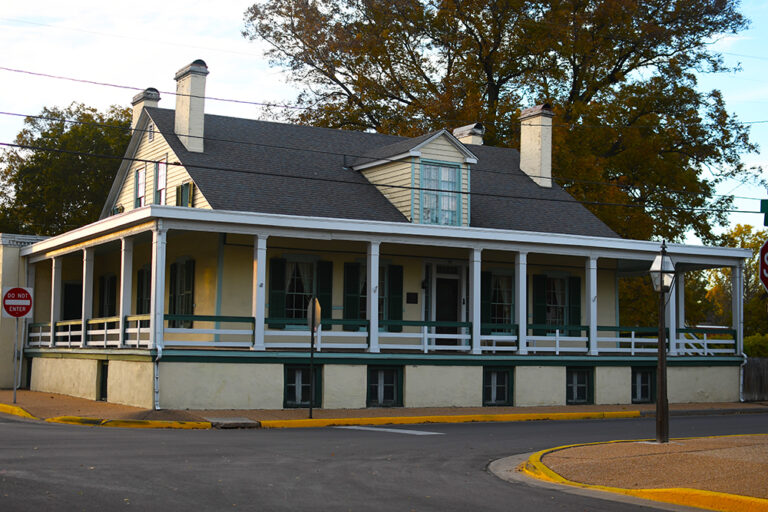
Jean-Baptiste Vallé House – Ste. Genevieve National Historical Park
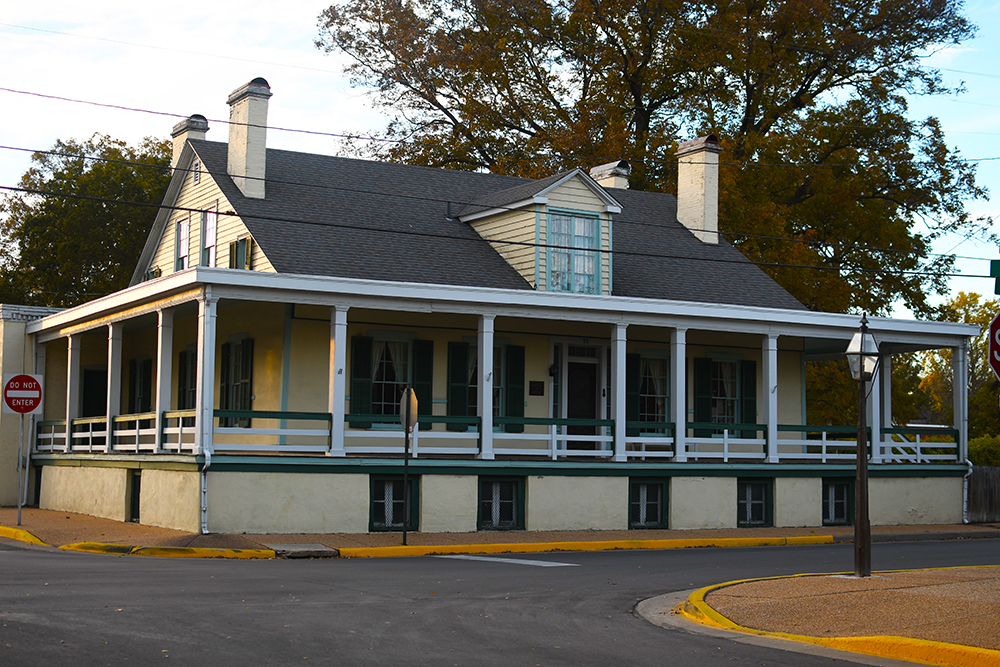
Standing as one of the most architecturally significant and historically important structures in Ste. Genevieve, the Jean-Baptiste Vallé House represents both the architectural sophistication of French Creole building traditions and the political power that once resided in this Mississippi River community. Now part of the Ste. Genevieve National Historical Park and operated by the National Park Service, this imposing residence tells the story of colonial governance, architectural evolution, and the dedicated preservation efforts that saved it for future generations.
Architectural Significance: Poteaux-sur-Solle at Its Finest
The Jean-Baptiste Vallé House stands as a large and impressive example of “poteaux-sur-solle” (post on sill) construction—one of the distinctive French Creole building methods that make Ste. Genevieve architecturally unique in the United States.
Unlike the rarer “poteaux-en-terre” (posts in earth) construction where vertical logs are set directly into the ground, the poteaux-sur-solle method places vertical log posts on a horizontal wooden sill beam that rests on a stone foundation. This elevation above ground level protects the wooden posts from moisture and rot, resulting in far greater durability—which explains why this particular house has survived for more than two centuries.
The house’s size alone commands attention. This wasn’t a modest frontier cabin but rather a substantial residence befitting someone of Jean-Baptiste Vallé’s status and responsibilities. The scale, the quality of construction, the architectural details—all announce that this was the home of someone wielding considerable authority and possessing substantial means.
For students of architecture and anyone interested in building traditions, the Vallé House offers an exceptional opportunity to see poteaux-sur-solle construction at an impressive scale. The exposed structural elements, the heavy timber framing, the Norman truss roof system—all demonstrate the sophisticated engineering knowledge that French colonial builders brought to the Mississippi Valley and adapted to local conditions and available materials.
A House of Power: Government Center and Home
Built in 1794, the Jean-Baptiste Vallé House served a dual purpose that was common in colonial administrative centers: it functioned simultaneously as both the commandant’s private residence and the seat of local government. This blending of domestic and official space reflects the nature of colonial governance, where political authority was often quite literally housed within the leader’s home.
Jean-Baptiste Vallé held the position of commandant—the highest local authority in this French colonial community under Spanish rule (Spain having acquired Louisiana from France in 1762). As commandant, Vallé exercised executive, judicial, and military authority over the district. He adjudicated disputes, maintained order, commanded the local militia, managed relations with Native peoples, enforced Spanish colonial regulations, and oversaw the economic and civic affairs of the community.
In this very house, important decisions were made, justice was dispensed, official documents were drafted and signed, and the machinery of colonial government operated. Imagine petitioners arriving to present grievances, militiamen receiving orders, traders seeking licenses, and the various functions of frontier government unfolding in these rooms.
The house thus represents not just domestic architecture but political architecture—a physical manifestation of colonial power and the systems of governance that structured life in the Mississippi Valley before American acquisition.
A Pivotal Moment in History: The Louisiana Purchase
Jean-Baptiste Vallé’s tenure as commandant spanned one of the most consequential moments in American history. In 1803, the United States purchased the Louisiana Territory from France (which had reacquired it from Spain just three years earlier). This massive land acquisition doubled the size of the United States and fundamentally altered the trajectory of North American history.
For Jean-Baptiste Vallé and the residents of Ste. Genevieve, the Louisiana Purchase meant profound change. Overnight, they ceased being subjects of the Spanish crown and became citizens (or at least residents) of the American republic. The position of commandant—with its blend of executive, judicial, and military authority rooted in European colonial traditions—was eliminated, replaced by American legal and governmental structures.
Vallé found himself navigating this transition, his authority and relevance suddenly uncertain in a new political order. The house where he had exercised colonial power became a private residence under American rule, its official functions transferred to new institutions and officeholders.
This historical pivot makes the Jean-Baptiste Vallé House particularly significant: it embodies the end of one era and the beginning of another, standing as tangible evidence of the colonial system that the Louisiana Purchase swept away.
Transformation and Restoration: A House That Changed and Changed Back
Like many historic structures, the Jean-Baptiste Vallé House didn’t remain frozen in its original 1794 appearance. By the 1850s and 1860s, subsequent owners remodeled it to conform to American architectural tastes. French Creole features were modified or concealed as owners sought to modernize the house and align it with the Greek Revival and Victorian styles then fashionable in the United States.
These alterations reflected broader cultural changes: as Ste. Genevieve’s French Creole population became increasingly integrated into American society, architectural preferences shifted. The distinctive French colonial style came to seem old-fashioned, even embarrassing to some, as residents embraced American identity and aesthetics.
For roughly a century, the house existed in this Americanized form, its French Creole origins obscured beneath later modifications. Then, in the 1960s, something remarkable happened: descendants of Leon Vion, who had purchased the property in 1867, undertook a major restoration effort to return the house to its pre-1850 appearance.
This restoration represented the flowering of a new appreciation for French colonial heritage. Rather than viewing the house’s origins as something to be hidden or overcome, the Vion descendants recognized the architectural and historical significance of the original French Creole design and worked to recover it.
The 1960s restoration removed later additions and modifications, uncovered original features, and returned the house to something approximating its late 18th-century appearance. This careful work—guided by historical research, architectural analysis, and respect for original building methods—preserved one of Ste. Genevieve’s most important historic structures and made possible its eventual inclusion in the National Park System.
National Park Service Stewardship
Today, the Jean-Baptiste Vallé House is part of the Ste. Genevieve National Historical Park, established in 2020 to preserve and interpret the town’s exceptional collection of French colonial resources. Under National Park Service management, the house receives professional care and interpretation that ensures its preservation and makes its stories accessible to the public.
The NPS brings considerable expertise in historic preservation, interpretation, and visitor services. Rangers who staff the house are trained in both the specific history of this property and the broader context of French colonial America. They can answer questions, provide historical context, and help visitors understand what they’re seeing.
National Park status also means that the house is part of a larger interpretive framework that includes other properties (like the Beauvais-Amoureux House) and connects Ste. Genevieve’s local history to national narratives about colonial America, westward expansion, cultural diversity, and architectural heritage.
Visiting the Jean-Baptiste Vallé House
The house is open when rangers are available, which means visiting hours can vary based on staffing. This flexibility reflects the realities of National Park Service operations and ensures that when the house is open, knowledgeable rangers are present to interpret what you’re seeing.
Before planning your visit, it’s wise to check with the Ste. Genevieve National Historical Park (via their website, phone, or visitor center) to confirm current hours and ranger availability. This advance planning ensures you won’t arrive to find the house closed.
When you do visit, you’ll have the opportunity to:
Explore the Architecture: See poteaux-sur-solle construction up close, examine the heavy timber framing, understand how the building was designed and constructed, and appreciate the durability of French Creole building methods.
Learn About Colonial Governance: Understand how Jean-Baptiste Vallé exercised authority as commandant, how Spanish colonial administration functioned in this frontier district, and how the house served as both home and government center.
Connect to the Louisiana Purchase: Stand in spaces that witnessed the transition from Spanish/French colonial rule to American governance, and consider how this massive geopolitical change affected real people in real places.
Appreciate Preservation Efforts: Learn about the 1960s restoration that saved this house and understand why preserving historic structures matters for understanding our collective past.
Ask Questions: Rangers are knowledgeable and enthusiastic. They welcome questions and can often tailor their interpretation to your specific interests—whether that’s architecture, politics, daily life, or broader historical context.
Why This House Matters
The Jean-Baptiste Vallé House is significant on multiple levels:
Architecturally: It’s an outstanding example of poteaux-sur-solle construction at an impressive scale, demonstrating French Creole building traditions at their most sophisticated.
Historically: It served as the seat of colonial government during a crucial transitional period, witnessing the end of European colonial rule and the beginning of American governance in the Mississippi Valley.
Culturally: The house embodies French Creole cultural traditions while also illustrating how those traditions evolved and were sometimes obscured before being recovered and celebrated.
Preservation-wise: The story of its 1960s restoration demonstrates the importance of historic preservation and the role of dedicated individuals in saving threatened heritage.
Educationally: As a National Park Service site, the house serves as a classroom where visitors of all ages can learn about aspects of American history that often receive insufficient attention in standard curricula.
Part of a Larger Story
While the Jean-Baptiste Vallé House stands as an impressive and significant property in its own right, it’s best understood as part of the larger ensemble of French colonial resources that make Ste. Genevieve so exceptional.
Together with the other National Park Service properties (like the Beauvais-Amoureux House), the privately operated French colonial homes (like the Bolduc and LeMeilleur Houses), and the broader Historic District, the Vallé House contributes to a comprehensive picture of French colonial life in the Mississippi Valley.
Visitors who take time to explore multiple sites gain a much richer understanding than those who visit just one property. The Vallé House shows governance and elite society; other houses reveal merchant life, evolving domestic arrangements, or different construction methods. Together, they create a multifaceted portrait of a complex, sophisticated colonial community.
Plan Your Visit
Location: Historic Downtown Ste. Genevieve (specific address and directions available from the National Park Service)
Hours: Variable, based on ranger availability—check ahead before visiting
Admission: National Park Service sites are often free or have modest entrance fees—check current policy
Accessibility: Contact the National Park Service regarding specific accessibility accommodations
Information:
- Ste. Genevieve National Historical Park website
- National Park Service visitor information
- Local visitor centers
Combine Your Visit: Plan to see multiple French colonial properties in Ste. Genevieve for a comprehensive understanding. The Jean-Baptiste Vallé House pairs particularly well with:
- The Beauvais-Amoureux House (also NPS)
- The Bolduc and LeMeilleur Houses
- The Centre for French Colonial Life
- Walking tours of the Historic District
A Window Into Forgotten Governance
Perhaps what makes the Jean-Baptiste Vallé House most fascinating is how it illuminates a system of government and authority that has completely disappeared from American life. The commandant’s role—combining executive, judicial, and military power in a single person operating from their own home—seems almost unfathomably foreign to us today, accustomed as we are to separation of powers, institutional government, and clear divisions between public and private spheres.
Yet for the residents of colonial Ste. Genevieve, this was simply how governance worked. Justice, administration, military command—all flowed from this house and the man who lived within it. Understanding this helps us appreciate just how revolutionary the American system of government actually was, and how dramatically the Louisiana Purchase changed not just maps but the very nature of authority and citizenship for people in the Mississippi Valley.
Step into the Jean-Baptiste Vallé House and you step into a world where power was personal, where government happened in someone’s home, and where the structures of European colonialism extended all the way to the banks of the Mississippi River. It’s a world that the Louisiana Purchase swept away—but this remarkable house survives to tell its story.
Sorry, no records were found. Please adjust your search criteria and try again.
Sorry, unable to load the Maps API.