




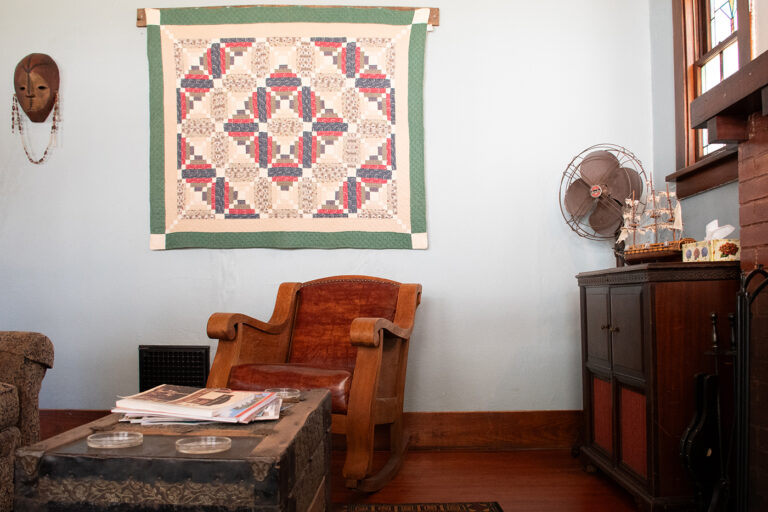


Aunt Katie’s Corner – Where 1930s Glory, Rose Du Barry Glamour, and Old World Charm Create Downtown’s Most Distinctive Period Bungalow Experience
Most vacation rentals offer generic comfort in spaces that could be anywhere—interchangeable bedrooms, utilitarian bathrooms, kitchens designed for efficiency rather than character. Aunt Katie’s Corner rejects this entirely. This meticulously restored 1930s bungalow, located in historic downtown Sainte Geneviève just a block off the main drag, doesn’t just reference its period through superficial vintage touches or antique accent pieces. This is comprehensive restoration to former glory—authentic 1930s atmosphere created through period-appropriate furnishings, old world charm preserved in architectural details, and the kind of attention to era-specific design that makes guests actually gasp when they see the Rose Du Barry bathroom or the vintage operational kitchen that isn’t just decorative but genuinely functional for preparing meals using equipment and aesthetics from nearly a century ago.
With two bedrooms and two bathrooms, Aunt Katie’s Corner accommodates small families, couples traveling together, or anyone wanting space to spread out during multi-day Sainte Geneviève explorations. But the real appeal isn’t square footage or bedroom count—it’s the immersive experience of inhabiting lovingly restored space that transports you to specific historical moment when Art Deco influences met traditional American bungalow architecture, when bathroom fixtures came in colors like Rose Du Barry (that distinctive pink-peach tone that epitomized 1930s glamour), and when kitchens combined emerging modern conveniences with craftsmanship and materials that contemporary mass production abandoned decades ago.
This is accommodation for travelers who appreciate the difference between “old house” and “carefully restored period property,” who view lodging as integral part of cultural experience rather than just sleeping space, and who understand that staying in authentic 1930s environment offers education and atmosphere that standard hotels and generic vacation rentals simply cannot provide. Aunt Katie’s Corner doesn’t try to appeal to everyone—it unabashedly celebrates specific historical aesthetic that will delight period enthusiasts while potentially feeling too distinctive for travelers preferring contemporary minimalism or neutral palettes.
For guests whose tastes align with what Aunt Katie’s Corner offers—1930s glamour, vintage functionality, old world charm, and downtown walkability combined with genuine historical character—this bungalow represents exactly the kind of unique accommodation worth traveling specifically to experience.
The 1930s Context: Understanding the Era Aunt Katie’s Corner Preserves
Aunt Katie’s Corner’s restoration focuses on the 1930s—specific decade whose aesthetic, culture, and historical significance deserve understanding for full appreciation of what you’re experiencing.
The 1930s spanned the Great Depression, economic hardship that profoundly affected American life, yet paradoxically produced remarkable design achievements as Art Deco reached its zenith, Hollywood glamour provided escapist entertainment, and domestic architecture balanced traditional forms with emerging modernism. This was the decade when:
Bungalow architecture remained popular – These modest, practical homes with their characteristic low-pitched roofs, front porches, and efficient floor plans suited both economic constraints and American preference for single-family houses. The bungalow style had emerged in early 1900s but continued through the 1930s, evolving to incorporate period-specific details while maintaining the fundamental form that made bungalows affordable and comfortable.
Bathroom fixtures came in colors – The 1920s-1930s saw explosion of colored bathroom fixtures as manufacturers moved beyond standard white porcelain. Rose Du Barry (that peachy-pink tone), Ming Green, Orchid, Delft Blue, and other colors transformed bathrooms from purely utilitarian spaces into designed environments where fixtures contributed to overall aesthetic rather than disappearing into neutral anonymity. These colored bathrooms represented optimism, glamour, and faith in domestic design’s importance even during economic hardship.
Kitchens modernized while retaining craftsmanship – The 1930s bridged gap between older kitchens (requiring wood-burning stoves, ice boxes, minimal counter space) and fully modern post-WWII versions (electric appliances, built-in cabinets, Formica counters). Aunt Katie’s Corner’s “vintage operational kitchen” likely reflects this transitional moment when gas stoves replaced wood-burning ranges, early refrigerators replaced ice boxes, and cabinet design became more sophisticated while still featuring quality materials and construction details that later mass production eliminated.
Art Deco influenced even modest homes – While full Art Deco style typically appeared in commercial buildings, theaters, and luxury residences, the movement’s emphasis on geometric patterns, streamlined forms, and decorative details filtered into ordinary domestic architecture through light fixtures, tile work, hardware, and furnishing choices. Aunt Katie’s Corner’s “old world charm” likely includes these Art Deco influences appearing in period-appropriate details.
Furnishings balanced tradition and modernity – 1930s furniture included both traditional styles (revivals of colonial, Victorian, and other historical patterns) and emerging modern designs. The decade saw mass-produced furniture become more accessible, department stores expand furniture offerings, and middle-class homeowners furnish houses with mix of inherited antiques and new purchases reflecting current styles.
Understanding this 1930s context transforms Aunt Katie’s Corner from “cute old house” into historically specific environment. You’re not experiencing generic “vintage” aesthetic—you’re inhabiting carefully restored space reflecting particular decade’s design sensibilities, economic realities, technological transitions, and cultural values. The Rose Du Barry bathroom isn’t random pink fixture; it’s authentic 1930s colored porcelain representing that era’s approach to bathroom design. The vintage operational kitchen isn’t just old appliances; it’s functioning example of transitional technology bridging pre-modern and fully modern domestic spaces.
Rose Du Barry Bathroom: The Star Attraction
The listing specifically highlights the Rose Du Barry bathroom—and for good reason. This isn’t standard bathroom with vintage soap dish. This is comprehensive period bathroom featuring colored fixtures in the distinctive peachy-pink tone that epitomized 1930s glamour and represents increasingly rare surviving example of colored bathroom suite from that era.
Rose Du Barry (sometimes spelled “Rose du Barry” or “Rose DuBarry”) was popular color choice for bathroom fixtures in the 1930s-1940s, named after Madame du Barry, mistress of King Louis XV of France, whose association with luxury and femininity made her name appropriate for this glamorous peachy-rose tone. Bathroom fixture manufacturers including American Standard, Kohler, and Crane produced extensive lines of colored fixtures during this period, marketing them as modern, stylish alternatives to standard white porcelain.
What makes Rose Du Barry bathrooms special:
Rarity – Most colored bathroom fixtures from the 1930s-1940s were removed during later renovations when homeowners updated to contemporary styles or when fixtures wore out and replacements weren’t available in matching colors. Finding complete, functional Rose Du Barry bathroom suite in good condition is increasingly uncommon, making Aunt Katie’s Corner’s preserved example genuinely significant.
Complete Suites – Period bathrooms typically featured matching toilet, sink, and bathtub in the same color, creating coordinated aesthetic. Maintaining complete suite requires all three fixtures surviving in functional condition—challenging when any component failure typically results in replacement with whatever’s currently available (usually white).
Tile and Details – Authentic 1930s bathrooms coordinated fixtures with complementary tile work, often featuring geometric patterns, contrasting colors, or Art Deco-influenced designs. The Rose Du Barry fixtures likely appear within broader bathroom design including period-appropriate floor and wall tiles, creating immersive environment rather than just colored fixtures in otherwise contemporary space.
Condition and Functionality – Preserving 90-year-old bathroom fixtures in usable condition requires careful maintenance. Porcelain chips and cracks, chrome pitting, internal mechanism failures, and simple wear all threaten survival. That Aunt Katie’s Corner maintains functional Rose Du Barry bathroom proves serious commitment to preservation and proper restoration work.
Photographic Appeal – Rose Du Barry bathrooms photograph beautifully, providing Instagram-worthy backgrounds that appeal to vintage enthusiasts, period design admirers, and anyone seeking visually distinctive travel experiences. The color creates warmth and character that standard white bathrooms never achieve.
For guests, the Rose Du Barry bathroom offers more than just place to shower and brush teeth—it’s immersive period experience teaching through direct encounter what 1930s domestic design actually looked like. You’re using the same style of fixtures that Depression-era homeowners considered modern and glamorous, experiencing spatial relationships and color palettes that contemporary design has largely abandoned, and inhabiting bathroom environment that museums preserve behind velvet ropes but Aunt Katie’s Corner allows you to actually use.
Photograph it. Appreciate it. Recognize that most 1930s bathrooms have long since been gutted and replaced with contemporary fixtures, making Aunt Katie’s Corner’s preserved Rose Du Barry bathroom genuinely special rather than just quirky vintage detail.
Vintage Operational Kitchen: Function Meets Period Authenticity
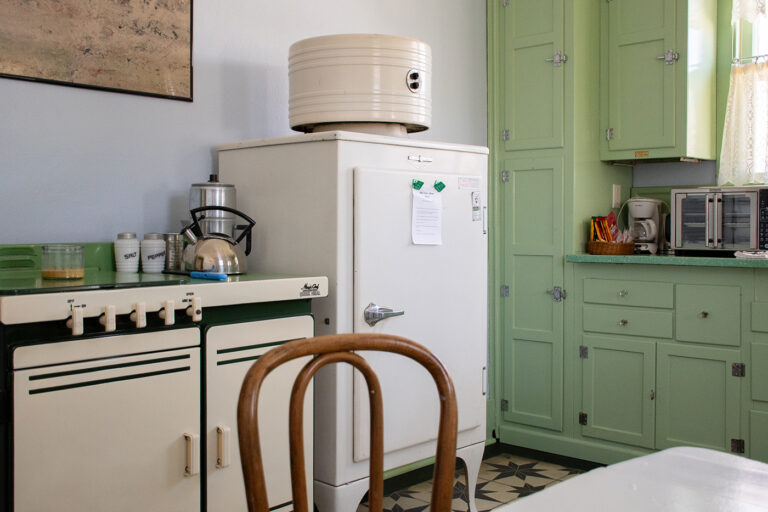
The “vintage operational kitchen” represents second major restoration achievement—creating cooking space that’s authentically period while remaining genuinely functional for guests preparing actual meals rather than serving as decorative museum display.
Operational is key word here. Many historic houses preserve vintage kitchens as exhibitions—look but don’t touch, admire but don’t use. Aunt Katie’s Corner takes different approach: the kitchen works. You can cook in it using period equipment and experiencing 1930s kitchen workflows firsthand.
What “vintage operational kitchen” includes:
Period Stove/Range – Restored 1930s-1940s gas or electric range, possibly original to the house or carefully sourced to match the period. These vintage stoves often feature porcelain surfaces in white or colors, chrome details, distinctive control placement, and burner/oven configurations different from contemporary appliances. Using one teaches you how cooking patterns have changed—oven temperature calibration, burner heat distribution, warming drawers, and other features that modern ranges either eliminated or redesigned.
Vintage Refrigerator – Possibly restored 1930s-1940s refrigerator with characteristic rounded corners, chrome hardware, and compact size reflecting earlier refrigeration technology. Alternatively, later-period refrigerator (1940s-1950s) in vintage style that maintains aesthetic consistency while providing more reliable operation. The refrigerator technology itself represents major transition—1930s saw electric refrigerators gradually replace ice boxes, transforming food storage and meal planning possibilities.
Period Cabinetry – Original or accurately reproduced 1930s kitchen cabinets featuring quality wood construction, period-appropriate hardware, glass-front upper cabinets, built-in flour bins or other specialized storage, and design details that mass-produced contemporary cabinets abandoned for cost efficiency. The cabinets demonstrate pre-WWII craftsmanship when kitchen cabinetry was custom-built or semi-custom rather than factory-produced modular units.
Vintage Sink and Fixtures – Period kitchen sink, possibly cast iron with porcelain enamel finish, accompanied by vintage faucets with separate hot/cold controls and design aesthetic matching the 1930s timeframe. The sink might feature integral drain boards, deep basin configurations, or other features reflecting pre-dishwasher era when hand-washing dishes and extensive food preparation required different sink designs than contemporary versions.
Period Lighting – Vintage light fixtures providing both illumination and authentic atmospheric detail. 1930s kitchen lighting often featured glass shades, chrome or porcelain fixtures, and placement reflecting natural light patterns and work area requirements in era before modern recessed lighting.
Tile and Surfaces – Period-appropriate backsplash tiles, possibly Art Deco-influenced patterns or simple subway tiles in layouts typical of 1930s installation. Counter surfaces might include vintage tile, restored original materials, or carefully selected reproductions maintaining period character.
Small Appliances and Details – Vintage or vintage-style toasters, coffee makers, canisters, dish towels, cooking utensils, and other items completing the period atmosphere while remaining functional for guest use.
What makes operational vintage kitchen significant:
Educational Experience – Actually cooking in 1930s kitchen teaches you how domestic labor, meal preparation workflows, and daily cooking patterns differed before contemporary appliances and kitchen layouts became standard. You learn through doing rather than just reading about historical kitchens.
Functional Beauty – The kitchen proves that period aesthetics and modern convenience aren’t mutually exclusive. You can have beautiful, historically accurate space that also allows you to make breakfast, prepare picnic lunches, or cook dinner using actual vintage equipment.
Preservation Through Use – Vintage appliances and fixtures often survive better when regularly used and maintained rather than sitting idle. By operating as functional guest kitchen, Aunt Katie’s Corner’s vintage equipment stays in working order while serving practical purpose.
As Always, Photographic Appeal – Like the Rose Du Barry bathroom, the vintage kitchen provides visually stunning background that contemporary kitchens can’t match. The colors, materials, details, and overall aesthetic create Instagram-worthy environment that documents your stay and illustrates what well-preserved period kitchens actually look like.
For guests, the operational kitchen offers flexibility that display-only versions don’t provide. You can:
- Prepare full meals using vintage equipment
- Make coffee in period-appropriate manner
- Store groceries and leftovers in vintage refrigerator
- Experience authentic 1930s cooking workflows and spatial relationships
- Appreciate craftsmanship and design details that close examination reveals
- Learn how kitchen technology and domestic labor evolved through direct hands-on experience
The kitchen isn’t just decorative background—it’s functioning space that enhances your stay while teaching you about domestic history, design evolution, and the material culture of 1930s American middle-class life.
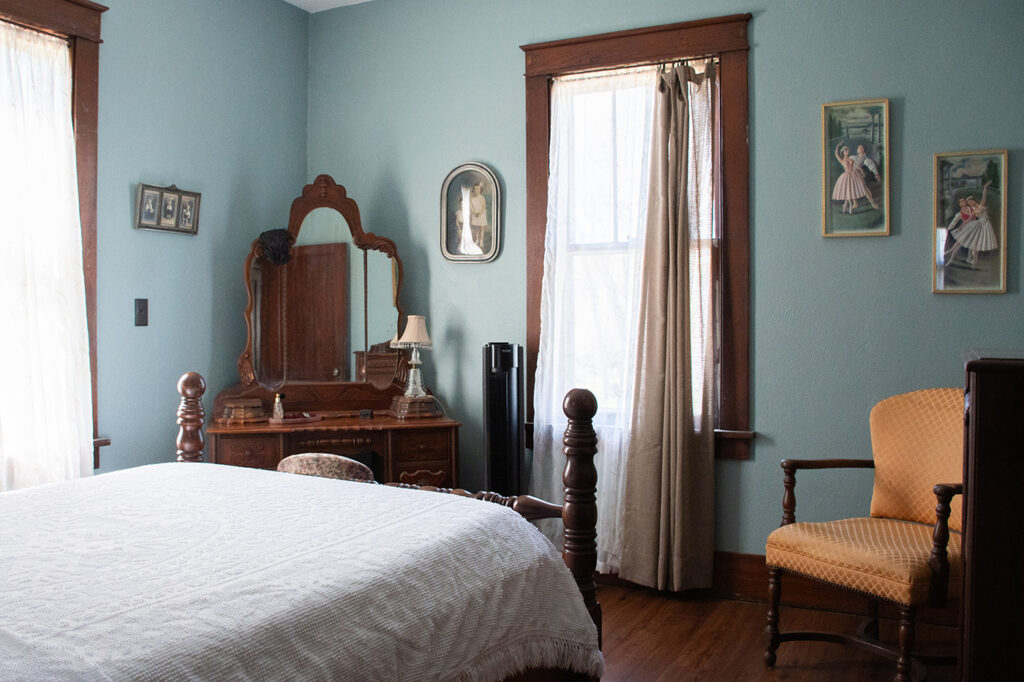
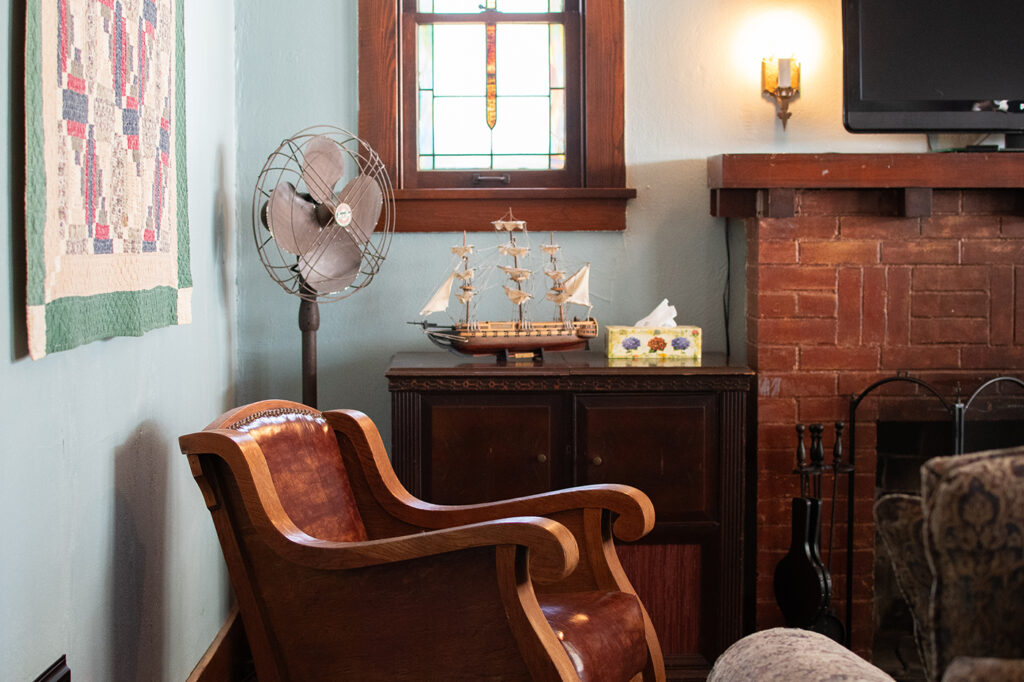
Old World Charm and Period Furnishings Throughout
Beyond the headlining Rose Du Barry bathroom and vintage operational kitchen, Aunt Katie’s Corner’s restoration extends throughout the property with “old world charm and furnishings” creating comprehensive period environment rather than modern space with occasional vintage touches.
Old world charm suggests:
Architectural Details Preserved – Original or restored woodwork, moldings, built-ins, window configurations, door hardware, floor surfaces, and other structural elements maintaining the bungalow’s 1930s character rather than being stripped away during misguided “modernization” renovations
Quality Materials – Hardwood floors, plaster walls, solid wood doors, tile work, and other materials reflecting pre-WWII construction standards before cost-cutting and mass production degraded typical residential building quality
Craftsmanship Evident – Details revealing individual craftsman’s hand rather than factory uniformity—subtle irregularities in plasterwork, handmade tile installation patterns, custom-fitted woodwork, and other signs of skilled manual labor rather than machine production
Patina and Character – The accumulated marks of time that distinguish genuinely old spaces from new construction imitating vintage styles—wear patterns on floors, variations in finish colors, slight settling and age that creates texture contemporary construction can’t replicate
Period-Appropriate Color Palettes – Paint colors, wallpaper patterns (if any), and overall chromatic schemes reflecting 1930s preferences rather than contemporary neutrals or anachronistic bright colors popular in other eras
Period furnishings means:
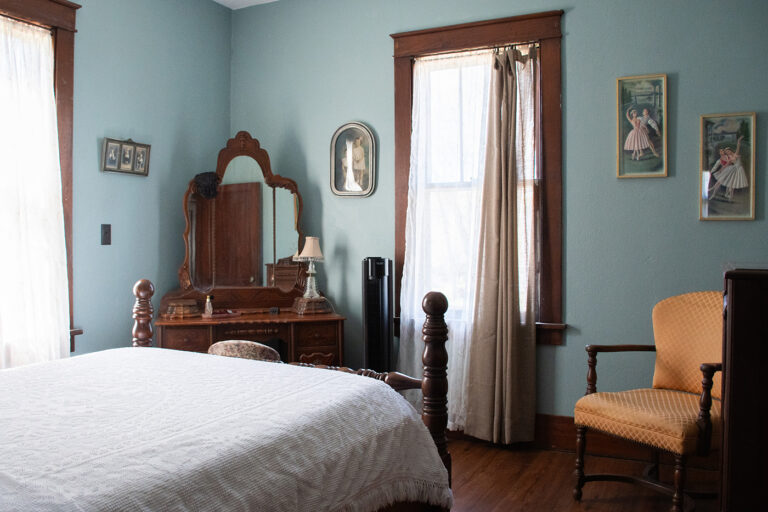
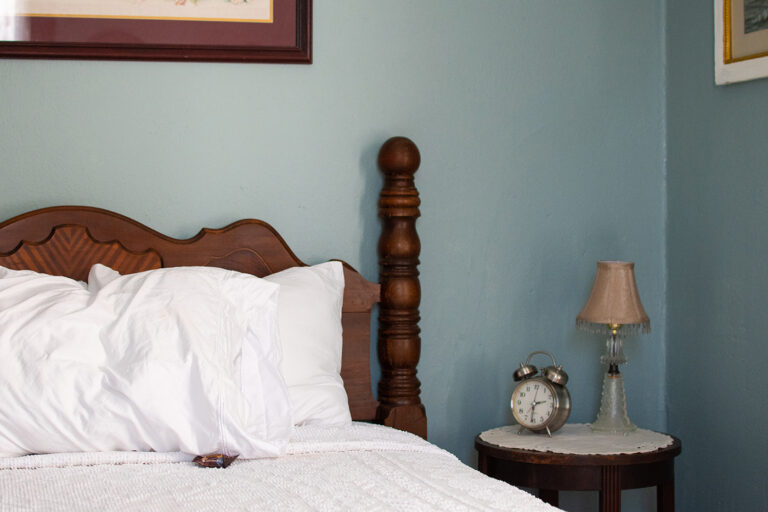
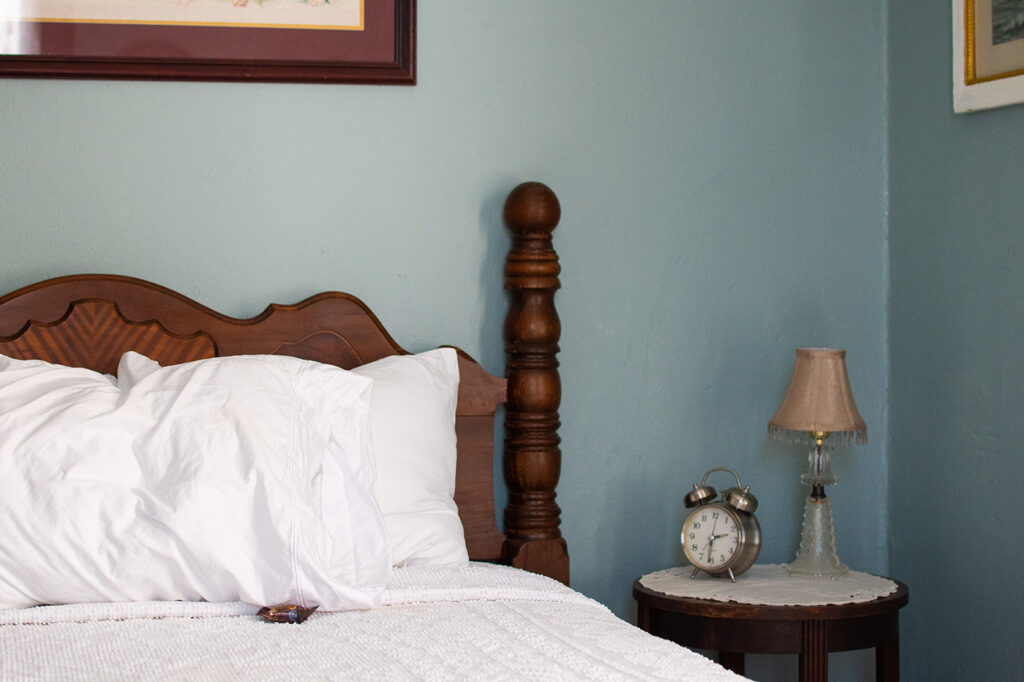
Furniture – Seating, beds, tables, storage pieces, and other furnishings either authentically from the 1930s-1940s or carefully selected reproductions matching the period aesthetic. The furniture isn’t just “old”—it’s specifically appropriate for the decade and style Aunt Katie’s Corner preserves.
Textiles – Curtains, bedding, upholstery, rugs, and fabric elements using patterns, materials, and colors consistent with 1930s domestic design. This might include reproduction fabrics based on period patterns or carefully preserved vintage textiles maintained in usable condition.
Lighting – Vintage or reproduction light fixtures throughout the house creating appropriate illumination while maintaining period character. 1930s lighting included table lamps, floor lamps, ceiling fixtures, and wall sconces in styles ranging from Art Deco geometric designs to more traditional forms—all different from contemporary lighting aesthetics.
Decorative Elements – Art, photographs, accessories, dishware, and other objects completing the period atmosphere. These might include vintage items actually from the 1930s-1940s or reproductions selected to maintain consistent aesthetic rather than jarring anachronisms.
Window Treatments – Curtains or shades appropriate to 1930s styles and materials rather than contemporary blinds or generic window coverings that would break period illusion
The comprehensive nature of Aunt Katie’s Corner’s restoration—not just bathroom and kitchen but throughout the house—creates immersive environment where every room reinforces the 1930s atmosphere. You’re not switching between vintage bathroom and contemporary bedroom, between period kitchen and modern living room. You’re inhabiting consistently restored space where the entire bungalow maintains historical integrity.
This comprehensive approach requires serious commitment and investment. It’s far easier and cheaper to slap vintage-style accessories into otherwise contemporary space than to actually restore entire property to period accuracy. That Aunt Katie’s Corner achieved this level of restoration proves the owners’ dedication to preservation, historical authenticity, and creating genuinely distinctive guest experience rather than superficial vintage theming.
Location: Historic Downtown, Block Off Main Drag
Aunt Katie’s Corner’s location—”in the historic downtown and a block off the main drag”—provides ideal balance between accessibility and quietness.
Walkable to Everything – Sainte Geneviève’s compact downtown layout, remnant of French colonial town planning, concentrates attractions, restaurants, shops, and historic sites within easily navigable area. From Aunt Katie’s Corner, you can walk to National Park historic houses, downtown restaurants, coffee shops, antique stores, galleries, and riverfront without driving.
Surrounded by History – The downtown area contains the highest concentration of historic buildings, creating environment where 19th-century architecture, French colonial structures, and early 20th-century commercial buildings surround you. Aunt Katie’s Corner fits naturally into this landscape rather than standing as isolated period piece in modern development.
Authentic Neighborhood Character – You’re staying in actual functioning town rather than tourist-designated district or purpose-built vacation rental zone. Local residents live nearby, businesses serve community as well as visitors, and daily rhythms reflect small-town Missouri life rather than purely tourism economy.
Reduced Traffic Noise – Market street carries through-traffic, commercial deliveries, and general vehicle activity. Being one block removed means quieter environment for sleeping, relaxing, and enjoying front porch or outdoor spaces without constant traffic noise.
Parking Easier – Side street location likely provides more convenient parking access and less maneuvering through downtown traffic.
More Residential Feel – Part of the charm is getting a feel for what it would be like to live in Sainte Geneviève. Be careful, people are known to up and move here after such an experience.
Still Convenient – One block isn’t far—easy walk to main street restaurants, shops, and activities while maintaining quieter, more residential character when you return to your lodging.
The location essentially gives you best of both worlds: full downtown walkability and immersion in historic district character without the noise, traffic, and commercial density of main street frontage itself. You can stroll to dinner in minutes, walk to National Park sites easily, and explore downtown shops without driving—then return to quieter side street where Aunt Katie’s Corner provides peaceful retreat.
For visitors planning multiple-day Sainte Geneviève explorations, this location allows car-free downtown navigation. Park once upon arrival, then walk everywhere for the duration of your stay. The compact downtown layout makes this practical rather than aspirational, and Aunt Katie’s Corner’s position within walking distance of all major attractions while maintaining residential quiet makes the location ideal for extended stays.
Two Bedrooms, Two Bathrooms: Practical Space Configuration
Aunt Katie’s Corner’s two-bedroom, two-bathroom configuration serves various guest types:
Small Families – Parents and children can occupy separate bedrooms with bathroom access for everyone, providing privacy and convenience during family trips combining historical education with cultural tourism
Couples Traveling Together – Two couples can share the bungalow with each having private bedroom and bathroom access, splitting costs while maintaining personal space and comfort
Extended Stays – Solo travelers or couples staying longer than quick weekends appreciate having guest bedroom for office space, storage, or simply extra room to spread out beyond single bedroom constraints
Multi-Generational Travel – Grandparents and grandchildren, or adult children traveling with elderly parents, benefit from separate sleeping spaces while sharing common areas for meals and socializing
Remote Workers – People combining work and leisure can dedicate second bedroom as office space, separating sleep and work environments even within small bungalow
The two-bathroom configuration particularly matters for shared occupancy—eliminating morning bathroom competition, providing privacy when multiple people occupy the space, and ensuring bathroom availability doesn’t create conflicts or inconvenience. Given that one bathroom is the featured Rose Du Barry suite, having second bathroom means you’re not forced to choose between using the special period bathroom or having sufficient bathroom access for practical needs.
The specific bedroom and bathroom configurations [details would be helpful if you have them—bed sizes, bathroom fixtures in second bath, layout specifics] determine exact capacity and suitability for different group sizes, but the basic two-bedroom, two-bathroom setup provides flexibility that single-bedroom or single-bathroom properties can’t match.
Who Aunt Katie’s Corner Serves
This distinctive property appeals to specific traveler types whose preferences align with what it offers:
Period Design Enthusiasts – People who actively seek out 1930s-1940s aesthetics, collect vintage furnishings, appreciate Art Deco influences, or simply love the look and feel of pre-WWII domestic design. These guests view the Rose Du Barry bathroom and vintage kitchen as primary attractions rather than quirky details.
History Buffs – Travelers interested in experiencing historical periods through immersive environments rather than just visiting museums and reading plaques. Staying in authentic 1930s bungalow provides educational experience that complements touring National Park’s earlier French colonial structures.
Instagram and Social Media Content Creators – Photographers, influencers, and content creators seeking visually distinctive backgrounds that contemporary accommodations can’t provide. The Rose Du Barry bathroom alone offers endless photo opportunities, while the vintage kitchen and period furnishings throughout create scroll-stopping content.
Romantic Getaway Seekers – Couples wanting special, memorable environment for anniversaries, proposals, or simply romantic weekends together. The old world charm creates atmosphere that chain hotels and generic vacation rentals cannot replicate.
Vintage Style Enthusiasts – People whose personal aesthetic preferences run toward vintage rather than contemporary design. These guests feel more comfortable in period-furnished space than in minimalist modern environments, genuinely preferring 1930s furniture and decor to IKEA and West Elm.
Writers and Artists – Creative professionals seeking inspiring environment for retreats, writing projects, or artistic work. The distinctive period atmosphere provides stimulation and removes them from familiar contemporary spaces that don’t inspire fresh thinking.
Multi-Generational Families – Grandparents who remember 1930s-1940s domestic environments from their childhoods visiting with grandchildren curious about “how things used to be,” creating intergenerational educational experience through shared lodging
Sainte Geneviève Cultural Tourists – Visitors specifically interested in the town’s full historical spectrum rather than just French colonial period. Aunt Katie’s Corner represents different era in Sainte Geneviève’s architectural evolution, showing how the town developed beyond its colonial origins.
People Seeking Unique Experiences – Travelers who prioritize distinctive, memorable accommodations over consistency and predictability. These guests actively seek properties with character and story rather than standardized hotel experiences.
What Aunt Katie’s Corner Isn’t (And Who Should Look Elsewhere)
Honesty about limitations helps potential guests make informed decisions:
Not Contemporary/Modern – People preferring clean-lined contemporary design, neutral color palettes, minimalist aesthetics, or modern luxury will find Aunt Katie’s Corner’s period furnishings and old world charm incompatible with their preferences.
Not Large Group Accommodation – Two bedrooms limits occupancy [specify maximum guests if known]. Big families or friend groups needing more sleeping spaces should look elsewhere.
Not Brand-New Everything – While restored and maintained, the property features 90-year-old fixtures, vintage appliances, and period furnishings that show their age (charmingly, but still visibly). Guests expecting everything pristine and new will be disappointed.
Not Accessible – Historic bungalows typically feature stairs, narrow doorways, period bathrooms not designed for wheelchair access, and other characteristics making them unsuitable for guests with mobility challenges.
Not Party/Event Venue – Period furnishings and vintage fixtures require respectful treatment. The property isn’t appropriate for large gatherings, parties, or events where damage risk increases.
Not Budget Accommodation – Meticulously restored period properties typically command premium rates reflecting restoration investment and unique character. Budget travelers seeking cheapest available lodging should consider other options.
Not Neutral/Safe Design – The Rose Du Barry pink bathroom, vintage kitchen, and period furnishings throughout create distinctive, opinionated aesthetic. People wanting “safe” neutral design that offends no one won’t find it here.
Aunt Katie’s Corner specifically appeals to guests who view these characteristics as features rather than bugs—who want period authenticity, appreciate 1930s design, and seek accommodation that’s genuinely distinctive rather than generically pleasant.
Planning Your Visit to Aunt Katie’s Corner
Booking: Available through Airbnb listing [Direct link: Aunt Katie’s corner – Bungalows for Rent in Ste. Genevieve, Missouri, United States]
Best For:
- Couples seeking romantic vintage getaway
- Small families wanting unique historical experience
- Friends traveling together who appreciate period design
- Remote workers combining work and cultural tourism
- Anyone specifically seeking 1930s-restored accommodation
Combine With:
- Ste. Genevieve National Historical Park tours (French colonial houses from earlier periods provide historical contrast)
- Downtown dining at Stella and Me, Oliver’s, American Custard Co., etc. (all within walking distance)
- Antique shopping at Ste. Genevieve Antique Mall and Schultz Antiques (period furniture appreciation extends beyond your lodging)
- King’s Ball or other seasonal festivals (if timing aligns)
- Mississippi River exploration and scenic overlooks
Photography Note: The Rose Du Barry bathroom and vintage kitchen photograph exceptionally well—bring camera and plan time for documentation. Natural light in morning/afternoon creates best images.
What to Appreciate:
- The rarity of complete, functional Rose Du Barry bathroom suite
- The operational vintage kitchen’s combination of beauty and functionality
- Period furnishings and old world charm creating comprehensive 1930s environment
- The restoration commitment required to achieve this level of historical authenticity
- Downtown walkability from quiet side street location
Experience 1930s Glamour in Downtown’s Most Meticulously Restored Period Bungalow
Aunt Katie’s Corner offers accommodation experience that’s genuinely rare: comprehensive restoration to 1930s glory creating immersive period environment rather than superficial vintage theming. The Rose Du Barry bathroom alone justifies the stay for enthusiasts of colored bathroom fixtures and Art Deco-era design. The vintage operational kitchen provides functioning space where you can actually cook using period equipment while experiencing 1930s domestic workflows. And the old world charm and period furnishings throughout create consistently authentic atmosphere that transports you to specific historical moment when American bungalows represented middle-class aspiration and domestic design balanced tradition with emerging modernism.
Located in historic downtown Sainte Geneviève just a block off the main drag, Aunt Katie’s Corner combines walkability and convenience with residential quiet and period character. Walk to National Park historic houses, downtown restaurants, shops, and attractions. Return to your meticulously restored 1930s bungalow where Rose Du Barry bathroom awaits and vintage kitchen invites you to prepare meals using equipment and experiencing spatial relationships from nearly a century ago.
This is accommodation for travelers who appreciate that lodging itself can be cultural experience, who value period authenticity over generic comfort, and who understand that staying in carefully restored historical environment teaches you things about design, domestic life, and material culture that museums preserve behind glass but Aunt Katie’s Corner lets you actually inhabit.
Book your stay. Prepare to WOW at the Rose Du Barry bathroom. Cook in the vintage kitchen. Sleep surrounded by period furnishings and old world charm. Experience 1930s glamour in downtown Sainte Geneviève’s most distinctive period bungalow—where restoration to former glory means you’re not just visiting history, you’re living in it.


Sorry, no records were found. Please adjust your search criteria and try again.
Sorry, unable to load the Maps API.