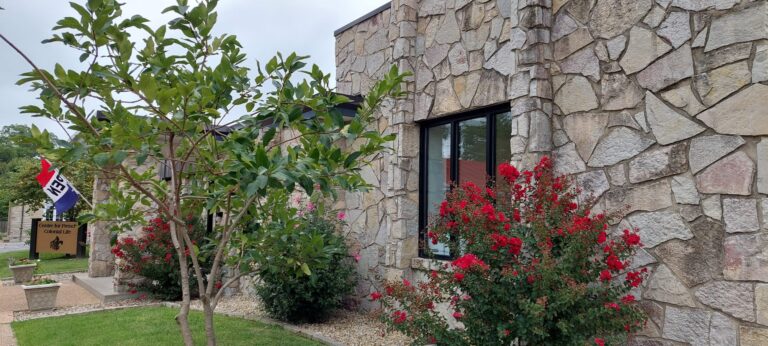
Centre for French Colonial Life – Gateway to America’s French Heritage
At the corner of 2nd and Market Streets in the heart of Ste. Genevieve’s Historic District stands the Centre for French Colonial Life, an institution dedicated to preserving, interpreting, and sharing the remarkably rich story of the French colonial presence in the Mississippi River Valley.
Your Journey Begins Here
The Centre for French Colonial Life is designed to be your first stop when exploring Ste. Genevieve’s French colonial heritage. Inside this modern facility, you’ll find everything you need to make the most of your visit: thoughtfully curated changing exhibits that provide context and depth, a well-stocked gift shop offering books and items related to French colonial history, and friendly staff ready to answer questions and help you plan your exploration of the museum campus.
This is where you’ll purchase tickets for the guided tours of the historic Bolduc and LeMeilleur Houses, learn about special programs and events, and get oriented to the broader story you’re about to experience. The Centre serves as the interpretive foundation that makes your visits to the historic houses more meaningful—providing background, context, and the big-picture understanding that transforms a tour of old buildings into a genuine historical experience.
The French Colonial America Museum Campus
The Centre serves as headquarters for a museum campus that encompasses multiple historic properties, each contributing to a multi-layered picture of French colonial life in the Mississippi Valley:
The Bolduc House: A National Historic Landmark and one of the most significant examples of French Creole vertical log architecture in North America. Built in the late 18th century, this beautifully restored and furnished home offers guided tours that transport you to the world of French Creole merchants and their families.
The LeMeilleur House: Built around 1820 by one of Louis Bolduc’s granddaughters, this house illustrates how life evolved in the decades following the Louisiana Purchase, showing both continuity and change in French Creole culture as it adapted to American rule.
The Beauvais-Linden Living History House: Every Saturday from late March through early November, this historic property comes alive with living history presentations and demonstrations. Costumed interpreters engage in period activities, showing visitors how daily life actually functioned in the French colonial era.
Together, these properties create a museum experience that’s both comprehensive and varied—combining artifact-based exhibits, guided tours of furnished historic homes, and interactive living history that brings the past to life.
Current Special Exhibits
The Centre’s changing exhibition galleries ensure that even repeat visitors always find something new. Current exhibits include:
A Creole Community
Throughout the years, the “Creole” has carried many different meanings. Some immediately think of the cuisine of Lower Louisiana, combining West African and European elements. Others focus on what it means for language, with multiple aspects of multiple unrelated languages converging into oner tongue with loosely-defined rules. Still others might focus on the Creoles themselves, the people of the present-day state of Louisiana with French and often West African ancestry. But Creole can also be applied to the people of Upper Louisiana (including present-day Missouri and Arkansas), including the original settlers of Ste. Genevieve. These people were mainly the descendants of French Canadian settlers, born in the colonies and living alongside peoples of African and Indigenous descent. At times, members of all three groups intermarried, and their children and grandchildren developed a unique blended identity and way of life that still shapes the character of communities like Ste. Geneviève today.
This exhibit attempts to clarify some definitions and origins of “Creole” identity in this region, and explain the roots and unique character iof the creolized culture left behind by the French in North America. The exhibit features original artifacts from the French, African and Native American peoples who shaped and maintained Creole culture and identity, the cultural exchange that contributed to this culture’s evolution, and images of individuals who participated in this process.
“A Creole Community” is sponsored by the D. & C. Brooksher Family Foundation in memory of Ruth Elizabeth Knoblauch.
To Shelter and Sustain: French Creole Architecture and Building Methods
One of the most distinctive aspects of Ste. Genevieve’s heritage is its collection of French Creole vertical log architecture—buildings that look unlike anything else in the United States. But understanding what makes these structures unique requires knowing something about how and why they were built this way.
This exhibit provides exactly that knowledge, explaining the origins of French Creole building traditions in the Mississippi Valley and the specific construction methods used to create these distinctive structures during the 18th and early 19th centuries. You’ll learn about:
- Poteaux-en-terre (posts-in-earth): The rarest technique, where vertical logs are set directly into the ground
- Poteaux-sur-solle (posts-on-sill): A more durable method placing vertical logs on a horizontal sill beam
- Norman trusses: The heavy timber roof systems that support the characteristic steep-pitched roofs
- Material choices: Why specific woods were selected and how they were prepared
- Climate adaptation: How French Canadian building traditions were modified for the Mississippi Valley’s different climate
- Cultural persistence: Why these building methods continued even as American architectural styles became available
The exhibit uses diagrams, models, photographs, and possibly even structural components to make these construction techniques understandable to non-specialists. After experiencing this exhibit, your tours of the Bolduc and LeMeilleur Houses become much more meaningful—you’ll look at the walls, roofs, and structural elements with informed eyes, appreciating the skill and knowledge embedded in these buildings.
The Gift Shop: More Than Souvenirs
The Centre’s gift shop is thoughtfully curated to extend your learning and provide meaningful connections to what you’ve experienced. You’ll find:
- Books: Scholarly and popular works on French colonial history, architecture, genealogy, and related topics
- Children’s Items: Age-appropriate books and educational toys that help young visitors engage with history
- Locally Made Crafts: Items that reflect French colonial traditions or are made by regional artisans
- Reproduction Items: Period-appropriate objects based on historical examples
- Genealogical Resources: Materials for those researching French colonial ancestry
Purchases from the gift shop directly support the museum’s mission, helping fund preservation, education, and programming.
Supporting a Vital Mission
The Centre for French Colonial Life and its associated historic properties serve purposes that extend far beyond tourism:
Preservation: These buildings represent irreplaceable architectural and cultural heritage. The museum campus ensures they’re professionally maintained and protected for future generations.
Education: Through exhibits, tours, programs, and outreach, the museum educates thousands of visitors annually about French colonial history—a chapter of American history that’s often overlooked in standard curricula.
Research: The museum supports scholarly research into French colonial life, architecture, material culture, and related topics, contributing to academic understanding.
Community Identity: For Ste. Genevieve residents, the museum campus helps maintain connection to the community’s distinctive heritage and sense of place.
When you purchase admission, you’re not just buying access to exhibits and tours—you’re supporting this broader mission and helping ensure that French colonial heritage remains understood, appreciated, and protected.
Plan Your Visit
Admission:
- Centre for French Colonial Life: Adults $10, Children $5
- House Tours (Bolduc and LeMeilleur): Adults $15, Children $7
What’s Included:
- Centre admission includes access to all changing exhibits and the gift shop
- House tour tickets (purchased at the Centre) include guided tours of both the Bolduc and LeMeilleur Houses
Living History:
- Beauvais-Linden House: Living history presentations every Saturday, late March through early November
Location:
- Centre for French Colonial Life: Corner of 2nd and Market Streets in Historic Downtown Ste. Genevieve
- Historic houses are within easy walking distance
Group Tours: Groups are welcome and encouraged! Call ahead to schedule a group tour, which allows for better scheduling and often enhanced programming tailored to your group’s interests and needs.
Tips for the Best Experience:
Start at the Centre: Even if you’re primarily interested in the historic houses, beginning at the Centre provides context that makes your house tours more meaningful.
Allow Sufficient Time: To fully experience the Centre exhibits and take both house tours, plan for at least 2-3 hours. Add more time if you’re including the living history presentations on Saturdays.
Combine with Other Sites: Ste. Genevieve offers multiple historic sites managed by different organizations (including the National Park Service properties). The Centre staff can help you plan a comprehensive historic tour.
Accessibility: Contact the Centre regarding accessibility accommodations for visitors with mobility considerations.
Why This Matters
The Centre for French Colonial Life and its museum campus preserve something precious and increasingly rare: authentic, tangible connections to America’s multicultural heritage. These buildings, artifacts, and stories remind us that “American” history includes French colonists, Spanish administrators, African Americans (both enslaved and free), Native peoples, and eventually Anglo-Americans—all interacting in this Mississippi River Valley crossroads.
In an era when so much of the past has been demolished or homogenized, Ste. Genevieve’s French colonial heritage stands as a remarkable survivor. The Centre for French Colonial Life serves as both guardian of that heritage and interpreter of its significance, helping each new generation understand what these buildings, artifacts, and stories mean for our collective American identity.
Whether you’re a serious history buff, a genealogist researching French colonial ancestors, an architecture enthusiast, a teacher looking for educational experiences, or simply a curious traveler, the Centre for French Colonial Life welcomes you to discover a fascinating chapter of American history that too often goes untold.
Sorry, no records were found. Please adjust your search criteria and try again.
Sorry, unable to load the Maps API.


