

Birding in Kaskaskia – Where the Mississippi Creates a Haven for Waterfowl and Rare Visitors
In the heart of the Mississippi River Valley, where the river’s powerful currents once carved through a peninsula to create an island, lies one of the region’s hidden birding treasures. Kaskaskia Island and the surrounding wetlands managed by the U.S. Fish & Wildlife Service offer bird enthusiasts a remarkable opportunity to observe herons, egrets, waterfowl, and—if fortune smiles—even the magnificent and critically endangered whooping crane. This is birding with history, where sloughs and backwaters that once sustained a thriving French colonial settlement now provide essential habitat for migrating and resident birds along the Mississippi Flyway.
A Geographic Anomaly Creates Birding Opportunity
Kaskaskia Island holds a unique place in American geography: it’s the only inhabited piece of Illinois located west of the Mississippi River. This geographic quirk resulted from the New Madrid Earthquake of 1811-1812 and subsequent flooding that dramatically altered the river’s course. What was once a peninsula became an island, separated from mainland Illinois but accessible only through Missouri.
This isolation and the island’s low-lying, flood-prone nature have preserved it as largely agricultural land interspersed with wetlands—exactly the kind of habitat that waterfowl and wading birds require. The sloughs, ponds, drainage canals, and backwater areas create a mosaic of wetland habitats that attract diverse bird species throughout the year.
Middle Mississippi River National Wildlife Refuge: The Crown Jewel
The birding opportunities around Kaskaskia are significantly enhanced by the presence of the Middle Mississippi River National Wildlife Refuge, established in 2000 and designated as an Important Bird Area in 2008. The refuge consists of seven island divisions stretching along the “unpooled” section of the Mississippi River below the confluence with the Missouri River, where natural river dynamics still operate without lock and dam regulation.
This refuge protects critical river floodplain habitat that provides essential resting and feeding areas for migratory birds traveling the Mississippi Flyway—one of North America’s major migration corridors. During spring and fall migrations, the refuge and surrounding Kaskaskia area become vital stopover points where exhausted travelers can rest and refuel before continuing their journeys.
The refuge’s location along the unpooled Mississippi creates unique conditions:
Natural Flooding Cycles: Regular flooding allows native fish to access the floodplain during high water, which in turn supports wading birds and other species that feed on fish and aquatic invertebrates.
Floodplain Forest Corridors: Bottomland hardwood forests provide habitat for migratory songbirds, including species of conservation concern like the prothonotary warbler, whose distinctive golden-yellow plumage flashes through the understory.
Diverse Wetland Habitats: Sloughs, oxbows, and backwater areas create varied habitat types that support different bird communities.
What You’ll See: The Birds of Kaskaskia
Herons and Egrets: The Elegant Waders
The most iconic birds of Kaskaskia’s wetlands are the herons and egrets that wade through the shallows hunting fish, frogs, and aquatic invertebrates. Herons, egrets, and ducks are often seen in the area near the Middle Mississippi River National Wildlife Refuge.
Great Blue Herons: These large, slate-gray birds with impressive six-foot wingspans are common residents. Watch for them standing motionless in shallow water or flying overhead with slow, powerful wingbeats.
Great Egrets: Elegant white birds nearly as large as great blue herons but more slender, with bright yellow bills and black legs. Their pure white plumage stands out dramatically against green vegetation and dark water.
Snowy Egrets: Smaller than great egrets and distinguished by their bright yellow feet (often called “golden slippers”), snowy egrets are active hunters, often running through shallows chasing prey.
Green Herons: These stocky, smaller herons are masters of camouflage, often hunting from low perches overhanging water. Watch for their distinctive chestnut neck and greenish back.
Waterfowl: Ducks, Geese, and More
Ducks are often seen on Kaskaskia Island, with diversity varying dramatically by season. During spring and fall migration, and especially in winter, the area can host impressive numbers and varieties of waterfowl.
Mallards: The most familiar duck species, common year-round in the area.
Wood Ducks: Beautifully patterned ducks that nest in tree cavities near water.
Diving Ducks: During migration and winter, look for species like ring-necked ducks, canvasbacks, and scaup on larger water bodies.
Dabbling Ducks: Species like pintails, gadwalls, green-winged teal, and blue-winged teal use the shallow wetlands during migration.
Canada Geese: Common throughout the year, with peak numbers during migration.
The Holy Grail: Whooping Cranes
Stray whooping cranes are often seen on Kaskaskia Island near the Middle Mississippi River National Wildlife Refuge. For serious birders, the possibility of seeing a whooping crane—one of North America’s rarest birds—elevates Kaskaskia from good birding spot to destination status.
Whooping cranes are critically endangered, with only between 600 and 700 individuals remaining in the wild. At one point that number was as low as 15, so massive conservation efforts have led to the current upswing. A pair of whooping cranes has been observed repeatedly on Kaskaskia Island over recent years, particularly during winter months, offering dedicated birders a rare opportunity to see these magnificent five-foot-tall white birds with black wingtips and red crowns.
Finding whooping cranes requires patience, good optics, and often some luck. The birds are often seen wading in sloughs several hundred yards from roads, foraging in the permanent drainage canals and agricultural fields. Bring a spotting scope or powerful binoculars, as the birds may be distant. And remember: these are critically endangered birds deserving of respect and distance. Observe from roads and never approach or disturb them.
Shorebirds
During migration, particularly in spring and late summer when water levels create mudflats and exposed shorelines, various shorebird species stop to feed in the Kaskaskia area. Look for killdeer, greater and lesser yellowlegs, spotted sandpipers, and during peak migration, rarer species.
Raptors
Bald eagles are frequent visitors to locations near the Middle Mississippi River National Wildlife Refuge, particularly around Wilkinson Island Division. These majestic birds nest and travel along the corridor, with peak numbers during winter when eagles from northern regions join local residents.
Other raptors to watch for include red-tailed hawks, red-shouldered hawks, American kestrels working fence lines and utility wires, and during migration, various other hawk species.
Songbirds
Prothonotary warblers arrive to the riverfront forests in early spring, bringing their distinctive golden-yellow color to the bottomland woods. Once prominent in floodplain forests along the Mississippi River, prothonotary warblers have been declining at nearly 1% per year, making protected and restored floodplain forests critical to their survival.
Other songbirds include various warbler species during migration, vireos, flycatchers, woodpeckers (including the spectacular pileated woodpecker), and numerous sparrow species.
When to Visit: Seasonal Birding Calendar
Spring Migration (March-May):
Early spring to summer is peak season at the Middle Mississippi River National Wildlife Refuge. This is when northbound migrants pass through in waves, with Easter being an excellent time for songbirds.
March brings returning herons and early migrants. April sees the arrival of great egrets and the peak of songbird migration, with warblers, vireos, thrushes, and other species flooding through. May offers late migrants and the beginning of breeding season activity.
Summer (June-August):
Breeding birds are present, with herons and egrets active at rookeries. Hot weather can make birding less comfortable, but early morning and evening offer opportunities to observe nesting behavior and fledglings learning to fly and hunt. Water levels are typically lower, concentrating birds around remaining wetlands.
Fall Migration (September-November):
Fall and early winter are peak seasons at the refuge, with Thanksgiving being an excellent time for waterfowl. September and October bring southbound songbirds, shorebirds, and early waterfowl. November sees peak waterfowl numbers as ducks and geese arrive from northern breeding grounds.
Winter (December-February):
This is prime time for waterfowl diversity and numbers, with ducks and geese using the area for wintering. Bald eagles are most numerous in winter. And significantly, this is when whooping cranes have been most reliably observed on Kaskaskia Island, making winter visits particularly exciting despite cold temperatures.
Where to Bird: Key Locations
Kaskaskia Island Roads:
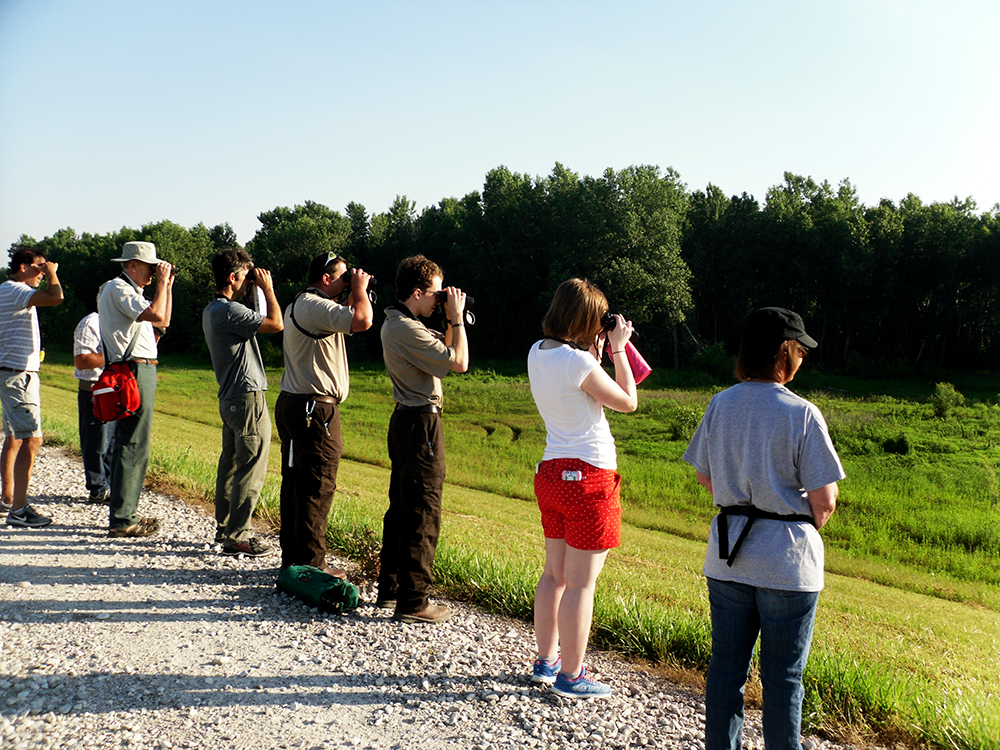
Birds can be viewed along most roads on the island. The gravel and paved roads that traverse the island’s agricultural lands provide access to viewing sloughs, drainage canals, and flooded fields where waterfowl and wading birds congregate.
Drive slowly, scan fields and waterways, and be prepared to pull safely off the road when you spot something interesting. Remember that this is working farmland—respect private property, stay on public roads, and watch for farm equipment.
Middle Mississippi River National Wildlife Refuge – Wilkinson Island Division:
The Wilkinson Island Division offers the Center Trail, a 2.3-mile trail providing viewing opportunities for migratory songbirds during spring and fall migrations. This trail winds through floodplain forest characteristic of the Mississippi River, offering different habitat and bird communities than the open wetlands.
Great River Road (Illinois Route 3):
Take a scenic drive down Illinois Route 3, also known as Great River Road, which runs parallel to the Mississippi River past refuge divisions and provides stunning views of river bluffs and forests. This drive is especially beautiful during peak fall foliage.
Fort Kaskaskia State Historic Site:
The elevated overlook at Fort Kaskaskia provides sweeping views across the Mississippi River to Kaskaskia Island below. This vantage point allows scanning for birds across the landscape and is a habitat for both migratory and resident birds.
Access and Directions
Getting to Kaskaskia Island:
Despite being part of Illinois, Kaskaskia Island can only be reached from Missouri. From Ste. Genevieve, go south on Highway 61 to Highway U near St. Mary, Missouri. Follow signs to the bridge that crosses onto the island.
From the Illinois side, cross the Chester Bridge off Route 3, which becomes Highway 51 in Missouri. Continue south to Highway H, then follow local signs to St. Mary and the Kaskaskia Island bridge.
Accessing Middle Mississippi River Refuge:
The refuge headquarters is located at Clarence Cannon National Wildlife Refuge, between St. Louis and Hannibal, Missouri. However, several refuge divisions are accessible from roads in the Kaskaskia area. Contact the refuge office for current access information and conditions.
Important Considerations
Flooding:
All seven divisions of the Middle Mississippi River National Wildlife Refuge are frequently flooded, affording big river fish access to the Missouri and Illinois floodplain. It is important to check the Mississippi River stage at the Chester, Illinois gauge before heading to the refuge, as most divisions become inaccessible by land beginning at a river stage of 25 feet.
Kaskaskia Island itself is extremely flood prone. Check current conditions before visiting, especially during spring flooding season or after heavy rains.
Plan Your Visit: Best Practices for Birding Kaskaskia
Timing Your Visit
Best Seasons: Spring migration (April-May) for songbird diversity; fall migration (October-November) for waterfowl numbers; winter (December-February) for whooping crane opportunities and wintering waterfowl.
Best Times of Day: Early morning (dawn to mid-morning) when birds are most active and lighting is best for photography. Late afternoon can also be productive, especially for waterfowl returning to roosting areas.
Weather Considerations: Check flooding conditions before visiting—this area is highly susceptible to Mississippi River flooding. Call the refuge office or check online for current conditions.
Essential Gear
Optics: Quality binoculars (8×42 or 10×42) are essential. A spotting scope with tripod is highly recommended for Kaskaskia, where birds are often distant across fields and water.
Field Guide: Bring a comprehensive field guide to birds of North America or specifically to birds of the Midwest/Mississippi Valley.
Camera: If you’re interested in bird photography, bring a camera with telephoto lens (300mm minimum, 500-600mm ideal for distant subjects like whooping cranes).
Clothing: Dress in layers and be prepared for muddy conditions near wetlands. Waterproof boots are often necessary. Camouflage or muted earth tones help you blend in and avoid disturbing birds.
Sun Protection: Hat, sunglasses, and sunscreen—much of the birding is in open areas with limited shade.
Insect Repellent: Mosquitoes and biting flies can be intense near wetlands, especially in warm months.
Birding Ethics and Etiquette
Respect Wildlife: Observe birds from a distance. Never approach nesting birds or areas with young. If birds show signs of distress or alarm, you’re too close—back away.
Whooping Crane Protocol: If you’re fortunate enough to see whooping cranes, maintain significant distance. Use spotting scopes or long lenses rather than approaching. These critically endangered birds deserve our utmost respect and protection.
Stay on Public Access: Much of Kaskaskia Island is private agricultural land. Bird only from public roads and designated public areas. Never trespass on private property.
Respect Farmers: This is working farmland. Watch for and yield to farm equipment. Don’t block roads or field entrances. Agricultural activities take priority.
Leave No Trace: Pack out all trash. Don’t disturb vegetation or habitat.
Report Rare Birds Responsibly: If you observe rare species like whooping cranes, report them to eBird or appropriate authorities, but be cautious about publicly sharing exact locations that might lead to disturbance.
Safety Considerations
Road Safety: Many roads are narrow gravel roads with limited shoulders. Pull completely off the roadway when stopping to observe birds.
Flooding Awareness: If water is over roads or rising, don’t attempt to cross. Conditions can change rapidly during flood events.
Weather: Be prepared for changing weather. Summer heat and humidity can be intense; winter temperatures can be brutally cold with wind coming off the river.
Limited Services: Kaskaskia Island has minimal services. Bring food, water, and have a full tank of gas. The nearest town with full services is Chester, Illinois, or Ste. Genevieve, Missouri.
Additional Resources
U.S. Fish & Wildlife Service – Middle Mississippi River National Wildlife Refuge: Contact for current conditions, access information, and birding reports.
eBird Hotspots: Check eBird for Kaskaskia Island and Middle Mississippi River Refuge locations to see recent sightings and species lists.
Great River Road Welcome Center: Located at 66 S. Main St. in Ste. Genevieve, this can provide local information and maps.
Birds of the Middle Mississippi River Corridor Checklist: Available from the refuge office, this checklist helps you identify which species are likely during your visit.
Why Kaskaskia Birding Matters
The wetlands and floodplain habitats around Kaskaskia represent increasingly rare ecosystems. As development, flood control, and agricultural drainage have eliminated wetlands across the Midwest, protected areas like the Middle Mississippi River National Wildlife Refuge become critically important refuges for migratory and resident birds.
If a particular species uses the Mississippi Flyway, you have a great opportunity to view it at the refuge. The Mississippi Flyway is one of four major North American migration corridors, and the Kaskaskia area sits right in this critical pathway.
Every visit to Kaskaskia for birding supports conservation in tangible ways. Your observations reported to eBird contribute to scientific understanding of bird populations and distributions. Your presence demonstrates public value for these protected areas, strengthening arguments for their continued protection and management. Your appreciation for these birds and habitats helps ensure they’ll be here for future generations.
Beyond Birding: The Complete Kaskaskia Experience
While birding brings you to Kaskaskia, take time to appreciate the area’s remarkable history. This island was once Illinois’s first territorial and state capital, a thriving French colonial settlement of 7,000 people. The Liberty Bell of the West, housed in a small memorial building, commemorates the town’s liberation from British rule on July 4, 1778. The Church of the Immaculate Conception, repeatedly rebuilt after floods, stands as testament to the tenacity of those who refuse to abandon this historic place.
Fort Kaskaskia State Historic Site, across the river on the Illinois bluffs, offers both historical interpretation and excellent birding vantage points overlooking the island and river.
Combine your Kaskaskia birding with exploration of Ste. Genevieve’s French colonial heritage, creating a complete experience that blends natural and cultural history in one of the most historically significant regions of the Mississippi Valley.
The Magic of Kaskaskia Birding
There’s something special about birding in a place where history and nature intertwine so completely. As you scan the sloughs for herons or watch a distant white form that might—just might—be a whooping crane, you’re standing in a landscape that has drawn humans for millennia. Native peoples, French colonists, American pioneers—all were sustained by these same rich bottomlands and river resources.
The birds don’t care about political boundaries or human history. They follow ancient migratory pathways encoded in their DNA, stopping at Kaskaskia because the habitat meets their needs. That the sloughs and wetlands persist here, protected by geographic isolation and conservation designation, is our good fortune as birders.
Whether you’re a life-lister hoping to add whooping crane to your species count, a photographer seeking that perfect heron-in-golden-light image, a casual observer who simply enjoys watching waterfowl, or a nature lover appreciating the Mississippi River ecosystem, Kaskaskia offers something special.
Come explore this geographic anomaly, this Illinois-that’s-only-accessible-from-Missouri, this island created by earthquake and flood, this haven for birds traveling the Mississippi Flyway. Bring your binoculars, your patience, your respect for wildlife, and your sense of wonder. The birds of Kaskaskia are waiting.
Sorry, no records were found. Please adjust your search criteria and try again.
Sorry, unable to load the Maps API.