
The King’s Ball – Sainte Geneviève’s 250-Year-Old Mardi Gras Tradition Where Fiddlers, French Colonial Costumes, and King Cake Crown Missouri’s Oldest Twelfth Night Celebration
On the first full weekend in February, hundreds of costumed revelers crowd the VFW Hall in Sainte Geneviève for one of Missouri’s most distinctive cultural celebrations: the King’s Ball. This isn’t some recently invented heritage festival designed to attract tourists—it’s the authentic continuation of a French colonial tradition that’s been celebrated for over 250 years, marking the Epiphany (Twelfth Night) and serving as the region’s traditional close to the Christmas season. Think of it as Sainte Geneviève’s answer to Mardi Gras: music, dancing, elaborate costumes, and the ceremonial serving of King Cake (Galette des Rois) complete with hidden bean or baby Jesus figurine that determines who’ll reign as royalty for the coming year.
While most Americans associate King Cake exclusively with New Orleans Mardi Gras, the tradition actually originates in French Epiphany celebrations—and Sainte Geneviève’s King’s Ball represents one of the oldest continuous observations of this custom in North America. The cake, the hidden prize, the crowning of royalty, the communal dancing—these aren’t borrowed from Louisiana. They’re direct inheritances from the early French Catholic settlers who founded Sainte Geneviève in the early 1700s, making it Missouri’s oldest European settlement and one of North America’s most authentically preserved French colonial communities.
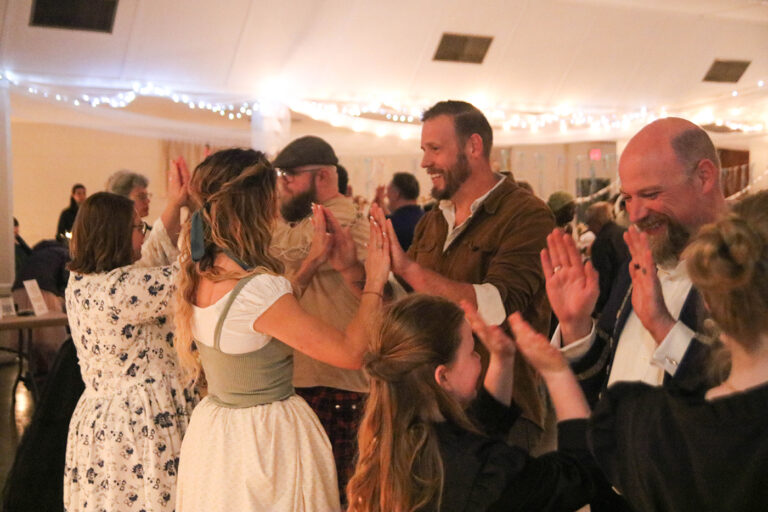
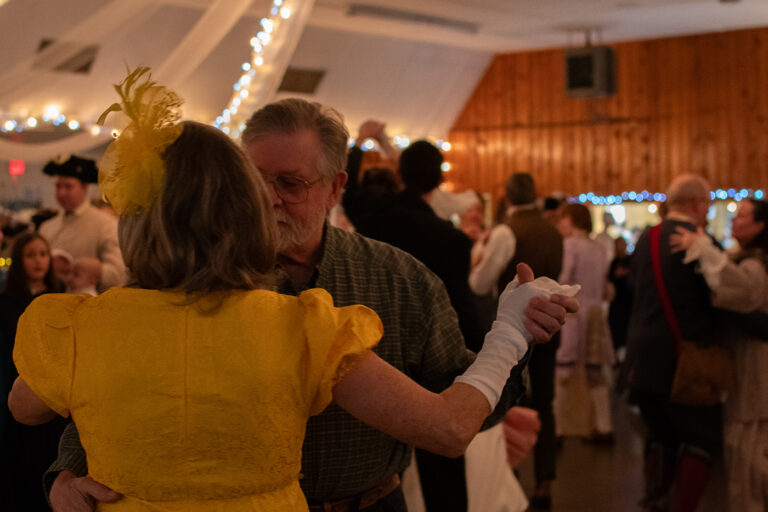
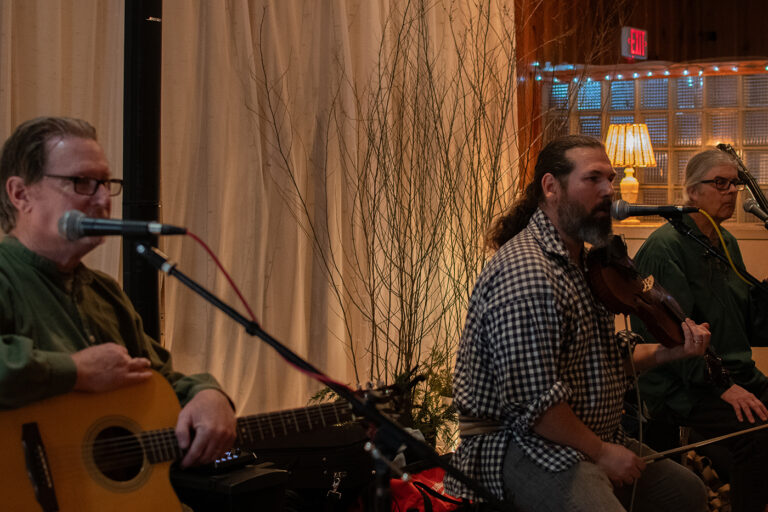
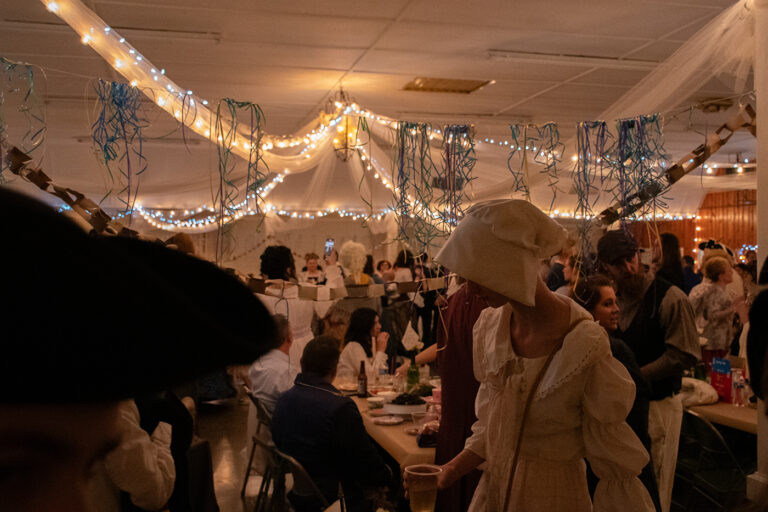
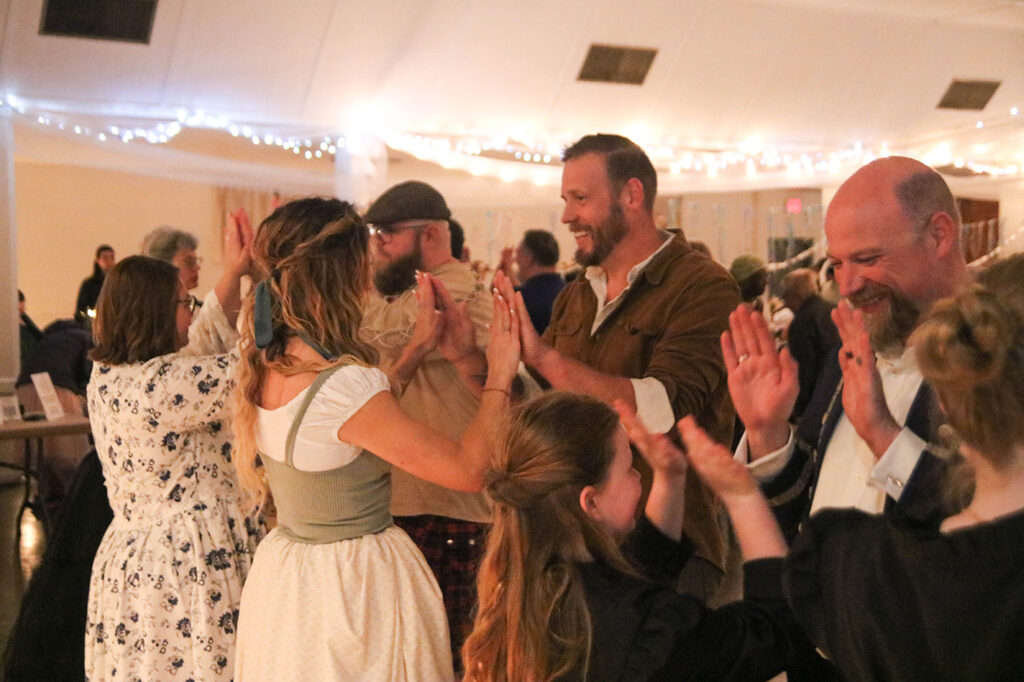
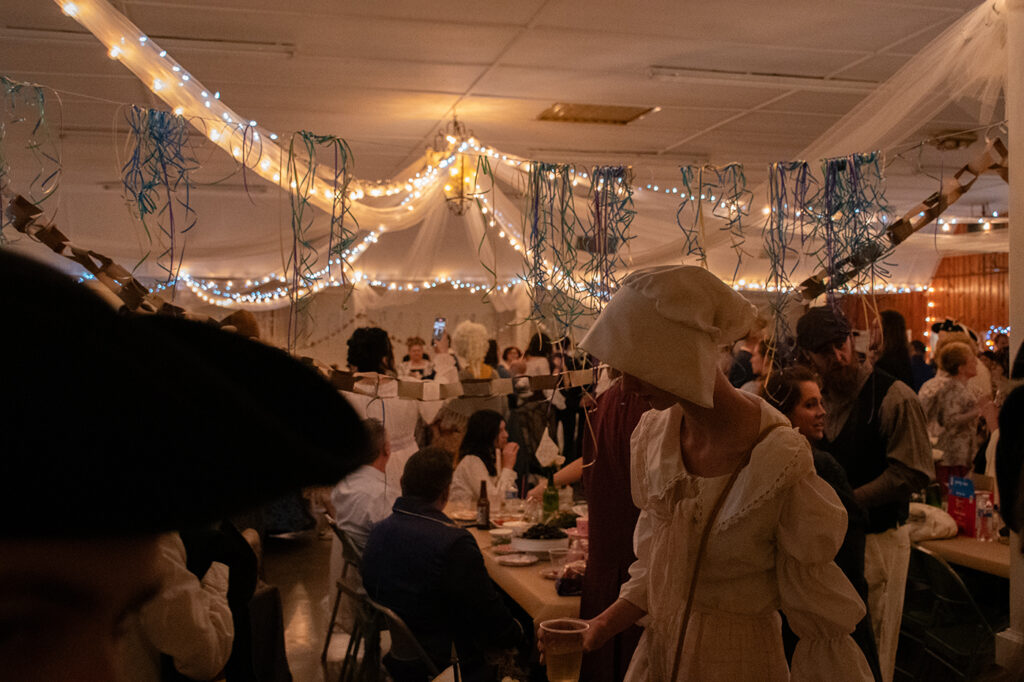
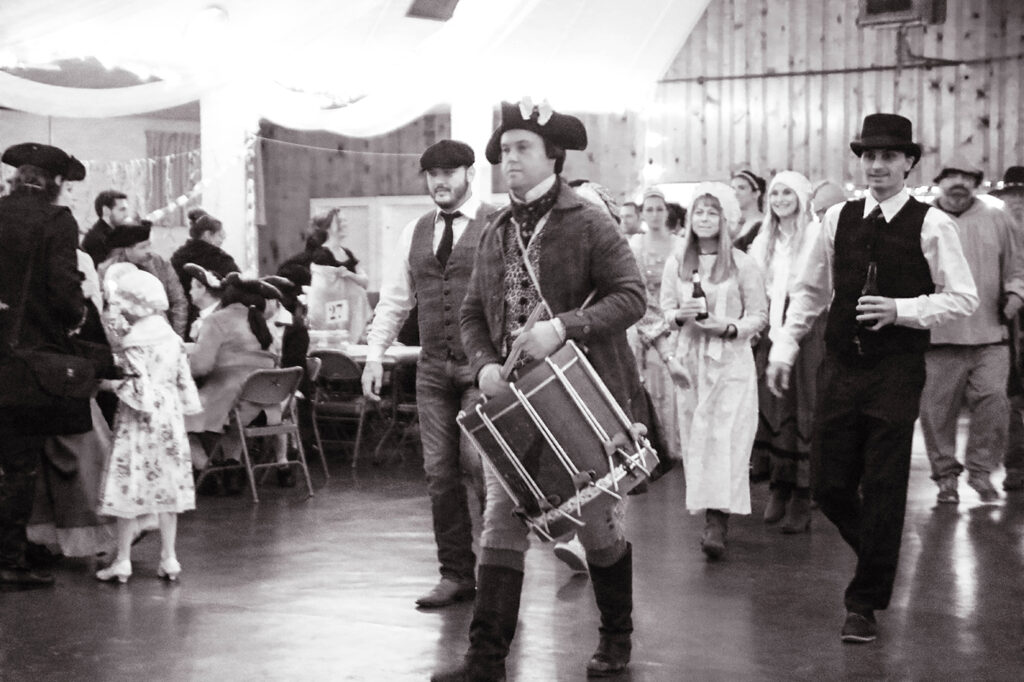
The King’s Ball transforms a February evening into time travel experience where young kids, teenagers, and adults of all ages dance reels and squares to traditional Illinois Creole music provided by fiddler Dennis Stroughmatt and L’Esprit Creole. Professional dance callers walk participants through steps, ensuring everyone—regardless of experience—can join the Virginia Reel, Paddle Dance, or Schottische. Costumes are encouraged but not required, creating spectacular visual atmosphere where white peasant blouses, calf-length breeches, and colonial attire mix with formal wear and contemporary dress. And throughout the evening, anticipation builds toward the cake ceremony: who will find the hidden prize and become King (or Queen) for the year, reigning over subsequent festivals including the French Heritage Festival and Holiday Christmas Festival?
This is living history—not museum recreation but genuine cultural continuity connecting 21st-century Sainte Geneviève directly to its 18th-century French colonial roots. The King’s Ball isn’t performed for tourists; it’s a veritable who’s who of the Ste. Gen community, with visitors welcomed into authentic tradition that’s survived centuries precisely because it remains vibrant, joyful, and central to local identity.
The Mardi Gras Connection: King Cake, Epiphany, and French Catholic Tradition
When most Americans think “King Cake,” they picture New Orleans bakeries, Mardi Gras parades, and purple-green-gold frosting hiding plastic babies. But King Cake—properly called Galette des Rois (Cake of the Kings)—originates in French Epiphany traditions celebrating the arrival of the Three Wise Men twelve days after Christmas. The cake, the hidden bean or figurine, the crowning of whoever finds it as “king” or “queen”—these customs predate Louisiana’s founding and represent pan-French Catholic celebration brought to North America by early colonists.
Sainte Geneviève’s King’s Ball preserves this tradition in its original form: a Twelfth Night celebration marking the close of the Christmas season with communal feasting, dancing, and the ceremonial serving of King Cake to determine royalty for the coming year. While New Orleans adapted the tradition to Mardi Gras timing and aesthetic, Sainte Geneviève maintains the older Epiphany association—though the ball itself now occurs on the first full weekend in February rather than January 6th, allowing coordination with similar celebrations in St. Louis and Prairie du Rocher, Illinois, so revelers on both sides of the Mississippi River can attend each other’s events.
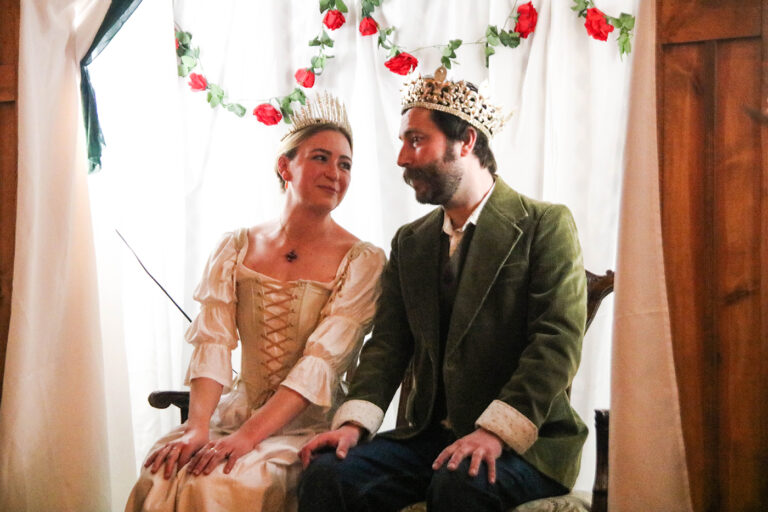
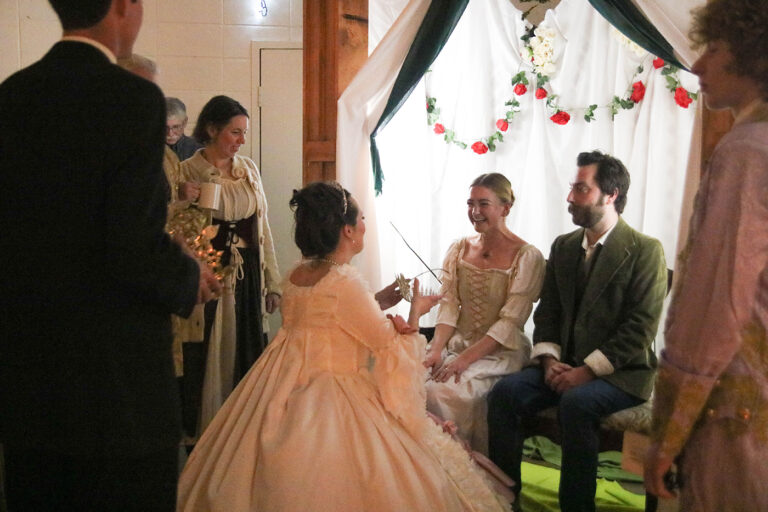
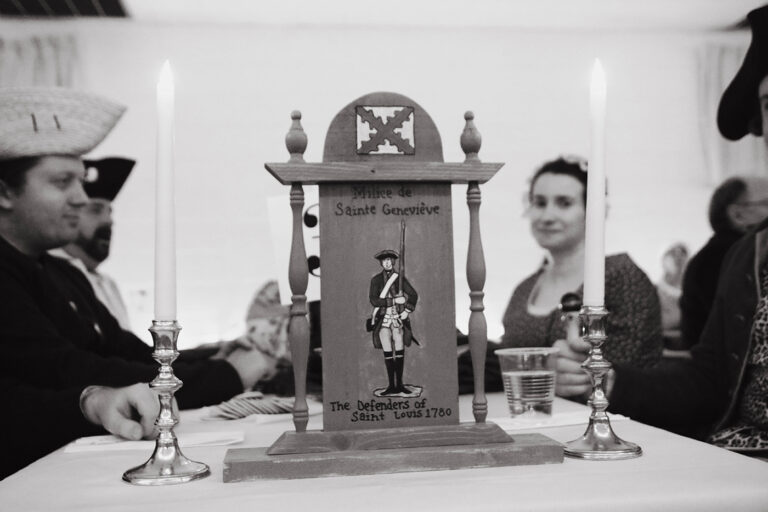
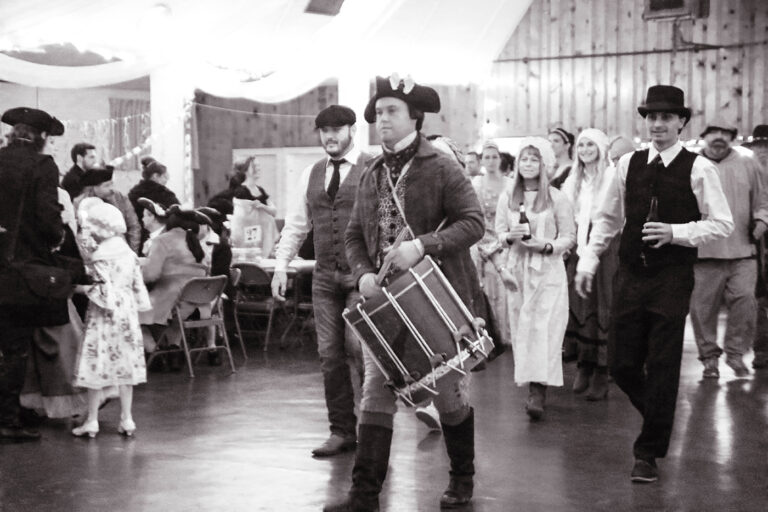
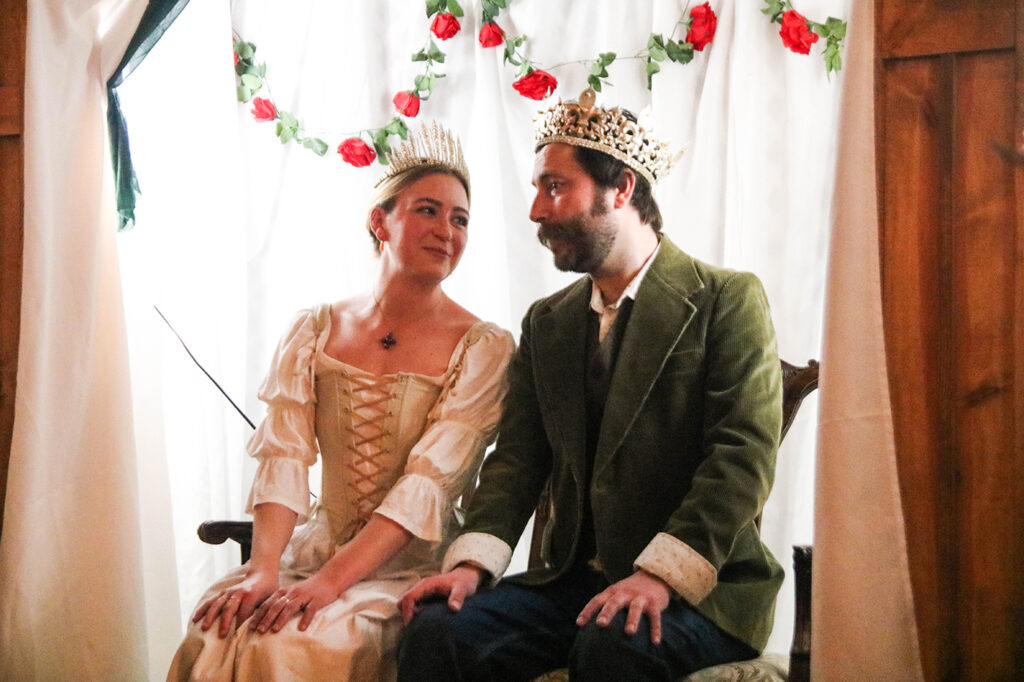
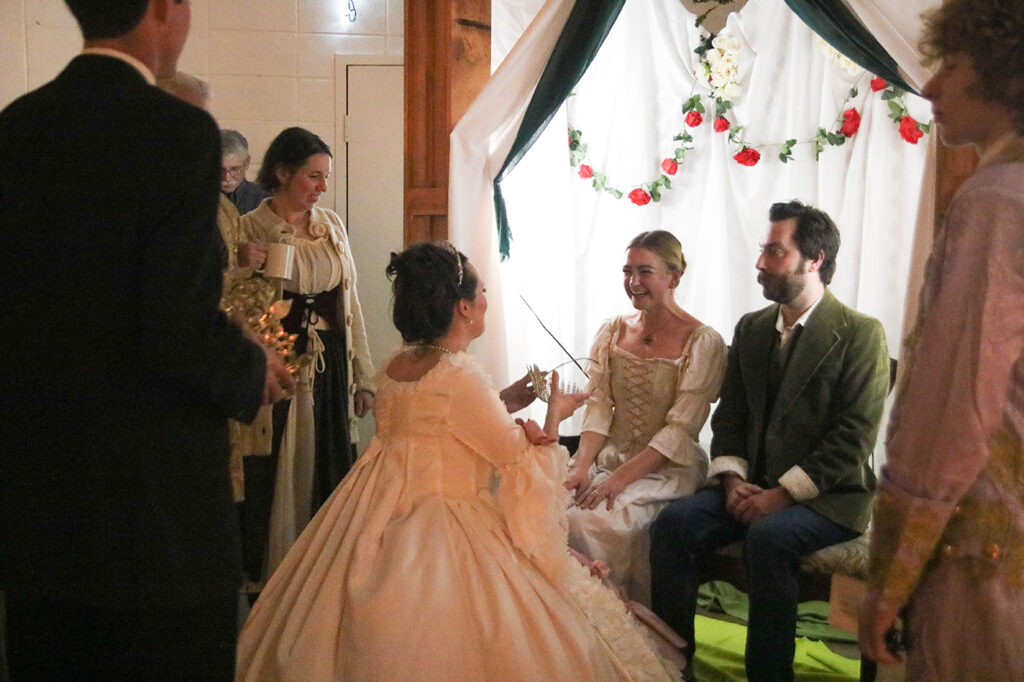
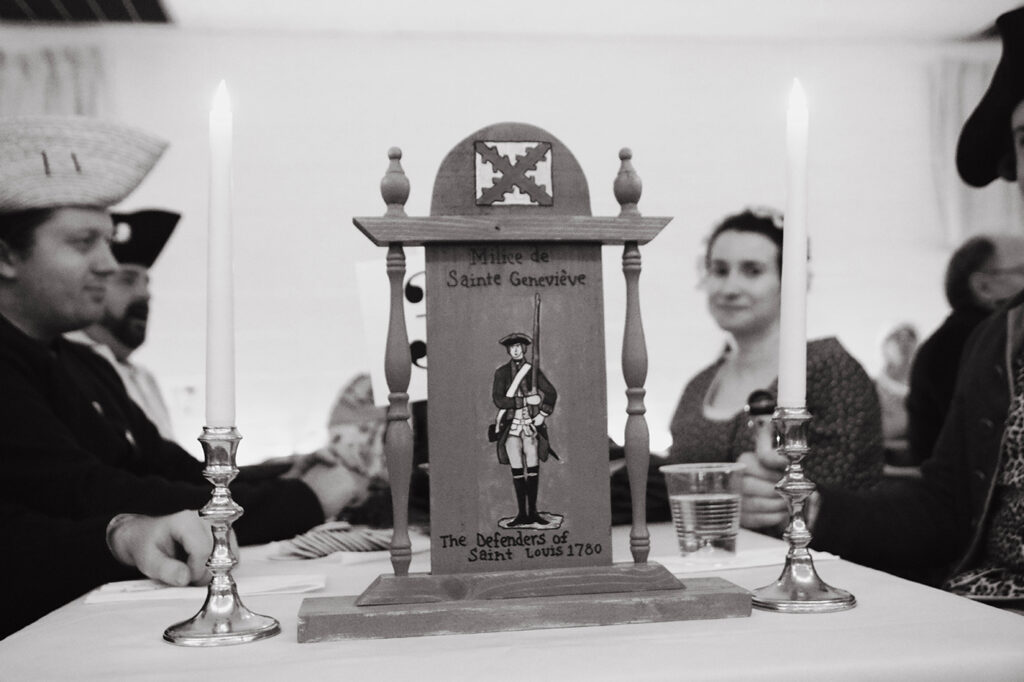
The King Cake Ceremony represents the evening’s dramatic centerpiece. During the second intermission, Galette des Rois is distributed to adult gentlemen present (and a separate cake to teenage guys). Traditionally a bean was hidden in the cake; today a plastic baby Jesus serves this purpose. The gentleman who discovers the figurine in his slice becomes King for the year. He then chooses a Queen from among the ladies present. The newly crowned King and Queen—escorted by traditionally dressed milice (militia)—promenade across the dance floor while the audience applauds and bows before them.
But there’s a twist: Since 1996, during Leap Years, the roles reverse. Female guests sample the cake, resulting in a Queen who then chooses her King. This modern adaptation maintains tradition while acknowledging contemporary sensibilities, and in 2015, AAA Midwest Traveler recognized the Sainte Geneviève Queen’s Ball as an official Midwest Travel Treasure.
The crowned royalty aren’t just ceremonial figureheads for the evening—they reign over the next year’s major festivals, presiding over events like June’s French Heritage Festival and December’s Holiday Christmas Festival. Additional honors include Le Chevalier and La Dame of Sainte Geneviève, honorary titles bestowed upon individuals who’ve made significant contributions to the local community.
This King Cake tradition directly connects Sainte Geneviève’s celebration to broader French Catholic culture including New Orleans Mardi Gras, French Canadian traditions, and European Epiphany celebrations. For visitors familiar with Louisiana’s King Cake customs, the Sainte Geneviève version provides fascinating perspective on the tradition’s origins and original context. For those unfamiliar with King Cake entirely, it’s delightful introduction to centuries-old custom that makes random chance (who gets which cake slice?) determine community leadership roles—democratic selection through divine lottery, if you will.
250+ Years of Continuous Tradition: From Colonial Homes to VFW Hall
As said above, the King’s Ball isn’t recent revival or invented tradition—it’s genuine cultural continuity stretching back over 250 years to Sainte Geneviève’s earliest days as French colonial settlement. When French Catholics settled this region in the early 1700s, they brought European customs including the Bal de Roi (King’s Ball) celebrating Epiphany and marking the traditional close of the Christmas season. Colonial residents, area farmers, trappers, Indigenous peoples, and enslaved persons all participated in the festivities featuring music, dancing, food, and the selection of royal personage to represent the town at various activities for the coming year.
Originally, according to ball organizer Mickey Koetting, the King’s Ball was held in the home of Sainte Geneviève’s oldest female resident—intimate gathering reflecting small colonial population and limited public spaces. As the tradition evolved and the town grew, the celebration moved to larger venues. The tradition eventually died out for a period, but over 50 years ago community members resurrected the King’s Ball, and today it’s grown so popular that hundreds of participants fill the VFW Hall, the largest venue available in town.
This trajectory—from private colonial homes to modern VFW hall—illustrates how living traditions adapt to changing circumstances while maintaining core elements. The location changed. The date shifted from January 6th to the first full weekend in February. Plastic baby Jesus figurines replaced traditional beans. But the essential celebration remains: communal dancing, traditional music, French colonial costumes, King Cake with hidden prize, crowning of royalty, and the closing of Christmas season with joyful festivities that strengthen community bonds and cultural identity.
Regional Context: Three Twelfth Night Celebrations Along the Mississippi
Understanding the King’s Ball requires recognizing its place within broader regional French colonial culture along the Mississippi River. Sainte Geneviève wasn’t an isolated outpost—it was part of a network of French settlements on both sides of the river, all sharing common culture, traditions, and celebrations.
Today, three Twelfth Night celebrations continue in the region, each marking the end of the Twelve Days of Christmas and the beginning of the social season that culminates with Mardi Gras:
Twelfth Afternoon Ball (St. Louis) – Held at Gateway Arch National Park (Visitor Center mezzanine level, formerly at the Old Courthouse) in early January, typically the first Saturday after New Year’s. This free, afternoon event features Dennis Stroughmatt et L’Esprit Creole providing live music, professional dance calling by Deborah Hyland, food demonstrations by culinary historian Suzanne Corbett, and living history interpreters in authentic 18th-century clothing. The ball highlights music and dances from specific historical years (changing annually—recent balls featured 1768, 1770, 1772, 1773, etc.), emphasizing St. Louis’s French colonial heritage. Visitors may drop in to observe at any time during the event, which typically runs from noon to 4:00 or 5:00 PM.
Twelfth Night Ball (Prairie du Rocher, Illinois) – Held at the American Legion Hall on the first Saturday in January, this evening celebration runs from 7:00 PM or 8:00 PM to midnight. Organized by La Guiannée Société, this tradition dates to Prairie du Rocher’s founding in the early 1700s, died out during World War II, and was revived in 1976 during the U.S. Bicentennial. Unlike St. Louis’s free afternoon demonstration, Prairie du Rocher’s is a full participatory ball with admission ($10 per person, $30 per family). Music is provided by Cousin Curtis and the Cash Rebates, an old-time string band that teaches and calls square dances, line dances, and reels. The cake ceremony serves all gentlemen present, with four beans hidden inside determining the King and his court (who then select their queen and ladies). In leap years, roles reverse—the cake goes to the ladies, who select the King. This celebration draws about 300 attendees and is explicitly understood as continuing tradition rather than historical reenactment, maintaining an unbroken cultural link to the original French settlers.
King’s Ball (Sainte Geneviève) – Held on the first full weekend in February at the VFW Hall, Saturday evening starting at 7:00 PM. This moved from the traditional Epiphany date to February to allow enthusiasts to attend all three regional celebrations without conflicts. Features Dennis Stroughmatt et L’Esprit Creole providing traditional Illinois Creole music, professional dance calling by Deborah Hyland, and King Cake ceremony during first intermission. Costumes encouraged but not required. Proceeds benefit the Foundation for Restoration of Ste. Genevieve. The crowned King and Queen reign over subsequent festivals including the French Heritage Festival and Holiday Christmas Festival. Since 1996, leap years feature a Queen’s Ball where ladies receive the cake and select their King.
The timing coordination is deliberate: St. Louis’s early January afternoon ball, Prairie du Rocher’s first Saturday in January evening ball, and Sainte Geneviève’s first full weekend in February celebration allow dedicated enthusiasts to attend all three events, experiencing variations on the same tradition in different communities. This reflects both historical reality (colonial French culture spanning the river rather than respecting later political boundaries) and modern practicality (allowing maximum participation by spreading festivities across multiple weekends).
The Music: Dennis Stroughmatt, L’Esprit Creole, and Illinois Creole Tradition
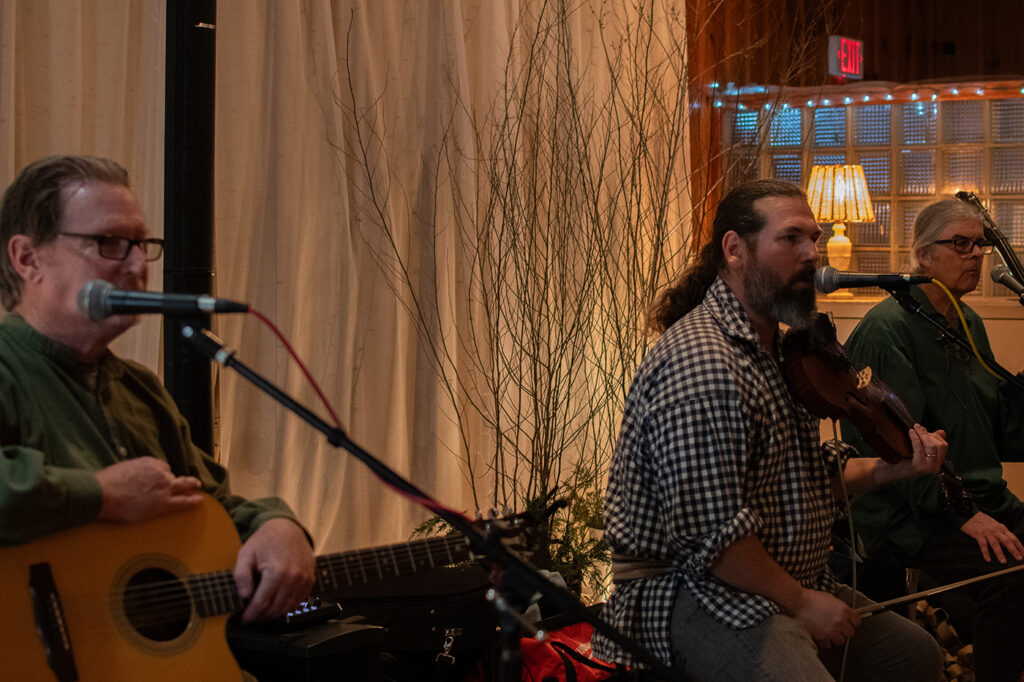
The King’s Ball isn’t background music event—the dancing is the point, and the music drives everything. Fabulous fiddler Dennis Stroughmatt and his band L’Esprit Creole provide traditional Illinois Creole music that’s been accompanying these dances for generations. Stroughmatt’s fellow musicians Doug Hawf and Greg Bigler help create authentic sound that connects contemporary celebration directly to historical roots.
“Illinois Creole” music represents the French-influenced traditional music of the Prairie du Rocher/Kaskaskia region across the river from Sainte Geneviève—the French colonial settlements in what’s now southwestern Illinois. This distinctive musical tradition blends French, Indigenous, African, and early American influences into unique sound characterized by fiddle-driven melodies, rhythmic patterns supporting specific dances, and cultural memory preserved through music when other historical records fade.
Stroughmatt isn’t just performing music—he’s continuing living tradition where specific tunes accompany specific dances, where rhythm and melody communicate instructions to dancers familiar with traditional patterns, and where musical performance connects 21st-century celebration to 18th-century colonial gatherings where similar fiddles played similar tunes for similar dances.
Professional dance caller Deborah Hyland serves crucial function: walking participants through each dance’s steps, calling moves as they happen, ensuring everyone can participate regardless of prior experience. The caller bridges gap between tradition (these specific dances with specific patterns) and accessibility (newcomers learning steps in real-time). Her instructions make the King’s Ball genuinely inclusive—you don’t need to know the Virginia Reel beforehand; you’ll learn it on the dance floor with patient guidance and communal encouragement.
This combination—traditional Illinois Creole music by expert musicians, professional caller providing instruction, and community atmosphere welcoming all ages and skill levels—creates environment where cultural tradition remains vibrant rather than becoming museum piece. The dances stay alive because people actually dance them, supported by music and calling that make participation possible and enjoyable.
The Dances: Virginia Reel, Paddle Dance, Schottische, and Old-Time Squares
What exactly are people dancing at the King’s Ball? The program features reels, squares, and other old-time dances—traditional patterns from colonial and early American periods that differ substantially from contemporary social dancing:
Virginia Reel – Longways formation where couples line up facing each other, then progress through series of movements including reeling (interlacing with partners), sashaying down the center, and casting off. The dance combines individual couple movements with large group coordination, creating kinetic energy as the entire line participates simultaneously.
Paddle Dance – Less well-known traditional dance involving specific stepping patterns and partner movements. The “paddle” refers to particular footwork that characterizes the dance.
Schottische – Partner dance with distinctive hopping step, combining European ballroom influences with folk dance traditions. Easier to learn than complex reels, making it accessible entry point for beginners.
Squares – Quadrille-style dances where four couples form square and execute called patterns including dos-à-dos, allemandes, promenades, and various figures. Square dancing feels familiar to many Americans but the King’s Ball versions follow older, more traditional patterns than modern square dance club routines.
These aren’t dances you learn from YouTube tutorials or practice in contemporary dance studios. They’re living traditions transmitted through community participation, learned by doing rather than studying, and kept alive precisely because events like the King’s Ball create contexts where they remain relevant and enjoyable.
The beauty of called dances is accessibility: professional caller tells you what to do when to do it, so you’re never lost or embarrassed. “Forward and back!” “Dos-à-dos!” “Down the center!” “Cast off!” The instructions come in real-time, matched to music, allowing even complete beginners to participate successfully. Yes, experienced dancers perform moves more smoothly, but the dances work because everyone—regardless of skill level—can execute the basic patterns following the caller’s directions.
This creates remarkable intergenerational atmosphere. One teenage girl was heard asking her friends, “Why don’t we dance like this anymore? It’s so much fun?” The question captures something important: these traditional dances involve actual social interaction, physical coordination, communal movement, and genuine fun that differs markedly from contemporary club dancing or formal ballroom styles. Young children dance with senior citizens. Teenagers partner with middle-aged adults. Some dances require partners, others don’t. The emphasis isn’t on individual performance but collective participation—everyone moving together through prescribed patterns that create both structure and spontaneity.
Costumes: French Colonial Authenticity Meets Practical Accessibility
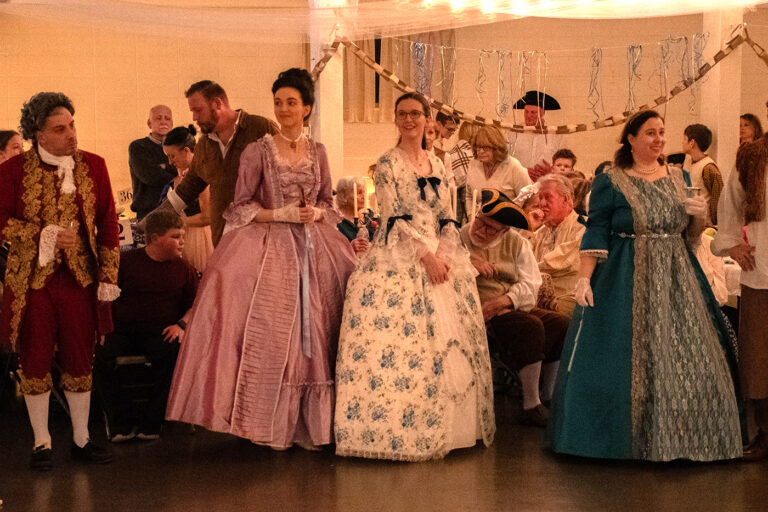
Costumes are encouraged but not required—crucial policy that makes the event accessible while still creating spectacular visual atmosphere. Most attendees do wear some type of traditional or formal wear, but the spectrum ranges from meticulously researched French colonial reproduction clothing to contemporary formal attire to simple white shirts and pants that nod toward period aesthetic without requiring major investment.
Easy French Peasant Costume Options:
For Women and Girls:
- White blouse (peasant-style or any white top)
- Peasant skirt or long simple skirt
- Apron (optional but adds authenticity)
- Simple shoes
- Hair in braid or simple style
For Men and Boys:
- White shirt
- Calf-length pants (rolled-up sweatpants work perfectly)
- Long white socks (soccer socks are ideal)
- Simple shoes
- Vest or suspenders (optional)
These basic elements create “French colonial peasant” aesthetic without requiring historical reproduction garments, extensive sewing skills, or major expense. The emphasis on white clothing—white shirts, white pants, white socks—creates cohesive visual effect when hundreds of people gather, suggesting colonial-era working-class dress without demanding strict accuracy.
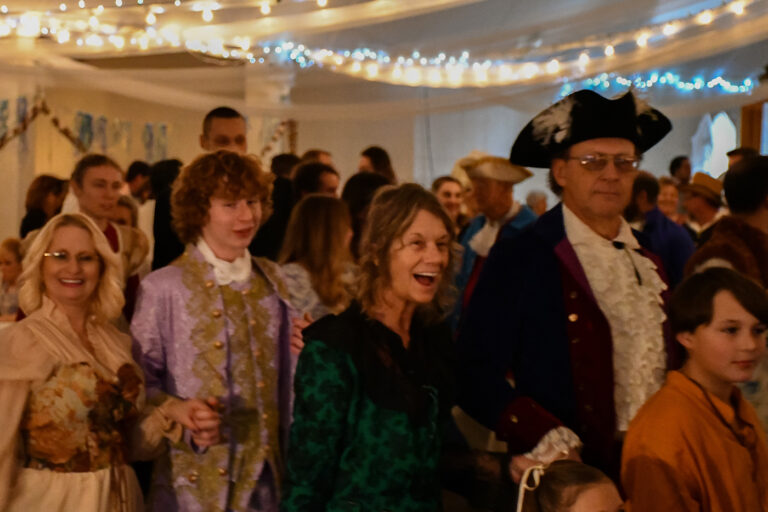
More serious historical reenactors and costume enthusiasts attend in elaborate period dress: reproduction French colonial civilian clothing, military uniforms, Indigenous-influenced hybrid garments reflecting frontier cultural exchange, and upper-class formal wear showing wealth and status distinctions from the colonial period. These impressive costumes provide visual richness and historical detail, but the event’s accessibility means elaborate costume isn’t entry requirement.
The result? Dance floor becomes living tableau: predominantly white peasant attire creates cohesive atmosphere punctuated by elaborate period costumes that add historical depth, all mixed with contemporary formal wear and casual dress that keeps the event welcoming rather than exclusive. The visual effect captures something important about cultural tradition—it adapts, includes, evolves, while maintaining recognizable connection to historical roots.
Master of Ceremonies: Bill Naeger and Local Character
Bill Naeger, local character and freelance photographer, typically serves as the event’s master of ceremonies. Naeger, who published the seminal photo book about the town with his wife Patti (“Ste. Genevieve, A Leisurely Stroll Through History”), brings insider knowledge, community connections, and personality that helps the King’s Ball feel like community celebration rather than formal performance.
In past years, Patti Naeger led Les Petits Chanteurs (The Little Singers), a group of children who sing French carols and folk songs as opening act. These young performers—dressed in costumes, singing traditional songs in French—set appropriate tone for evening ahead, demonstrating how cultural traditions pass to younger generations through active participation rather than passive observation.
The MC role requires balancing multiple functions: keeping evening flowing smoothly through multiple dances and intermissions, providing historical context and explanation for visitors unfamiliar with traditions, managing the King Cake ceremony with appropriate gravitas and humor, and maintaining festive atmosphere that encourages maximum participation. Local MCs like Naeger succeed because they understand both the formal traditions being observed and the informal community dynamics that make the event work socially.
Practical Details: VFW Hall, Snack Baskets, Cash Bar, and Proceeds
Location: VFW Hall, Sainte Geneviève (the largest venue available in town)
When: First full weekend in February, Saturday evening
Time: Dancing begins at 7:00 PM
Admission: [Check current ticket prices—proceeds benefit Foundation for Restoration of Ste. Genevieve]
What to Bring:
- Guests are welcome to bring baskets of snacks for their own enjoyment during the evening
- Cash for the bar (refreshments available for purchase)
Costumes: Encouraged but not required—wear French colonial costume, formal attire, or come as you are
Experience Level: No dance experience necessary—professional caller provides instructions for all dances
Ages: All ages welcome and encouraged—this is genuinely multi-generational event
The VFW Hall accommodates over 300 attendees, creating substantial crowd that generates energy and excitement while maintaining intimate community atmosphere. Unlike large concert venues or festival grounds, the hall keeps everyone close together—on the dance floor or watching from edges—creating shared experience rather than dispersed spectators.
The snack basket tradition reflects practical accommodation: it’s a long evening of dancing, people get hungry, and allowing personal snacks means no one has to leave early due to hunger while avoiding complexities of catering for 300+ people. It also creates casual, picnic-like atmosphere despite formal setting—families spread out snacks during intermissions, sharing food while socializing between dances.
Cash bar provides refreshments for purchase, generating additional revenue while keeping ticket prices reasonable. The bar serves practical function (dancing is thirsty work) and social function (gathering point between dances, facilitating conversation and community connection).
Proceeds benefit the Foundation for Restoration of Ste. Genevieve—nonprofit organization dedicated to preserving and restoring the town’s historic French colonial structures. This means attending the King’s Ball isn’t just entertainment; it’s direct support for cultural preservation work that maintains the physical structures and historical landscapes that make Sainte Geneviève’s French colonial heritage tangible and accessible.
Who Attends: Locals, History Enthusiasts, Cultural Tourists, and Dance Lovers
The King’s Ball attracts diverse crowd united by interest in cultural tradition, historical preservation, and genuine community celebration:
Local Families – Multi-generational Sainte Geneviève families for whom the King’s Ball is annual tradition, often attended for decades
French Colonial History Enthusiasts – People fascinated by early French settlements in North America and authentic cultural traditions
Historical Reenactors – Living history participants who view the King’s Ball as rare opportunity to attend period-appropriate social event
Traditional Dance Lovers – Contra dancers, square dancers, folk dance enthusiasts drawn to old-time dances rarely performed elsewhere
Cultural Tourists – Travelers seeking authentic regional traditions rather than manufactured tourist attractions
Mardi Gras Aficionados – People interested in King Cake traditions and French Catholic Epiphany celebrations beyond New Orleans context
Photographers and Artists – Visual artists drawn to spectacular costumes, colorful scenes, and cultural documentation opportunities
Couples Seeking Unique Date Nights – Partners wanting memorable evening different from typical dinner-and-movie routine
Families with Children – Parents wanting to expose kids to cultural traditions and multi-generational community events
The mix creates rich social atmosphere. You might find yourself dancing the Virginia Reel between a 10-year-old in colonial costume and a 70-year-old who’s attended every King’s Ball for 40 years. The professional photographer next to you might be documenting the event for historical preservation while the couple behind you is experiencing their first traditional dance event. This diversity of participants—unified by willingness to participate in communal cultural tradition—makes the King’s Ball feel alive rather than staged.
Beyond the Ball: Cultural Context and Historical Significance
The King’s Ball matters beyond providing entertaining February evening. It represents living connection to French colonial heritage that’s increasingly rare in North America. While French language, French architecture, and French place names survive throughout the Mississippi Valley and St. Lawrence Seaway, active cultural traditions—celebrations still observed, dances still danced, customs still practiced—are far less common.
Sainte Geneviève’s National Historical Park status (designated 2018) recognizes the town’s exceptional preservation of French colonial heritage, including both physical structures and intangible cultural traditions like the King’s Ball. The celebration demonstrates that historic preservation isn’t just maintaining buildings—it’s keeping cultural practices alive so contemporary communities maintain living relationships with historical identities rather than treating history as museum curiosity.
The King’s Ball also provides counterpoint to dominant American cultural narratives. American history education typically emphasizes English colonial settlements, westward expansion, and Anglo-American cultural dominance. French colonial history—despite encompassing vast territories from Quebec to New Orleans, from the Great Lakes to the Gulf of Mexico—receives far less attention. Events like Sainte Geneviève’s King’s Ball assert French colonial history’s continued relevance and contemporary communities’ active maintenance of cultural traditions that predate American independence.
For visitors from Quebec, Louisiana, or other French-heritage regions, the King’s Ball offers familiar elements in unexpected context—recognition that French colonial culture once extended throughout North America’s interior, connected by Mississippi River that served as highway rather than barrier. For visitors without French heritage, it’s window into rich cultural tradition that shaped American development even when that influence isn’t prominently featured in conventional histories.
Planning Your Visit: Combining the King’s Ball with Broader Sainte Geneviève Exploration
The King’s Ball occurs in February—typically slow tourism season but perfect timing for visitors wanting to experience Sainte Geneviève without summer crowds. Consider building full weekend around the event:
Friday Evening:
- Arrive in Sainte Geneviève
- Check into lodging (MorLy Cottage, Main Street Inn, or other accommodations)
- Dinner at local restaurant (Audubon’s, American Custard Co., depending on what’s open Friday)
- Evening walk through downtown historic district
Saturday:
- Morning coffee at Birdie’s or Common Grounds.
- Daytime touring of National Park historic houses (check winter hours)
- Lunch at downtown restaurant (Sirros, The Anvil, QRSTea, Stella and Me)
- Afternoon costume preparation or relaxation
- OR afternoon visit to Chateau Ste. Genevieve Winery to stock your basket with local meats and cheeses for the dance
- Early dinner before the ball
- King’s Ball at VFW Hall (7:00 PM start)
- Late evening socializing with other ball attendees
Sunday:
- Breakfast/brunch at local establishment
- Final historic site touring or antique mall browsing before departure
February weather in Missouri can be cold, so pack appropriate clothing for outdoor historic site touring while bringing or preparing ball costume separately. Many lodging options offer full kitchens or coffee facilities, useful for self-catering breakfasts before full days of activities.
If you’re seriously interested in French colonial traditions, consider attending multiple regional King’s Ball celebrations—St. Louis’s afternoon courthouse event (typically early January), Prairie du Rocher’s Illinois celebration (Epiphany evening), and Sainte Geneviève’s February ball. This creates unique cultural tourism itinerary exploring variations on the same tradition across different communities over several weeks.
Video Preview: See the King’s Ball Before You Go
For those uncertain whether the King’s Ball aligns with their interests, video documentation provides preview of atmosphere, dancing, costumes, and overall experience: 2023 Kings Ball in Ste Genevieve Part 1 – YouTube
The video captures the energy, music, and community spirit that make the King’s Ball special. Last year, we put an emphasis on decoration and lighting, so ignore the fluorescent lighting. That’s been addresses. Watch the dancers moving through traditional patterns, the variety of costumes from simple to elaborate, the multi-generational participation, and the King Cake ceremony. The footage conveys what written descriptions can only approximate: the living, joyful, communal nature of authentic cultural tradition.
Why the King’s Ball Matters: Preserving Living Tradition in Modern America
In an era when “cultural events” often mean themed restaurant nights or heritage festivals invented for tourism promotion, the King’s Ball stands out as authentic continuation of 250+ year-old tradition maintained by local community for its own reasons, with visitors welcomed but not catered to exclusively.
The celebration matters because:
It demonstrates cultural continuity—direct line from 18th-century French colonial settlers to 21st-century community maintaining their traditions
It keeps traditional arts alive—the dances, music, and customs survive through practice rather than preservation in museums or archives
It builds community bonds—multi-generational participation creates connections across age groups that contemporary society often segregates
It asserts cultural identity—active maintenance of French colonial heritage despite being surrounded by dominant Anglo-American culture
It educates through participation—attendees learn history by experiencing traditions rather than reading about them
It adapts while preserving core elements—the tradition evolves (Leap Year Queen’s Ball, modern venues, adjusted timing) while maintaining essential character
For Sainte Geneviève residents, the King’s Ball isn’t tourist attraction—it’s community celebration that reinforces local identity and cultural heritage. For visitors, it’s rare opportunity to participate in authentic cultural tradition, learning through experience rather than observation, and contributing to tradition’s continuation through attendance and engagement.
Come Dance, Crown Royalty, and Celebrate 250 Years of French Colonial Tradition
The King’s Ball invites participation in living history—not static museum display but dynamic cultural tradition that’s survived centuries because it remains joyful, meaningful, and central to community identity. On the first full weekend in February, join hundreds of revelers in the VFW Hall for an evening of traditional Illinois Creole music, old-time dances, elaborate costumes, and the ceremonial serving of King Cake that will crown royalty to reign over the coming year’s festivals.
No dance experience required—professional caller walks everyone through steps. Costumes encouraged but not required—white shirt and pants suffice if elaborate colonial dress isn’t available. All ages genuinely welcome—this is rare event where children, teenagers, adults, and seniors all dance together creating multi-generational celebration that’s increasingly uncommon in age-segregated modern society.
Support cultural preservation through attendance—proceeds benefit the Foundation for Restoration of Ste. Genevieve, ensuring the historic structures and landscapes that make this cultural heritage tangible will survive for future generations.
Experience Sainte Geneviève’s answer to Mardi Gras—the King Cake, the Epiphany traditions, the French colonial customs that predate Louisiana’s famous celebrations and continue in Missouri’s oldest European settlement. Swing your partner through the Virginia Reel, dos-à-dos through squares, schottische with strangers who’ll become friends by evening’s end, and understand through experience rather than explanation what it means to maintain cultural traditions across centuries of social change.
The King’s Ball awaits the first full weekend in February—where history comes alive through music, dancing, costumes, King Cake, and community celebration that’s as authentic as cultural traditions get in modern America. Come revel in the historic French tradition, help crown next year’s royalty, and participate in 250+ years of continuous cultural heritage that refuses to become museum piece precisely because it remains vibrant, joyful, and genuinely communal.
For tickets, current information, and additional details, contact the Foundation for Restoration of Ste. Genevieve or check their website. Video preview available at: https://www.youtube.com/watch?v=btJH00lYbBU
This is the King’s Ball—Sainte Geneviève’s oldest tradition, Missouri’s most authentic French colonial celebration, and one of North America’s rare surviving Epiphany balls where community still gathers to dance old-time patterns, share King Cake, crown royalty by lottery hidden in dessert, and close Christmas season the way French Catholic colonists did 250 years ago. Don’t miss it.



Sorry, no records were found. Please adjust your search criteria and try again.
Sorry, unable to load the Maps API.