

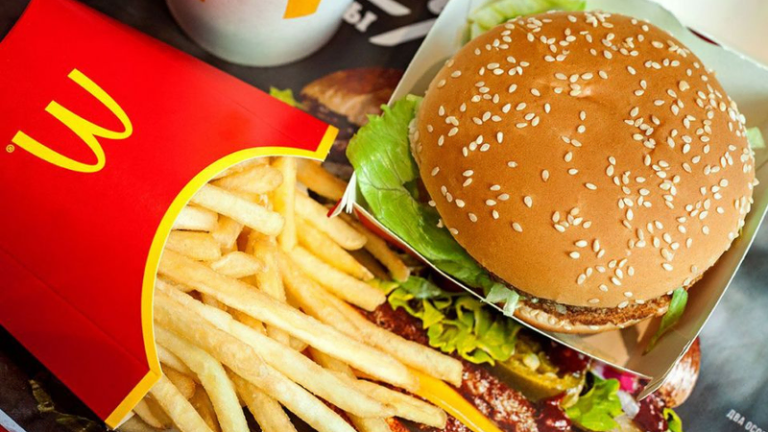
McDonald’s Sainte Geneviève – Fast Food Slows Down and Adapts to Small-Town Sensibilities
Every American knows McDonald’s—the golden arches, the Big Mac, the French fries, the relentless standardization that means a Quarter Pounder in Miami tastes identical to one in Seattle. Corporate consistency is the entire point: you know exactly what you’re getting regardless of location. Except when you don’t. Except when a McDonald’s location in a small historic town operates just differently enough that it stops being generic fast food and becomes something more interesting—a franchise that adapted to local expectations rather than imposing corporate uniformity.
Sainte Geneviève’s McDonald’s, tucked into Missouri’s oldest town, is that exception. It serves the same menu corporate requires, features the same branding, and technically operates as the McDonald’s you know. But walk inside and you’ll notice differences: the atmosphere is relaxed rather than rushed, the interior resembles a lounge more than typical fast-food dining room, your food arrives at your table rather than being thrust across a counter, and you’re greeted with genuine smiles rather than harried efficiency. Even the menu bends slightly toward local preferences—you can order a basket of fries alongside a meal featuring two Filet-O-Fish sandwiches, a combination reflecting small-town appetites and the kind of menu flexibility corporate McDonald’s typically discourages.
It’s nothing groundbreaking. It won’t revolutionize how you think about fast food. But it’s different enough to be notable, and in a town where French colonial architecture and historic preservation define the atmosphere, even McDonald’s found ways to fit in rather than simply arrive. There’s something special here, even at the McDonald’s.
The European Model in Rural Missouri
Describing Sainte Geneviève’s McDonald’s as “more akin to something you’d find in Europe” captures the essential difference. European McDonald’s locations, while maintaining menu similarities to American versions, typically operate with different service models and cultural expectations. Table service is common in many European locations. The atmosphere encourages lingering rather than eating quickly and leaving. Seating feels more like café than fast-food utility. The entire experience slows down, recognizing that food—even fast food—can be social and leisurely rather than purely functional.
Sainte Geneviève’s location embraces similar philosophy. The lounge-like interior suggests comfort rather than throughput optimization. When your meal arrives at your table rather than requiring you to stand at the counter balancing a tray, the transaction shifts from industrial efficiency toward hospitality. The relaxed atmosphere acknowledges that in small towns, McDonald’s functions as gathering place, not just feeding station.
This adaptation to local culture reflects an interesting franchise dynamic. McDonald’s corporate standards are notoriously rigid—portion sizes, preparation methods, store design all follow detailed specifications ensuring consistency across thousands of locations. But successful franchisees understand that some flexibility around the margins—service style, atmosphere, small menu accommodations—can make locations feel locally appropriate rather than corporate impositions.
In Sainte Geneviève, where locally-owned restaurants like Stella and Me, Audubon’s, and other establishments emphasize personal service and unhurried dining, a McDonald’s operating with typical fast-food assembly-line efficiency would feel jarringly out of place. By slowing down, adding table service, and creating lounge-like atmosphere, the location bridges the gap between franchise requirements and local expectations.
The Filet-O-Fish Phenomenon
The menu accommodation—a basket of fries with a meal featuring two Filet-O-Fish sandwiches—deserves attention because it signals localization within corporate standardization. Most McDonald’s locations discourage menu modifications beyond substitutions. The Filet-O-Fish itself is McDonald’s least-popular major sandwich, originally created to serve Catholic customers avoiding meat on Fridays but maintained as menu staple despite relatively low sales compared to beef burgers.
In Sainte Geneviève, with its Catholic heritage dating to French colonial settlement and its proximity to the Mississippi River where fish remains dietary staple, the Filet-O-Fish likely enjoys stronger sales than national averages. A meal built around two fish sandwiches suggests local demand that influenced menu offerings. The basket of fries—generous portions served in baskets rather than standard cardboard containers—further adapts to small-town expectations where people want value, substance, and presentation slightly elevated above typical fast-food packaging.
These aren’t radical innovations. Corporate McDonald’s likely approved every detail. But they represent franchise management paying attention to local preferences and making accommodations that improve customer satisfaction within allowable parameters. It’s the kind of localization that makes residents feel their McDonald’s isn’t quite the same as every other McDonald’s—it’s theirs, adapted to them.
Table Service: The Game-Changing Detail
Of all the ways Sainte Geneviève’s McDonald’s differs from typical locations, table service most dramatically changes the experience. Standard McDonald’s service follows the fast-food model: order at counter, receive number, wait for your number to be called, pick up your tray, find seating, eat, bus your own table, leave. This system maximizes efficiency, minimizes labor costs, and keeps customers moving through quickly.
Table service inverts this entirely. You order at the counter (or increasingly, at digital kiosks), take a number to your chosen seat, and wait while staff deliver your food directly to your table. This simple change transforms the experience in multiple ways:
It Makes You a Guest Rather Than a Customer – Having food brought to your table, even at McDonald’s, creates hospitality dynamic. You’re being served rather than just picking up an order.
It Slows the Experience Down – You’re not rushing to grab your food the moment your number is called. You sit, relax, wait comfortably, and receive your meal when it’s ready.
It Removes Awkwardness – No more juggling trays, balancing drinks, trying to hold the door while carrying food, or navigating crowded restaurants with full hands.
It Signals Different Purpose – The table service model indicates this location functions as community gathering place where people might sit and talk for a while, not just a pit stop between errands.
It Requires More Labor – Table service costs more in staff time than counter pickup, meaning the franchise prioritizes customer experience over pure efficiency.
For visitors from cities where McDonald’s means grab-and-go efficiency, the table service at Sainte Geneviève’s location creates memorable moment of cognitive dissonance: “Wait, McDonald’s is bringing my Big Mac to my table?” That surprise makes the location notable, conversation-worthy, and oddly charming.
The Lounge Atmosphere: Design That Doesn’t Rush You Out
McDonald’s dining rooms typically feature hard plastic seats, bright lighting, primary colors, and design elements psychologically encouraging customers to eat quickly and leave. This turnover focus makes sense in high-traffic locations where seating is limited and customer volume is high—you want people fed and gone so the next customers can sit.
Sainte Geneviève’s location apparently took different approach. Describing the interior as “more of a lounge” suggests more comfortable seating, potentially softer lighting, design elements that invite lingering rather than rapid departure. This makes practical sense in small-town context where customer volume rarely reaches levels requiring aggressive table turnover. If you’re not desperately needing to free up seats for waiting customers, why not make the existing customers more comfortable?
The lounge atmosphere also serves social function in small communities. McDonald’s locations in towns like Sainte Geneviève often become informal gathering places—morning coffee groups, retired folks meeting regularly, teenagers hanging out after school, travelers taking extended breaks. Comfortable seating and welcoming atmosphere support these social functions, positioning McDonald’s as community asset rather than just convenient food source.
This atmosphere contrasts sharply with Sainte Geneviève’s other dining options. Stella and Me offers intimate tearoom charm. Audubon’s provides upscale restaurant elegance. The Anvil serves pub food in casual bar setting. McDonald’s, with its lounge-like comfort and table service, fills a niche: relaxed, affordable dining where you can settle in without the formality of sit-down restaurants but with more comfort than typical fast food.
Greeted with a Smile: Service Culture in Small Towns
The description notes you’re “always greeted with a smile” at Sainte Geneviève’s McDonald’s. This matters more than it might seem. Fast-food service in busy urban locations often feels transactional and harried—overworked staff, long lines, customer impatience, and the grinding reality of low-wage service work in high-pressure environments. Smiles, when they appear, feel obligatory rather than genuine.
Small-town McDonald’s locations operate differently. Staff often know regular customers by name. They live in the same community they serve. The job becomes less anonymous and more personal. Lower customer volume reduces pressure and stress. These factors enable genuine friendliness rather than forced customer service performance.
For visitors, this friendliness contributes to overall impression of Sainte Geneviève as welcoming community. You’re not just a number in the drive-through—you’re a guest receiving genuine hospitality. The consistent smiles signal that even at McDonald’s, even in a corporate franchise, the human element hasn’t been entirely optimized away.
Why It’s Notable: The Power of Subtle Difference
Let’s be clear: Sainte Geneviève’s McDonald’s isn’t revolutionizing fast food. They’re not serving gourmet burgers, featuring local ingredients, or radically reimagining what McDonald’s could be. The food is standard McDonald’s—which, love it or hate it, means consistent quality, familiar flavors, and exactly what you expect from the menu.
But the subtle differences—table service, lounge atmosphere, menu accommodations, genuine friendliness—create experience meaningfully better than typical McDonald’s while remaining recognizably McDonald’s. It’s the Goldilocks version: different enough to be pleasant surprise, but not so different it stops being convenient fast food.
This matters for several reasons:
It Makes the Mundane Memorable – Visitors remember that Sainte Geneviève’s McDonald’s brought their food to the table. It becomes story, oddity, detail that makes the town more interesting.
It Serves Locals Well – Residents benefit from fast-food option that doesn’t feel hostile or purely transactional. The lounge atmosphere and table service make McDonald’s usable for casual socializing, not just quick meals.
It Fits the Town – A typical McDonald’s aggressively designed for maximum throughput would clash with Sainte Geneviève’s pace and atmosphere. This adapted version harmonizes better with local culture.
It Demonstrates Franchise Flexibility – The location proves that even highly standardized franchises can accommodate local preferences when management prioritizes customer experience and community fit.
It Provides Accessible Option – Not everyone wants upscale dining or intimate cafés. McDonald’s provides affordable, fast, familiar food for families, travelers on budgets, and people wanting simple meals without fuss.
Context: McDonald’s in Tourism Districts
Sainte Geneviève’s McDonald’s operates in interesting context. The town attracts tourists specifically for its French colonial history, National Park sites, wineries, and small-town charm. These visitors often seek authentic, local dining experiences—restaurants like Stella and Me, Audubon’s, and The Anvil that offer food connected to regional identity.
But tourism also creates demand for fast, affordable, familiar options. Families with children, travelers on tight budgets, people who’ve spent their meal budget on nice dinners and want cheap breakfast—all appreciate having McDonald’s available. The challenge is making fast food accessible without undermining the town’s historic character.
By operating with table service, comfortable atmosphere, and genuine hospitality, Sainte Geneviève’s McDonald’s manages to be useful without being offensive. It’s not trying to be something it’s not—it remains obviously McDonald’s. But it’s McDonald’s that made effort to fit in, to slow down, to recognize that even chain restaurants can adapt to local context.
Practical Information
Location: 706 Ste. Genevieve Drive
Hours: Typical McDonald’s hours (5:00 a.m. – 11:00 p.m. weekdays, and 5:30 a.m. – 11:00 p.m. on weekends)
Services:
- Dine-in with table service
- Drive-through
- Mobile ordering via McDonald’s app
- Standard McDonald’s menu
- Breakfast served until 10:30 a.m. (or as per corporate policy)
- Special menu items including two Filet-O-Fish meal with basket of fries
What to Expect:
- Table service for dine-in orders
- Lounge-like atmosphere with comfortable seating
- Friendly, personalized service
- Standard McDonald’s menu and food quality
- Slightly slower pace than typical McDonald’s (in a good way)
- Local menu accommodations
- Clean, comfortable dining room
- Family-friendly environment
Why Visitors Appreciate It:
Budget Travelers – Fast, affordable meals without sacrificing too much atmosphere quality.
Families with Kids – Familiar food kids will eat, comfortable seating, friendly service, and no pressure to rush.
Early Risers – Breakfast available earlier than most local restaurants open.
Road Trippers – Reliable stop for coffee, bathroom breaks, and quick meals without leaving town.
Locals – Gathering place for coffee groups, casual meals, and social connections.
Anyone Craving Familiar – Sometimes after days of trying new restaurants, you just want something you know. McDonald’s delivers that while still feeling pleasant.
The Sainte Geneviève Difference
Here’s what makes Sainte Geneviève notable: even at McDonald’s—the ultimate symbol of corporate homogenization and standardized experience—the town’s character influences operations. The same forces that preserved French colonial architecture, maintained small-town pace, and created community where shopkeepers know customers’ names somehow also shaped how McDonald’s operates.
It’s not that management made radical departures from franchise requirements. It’s that within allowable parameters, they chose table service over counter pickup, comfortable lounge seating over efficiency-optimized plastic, genuine smiles over scripted greetings, and menu flexibility over rigid standardization. These small choices accumulated into meaningful difference.
The result? A McDonald’s that feels like it belongs in Sainte Geneviève rather than being dropped there by corporate indifference. A fast-food location that serves its purpose—quick, affordable, familiar food—without violating the town’s atmosphere. A franchise that adapted to local culture rather than demanding local culture adapt to it.
There’s Something Special Here
The description concludes: “I guess you could say there’s something special here, even at our McDonald’s.” That’s exactly right, and it’s the perfect note to end on.
Sainte Geneviève is special because it preserved French colonial heritage while remaining living town rather than theme park. It’s special because locally-owned businesses thrive alongside franchises. It’s special because pace, hospitality, and community matter enough to influence even corporate operations.
That specialness extends everywhere—to the historic houses protected by the National Park, to the antique mall housed in a renovated factory, to the intimate café serving award-winning sandwiches, to the bed and breakfast filled with world-class art, and yes, even to McDonald’s.
So when you visit Sainte Geneviève exploring history and culture, when you need quick breakfast before touring National Park sites, when your kids are demanding familiar food, or when you just want coffee and comfortable seating for planning your day, stop by the local McDonald’s. Order your two Filet-O-Fish with a basket of fries. Settle into the lounge-like seating. Wait while staff bring your food to your table. Notice the genuine smiles. Recognize that even here, even at McDonald’s, Sainte Geneviève’s character shaped the experience into something slightly better than what you expected.
It’s nothing groundbreaking. But it’s different enough to be notable. And in a town where even the golden arches adapted to local sensibilities, that difference reveals something important about what makes Sainte Geneviève special: this is a place where community, hospitality, and quality of life matter enough to influence everything—even fast food.
gh to be notable. I guess you could say there’s something special here, even at our McDonald’s.

Sorry, no records were found. Please adjust your search criteria and try again.
Sorry, unable to load the Maps API.