

I’ll create an expanded description for Sassafras Creek Cabin in the same style as the other tourism articles:
Sassafras Creek Cabin – Where 1840s Authenticity Meets Modern Comfort in a Restoration Road Star Cabin Within Ste. Genevieve National Historical Park
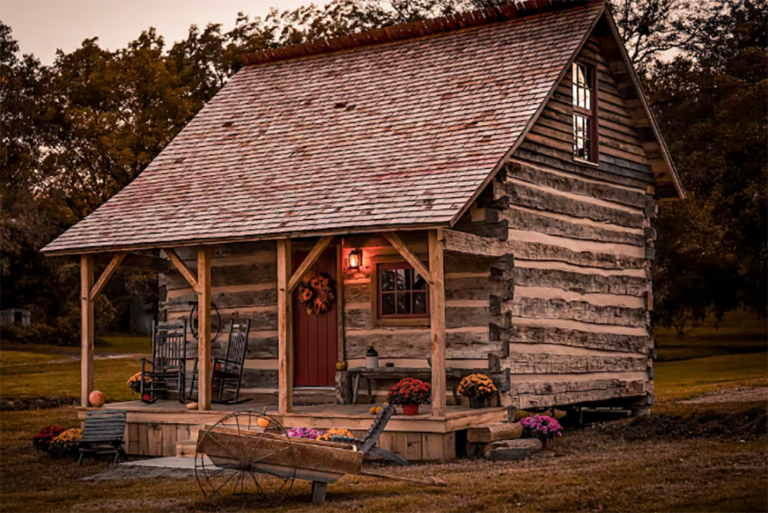
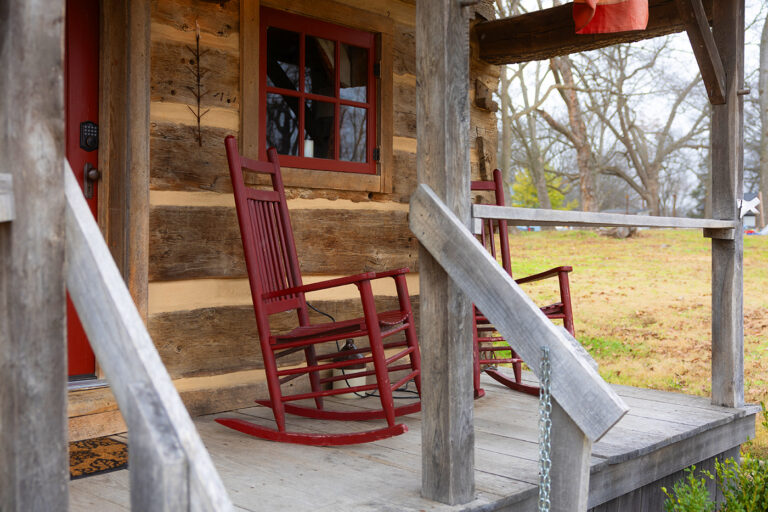
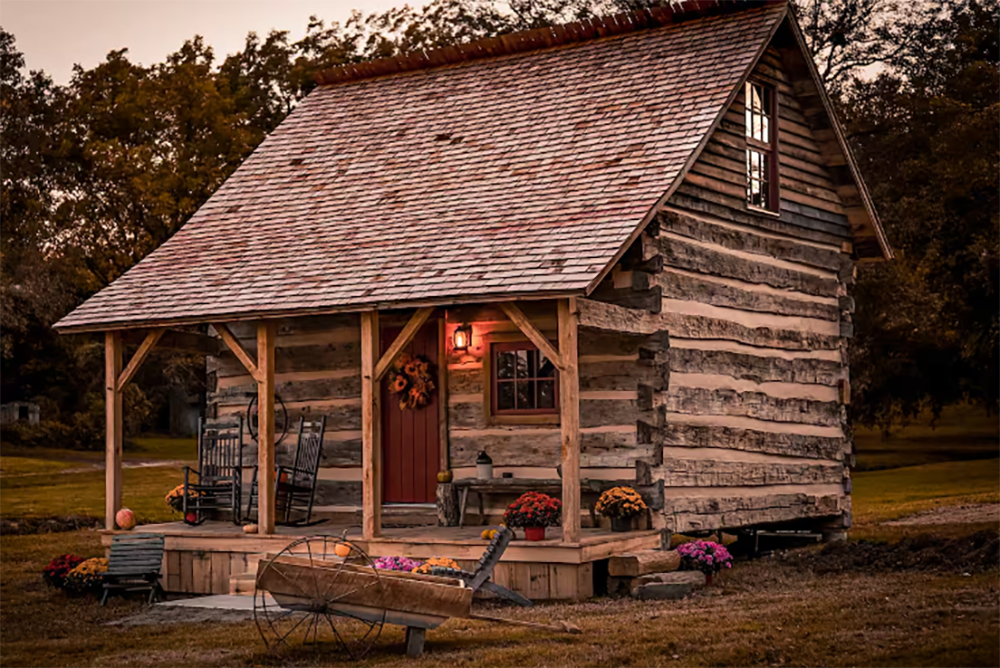
Most historic lodging involves staying in renovated buildings where modern amenities awkwardly coexist with period architecture—exposed beams above recessed lighting, original fireplaces beside flat-screen TVs, antique exteriors wrapped around thoroughly contemporary interiors. Sassafras Creek Cabin takes different approach: this circa 1840 log cabin, relocated to its current St. Marys Road property in June 2020 and featured in Season 1, Episode 3 of Restoration Road (streaming on Max), offers genuinely immersive historical experience where furniture, decor, and atmosphere authentically match the cabin’s time period. You’re not sleeping in building that merely looks old from outside while functioning like standard rental inside. You’re inhabiting space that feels genuinely transported from the 1840s—stepping back in time to experience what frontier cabin living actually meant, albeit with crucial modern comforts (climate control, proper plumbing, reliable electricity) that make the experience enjoyable rather than merely authentic.
The location enhances the historical immersion: Sassafras Creek Cabin sits between two houses in the newly formed Ste. Genevieve National Historical Park, placing you literally within the protected historic district rather than just near it. Walk out your door and you’re surrounded by 19th-century architecture, within easy walking distance of downtown and other historic tourist sites, positioned in landscape that still conveys the Missouri frontier character that defined Sainte Geneviève when this cabin was originally constructed. The adjoining Early American gift shop—Sassafras Creek Originals, housed in the circa 1850 Brooks House—extends the period immersion beyond your lodging into retail experience featuring reproduction goods, historical crafts, and items that complement rather than contradict the 1840s atmosphere.
For history enthusiasts, Restoration Road fans, National Park visitors seeking authentic period accommodation, and travelers who find standard hotels and vacation rentals disappointingly generic, Sassafras Creek Cabin delivers something increasingly rare: lodging that’s genuinely distinctive, historically significant, carefully curated, and positioned to maximize your engagement with Sainte Geneviève’s French colonial and early American heritage.
This isn’t just a place to sleep between tourist activities. It’s immersive historical experience, functioning museum of frontier domestic life, and comfortable base camp for exploring America’s oldest permanent European settlement west of the Mississippi River—all wrapped into one carefully restored 1840s log cabin that’s achieved minor celebrity through its Restoration Road television appearance.
The Star Power: Restoration Road Season 1, Episode 3
Before you even arrive at Sassafras Creek Cabin, you can watch its television debut. Restoration Road Season 1, Episode 3 (streaming on Max) documents the cabin’s restoration journey, showcasing the challenges, techniques, and craftsmanship involved in preserving and adapting historical log structures for modern use while maintaining period authenticity. The show provides context that enriches your stay—understanding what went into saving this cabin, what restoration decisions were made and why, and how the finished product balances historical accuracy with guest comfort.
This “star power” serves multiple purposes beyond bragging rights about sleeping in a TV-featured cabin:
Educational Foundation – The episode explains log cabin construction techniques from the 1840s, showing viewers (future guests) how these structures were built, what materials were used, why certain design choices made sense for frontier conditions, and how restoration work preserves historical integrity while addressing deterioration from 180+ years of existence. Arriving at Sassafras Creek Cabin after watching the episode means you understand what you’re seeing—recognizing specific restoration techniques, appreciating craftsmanship details, and knowing the building’s story beyond generic “old cabin” designation.
Expectation Setting – The show reveals exactly what the cabin looks like, how it’s furnished, what the interior space offers, and how period authenticity manifests in practical terms. Potential guests can watch the episode before booking, ensuring the cabin’s historical character aligns with their preferences. No surprise disappointments from expecting luxury amenities or modern design—you know exactly what you’re getting because you’ve literally seen it on television.
Conversation Starter – “We’re staying in the cabin from Restoration Road” provides immediate context when telling friends about your Sainte Geneviève trip. The television connection makes the cabin memorable and helps explain why you chose this particular accommodation over conventional options.
Authenticity Verification – The Restoration Road feature signals serious commitment to historical preservation. This isn’t superficial “rustic decor” styling or vague “historic charm” marketing. This is cabin whose restoration was deemed significant enough for documentary television coverage, implying genuine historical value and professional restoration standards rather than amateur attempts at period atmosphere.
For guests, the television appearance adds layer of interest and legitimacy. You’re not just staying in some random old cabin—you’re inhabiting structure whose preservation story was considered sufficiently compelling for national broadcast, whose restoration was executed professionally enough to withstand documentary scrutiny, and whose historical significance justified the effort and expense of relocation, restoration, and period-appropriate furnishing.
Watch the episode before your visit. Understand the cabin’s journey. Then experience the real thing in person, noticing details the show highlighted, appreciating craftsmanship the episode explained, and inhabiting space whose story you already know from television documentary but can now explore firsthand.
Circa 1840: What That Date Means for Sainte Geneviève Context
The cabin’s circa 1840 construction date places it in specific historical moment worth understanding for full appreciation of what you’re experiencing:
By 1840, Sainte Geneviève had existed for over 100 years (founded early 1700s by French colonists). The town had survived transfer from French to Spanish control (1762), back to French (1800), then to American governance through the Louisiana Purchase (1803). Missouri had achieved statehood in 1821. The frontier was pushing westward beyond the Mississippi River, making Sainte Geneviève less isolated outpost and more established community.
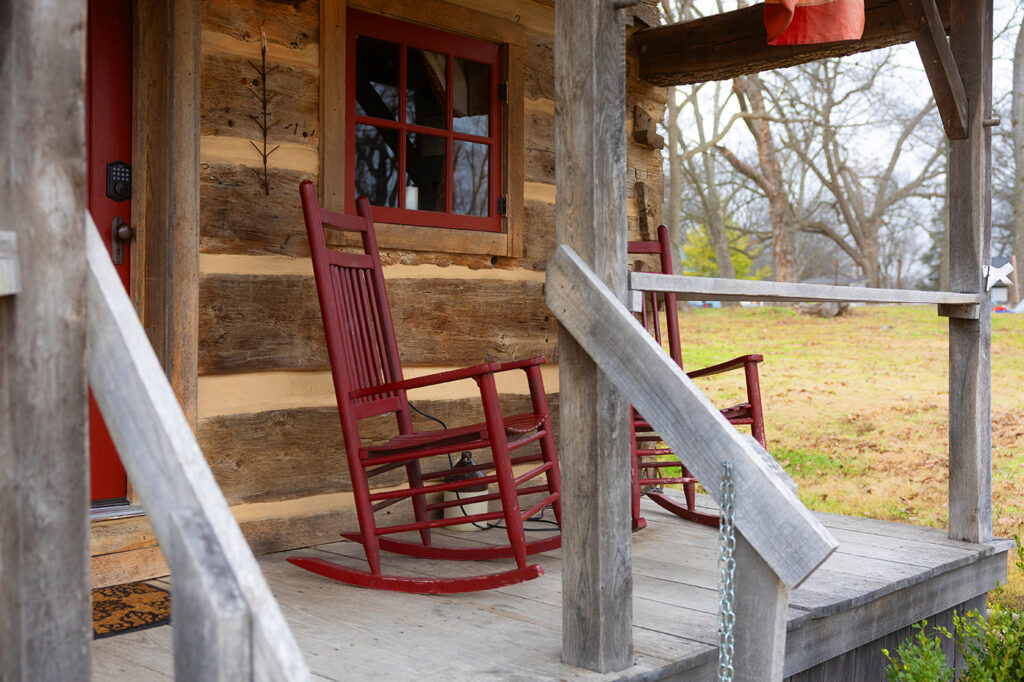
Log cabin construction in 1840 represented practical building method for people of modest means in still-frontier conditions. While wealthy Sainte Geneviève residents lived in substantial French colonial houses (the vertical log poteaux-sur-sole structures now preserved as National Park historic sites), ordinary settlers, farmers, and working families built simpler log cabins using techniques brought from Appalachia, Virginia, Kentucky, and other American frontier regions. These cabins—horizontal log construction with corner notching, chinking between logs, simple floor plans—differed architecturally from Sainte Geneviève’s French colonial buildings, reflecting the town’s demographic shift as American settlers arrived following the Louisiana Purchase.
Sassafras Creek Cabin thus represents American frontier architecture rather than French colonial style—important distinction in town famous for French heritage. The cabin shows what life looked like for ordinary 1840s Sainte Geneviève residents rather than wealthy French colonial merchants and landowners. It complements rather than duplicates the National Park’s French colonial houses, providing counterpoint perspective on 19th-century frontier domestic life.
The 1840 date also precedes the Civil War (1861-1865), meaning the cabin was built, occupied, and functionally part of daily frontier life before the war transformed Missouri and the nation. People who originally lived in this cabin experienced Missouri statehood’s early decades, witnessed westward expansion accelerate, participated in agricultural economy still dependent on human and animal power rather than mechanization, and inhabited world where Sainte Geneviève’s French colonial past was living memory for older residents rather than distant history.
Understanding this context—what 1840 meant, what log cabin construction signified, how this cabin fit into Sainte Geneviève’s broader architectural and social landscape—transforms your stay from “sleeping in old cabin” to genuine historical immersion where the building itself teaches you about frontier life, American settlement patterns, and social history beyond the elite French colonial narrative that dominates Sainte Geneviève’s tourism marketing.
June 2020 Relocation: Saving History by Moving It
The cabin’s June 2020 relocation to its current St. Marys Road property raises important question: why move a historic building rather than preserving it in original location? The answer reveals practical realities of historic preservation and demonstrates the owners’ commitment to saving threatened structures.
Historic log cabins face constant threats: deterioration from weather exposure, structural failure from foundation problems, demolition by property owners who view old buildings as obstacles rather than assets, neglect when maintenance costs exceed perceived value, and simple abandonment as rural populations decline and farmsteads empty. Without intervention, most 19th-century log cabins disappear—torn down, collapsed, burned, or simply rotted away until nothing remains.
Relocation preserves cabin while acknowledging original site is unavailable for various reasons: private property ownership by people unwilling to maintain historic structure, land development pressures, location too remote for practical tourist access, or structural condition requiring complete disassembly and reconstruction anyway (making relocation feasible during necessary restoration work).
The June 2020 move—during COVID-19 pandemic, notably—demonstrates serious commitment. Moving log cabins requires careful documentation of original construction, systematic disassembly numbering each log for reassembly, transport of heavy timber components, and skilled reconstruction ensuring structural integrity matches historical techniques. This isn’t casual weekend project but major undertaking requiring expertise, equipment, labor, and significant financial investment.
The chosen relocation site—St. Marys Road between two houses now within Ste. Genevieve National Historical Park boundaries—provides ideal context. The cabin sits in landscape that maintains historical character, surrounded by period architecture, accessible to tourists visiting National Park sites, and positioned where it contributes to visitors’ overall understanding of 19th-century Sainte Geneviève rather than standing isolated from historical context.
Relocation also enabled adaptive reuse as guest lodging while preserving historical integrity. The restoration work showcased in Restoration Road addressed structural issues, added necessary modern systems (climate control, plumbing, electrical) in ways that minimize visual impact on period character, and prepared the cabin for regular occupation by guests who’ll help fund ongoing maintenance through rental income. This creates sustainable preservation model where the cabin pays for its own upkeep rather than requiring perpetual subsidy from preservation-minded owners.
For guests, the relocation history adds layer of authenticity rather than detracting from it. This cabin was deemed worth saving, worth moving, worth restoring to functional use—testament to its historical significance and the owners’ dedication to preservation. You’re staying in building that someone cared enough about to rescue from likely demolition or collapse, investing substantial effort and resources to ensure 1840s frontier architecture survives for 21st-century visitors to experience firsthand.
Period Furniture and Decor: Authentic 1840s Atmosphere
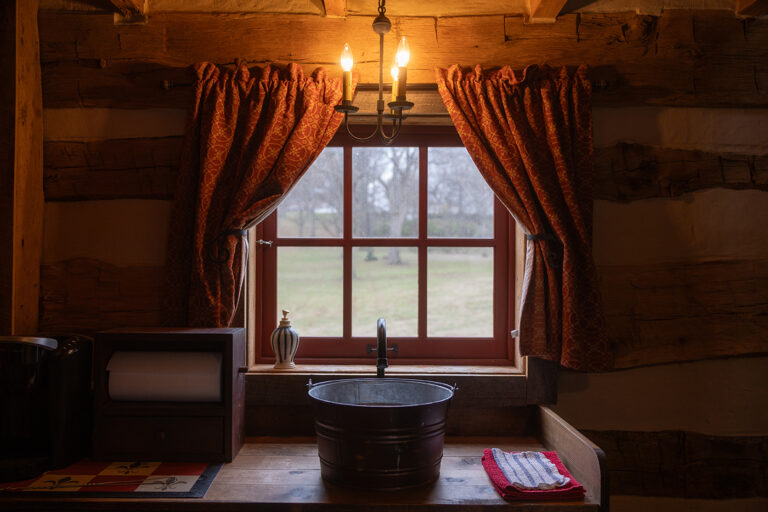
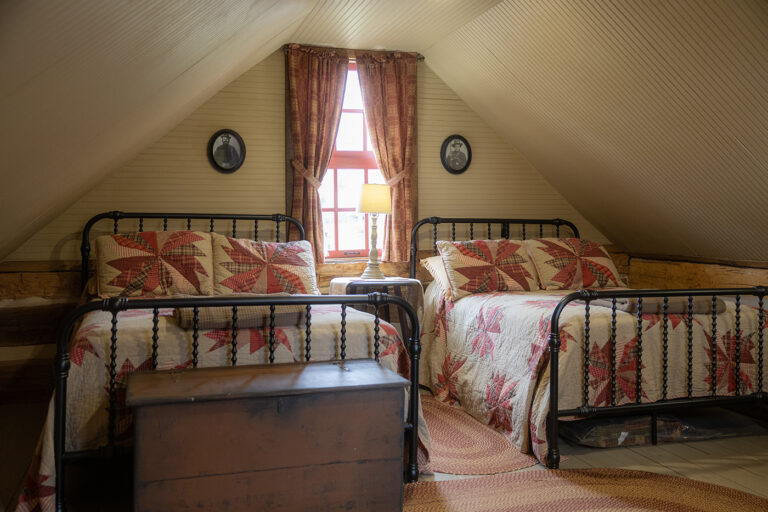
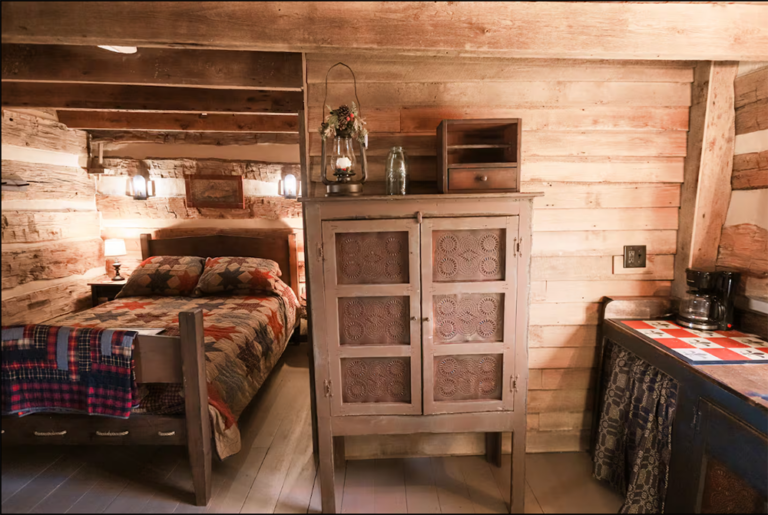
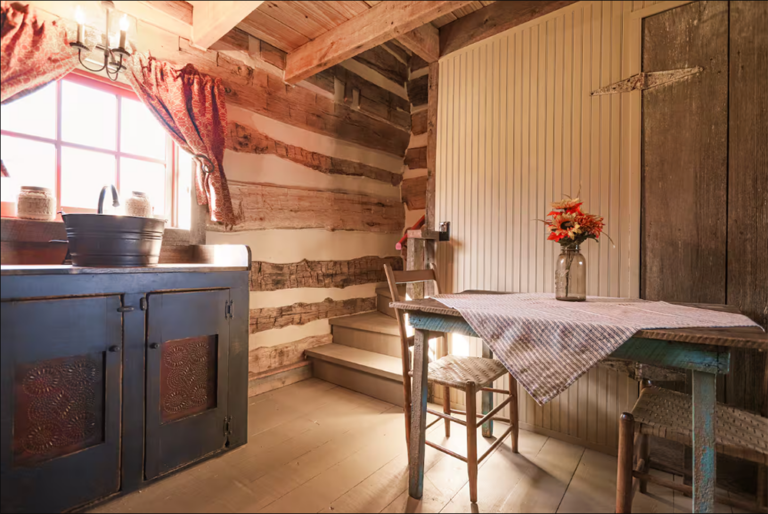
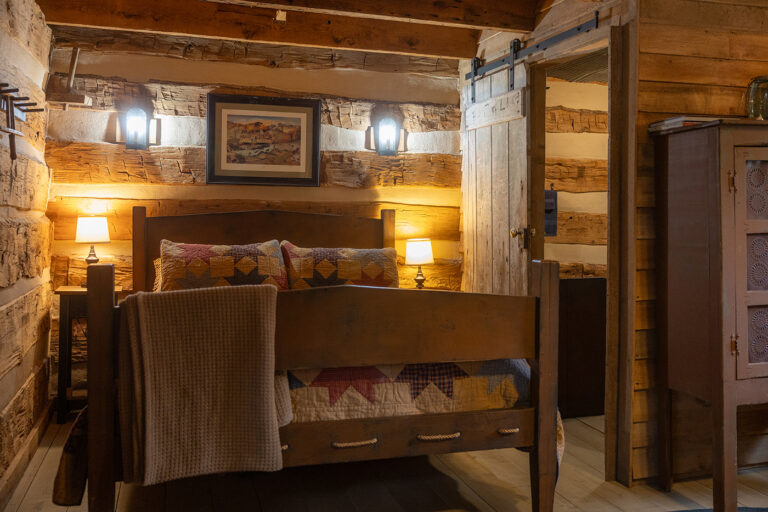
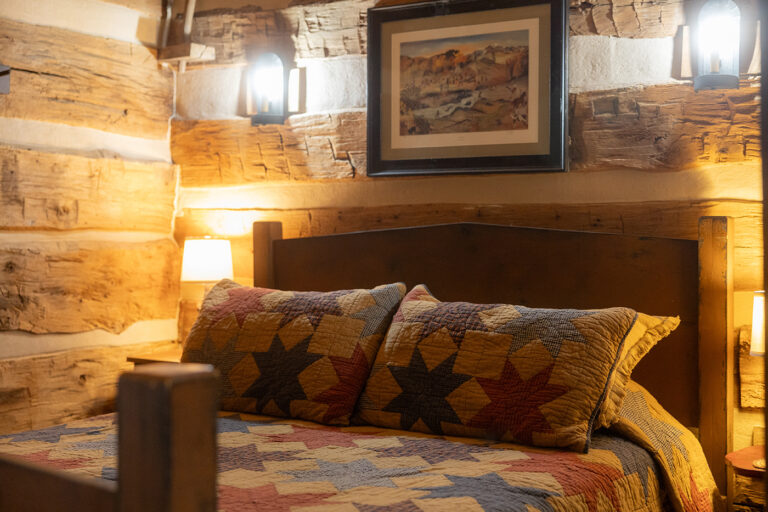
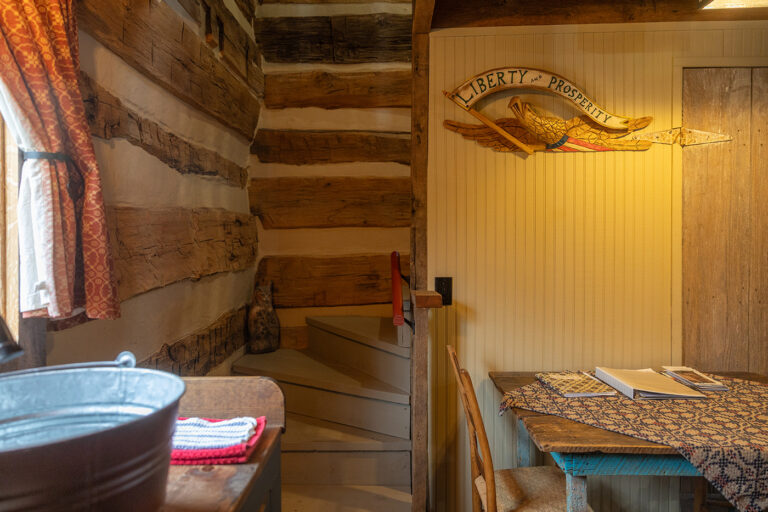
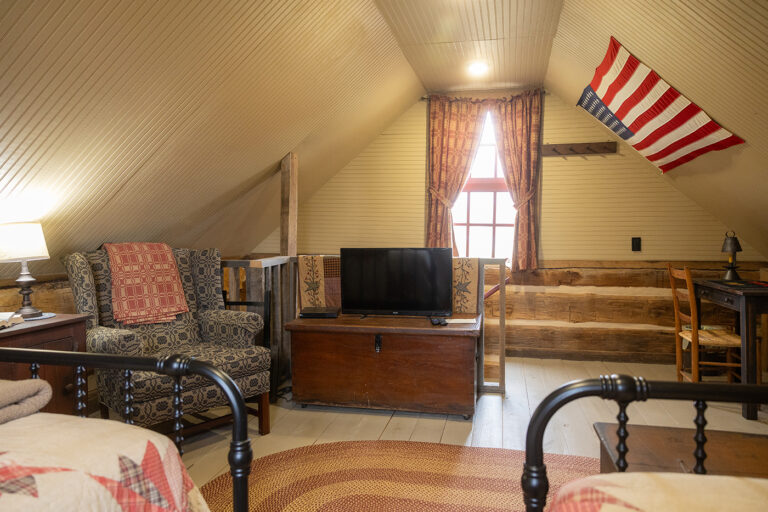
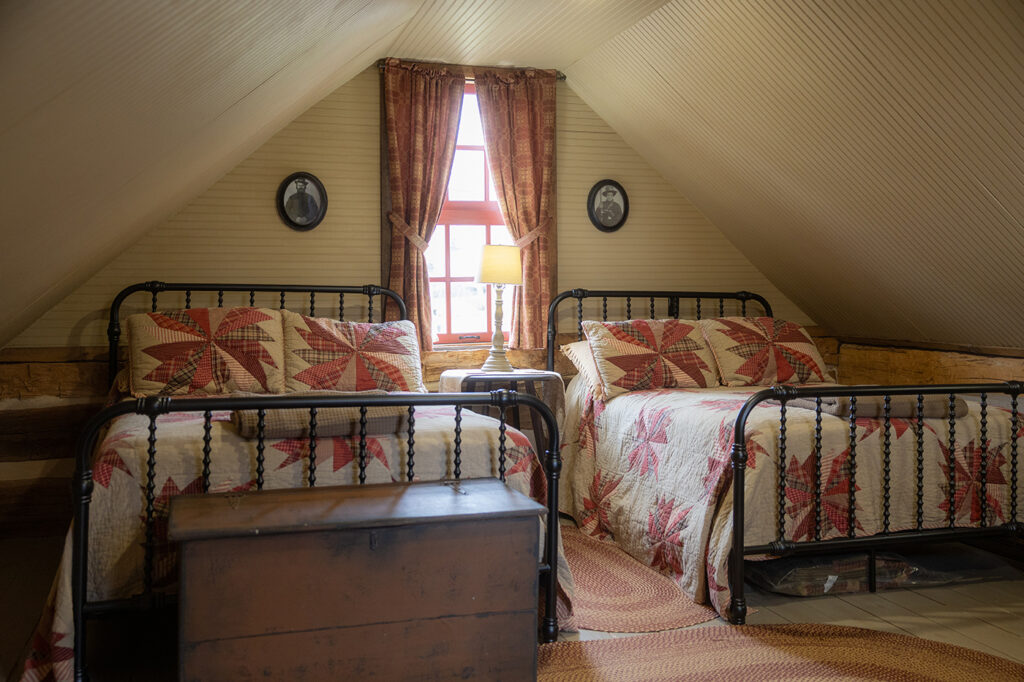
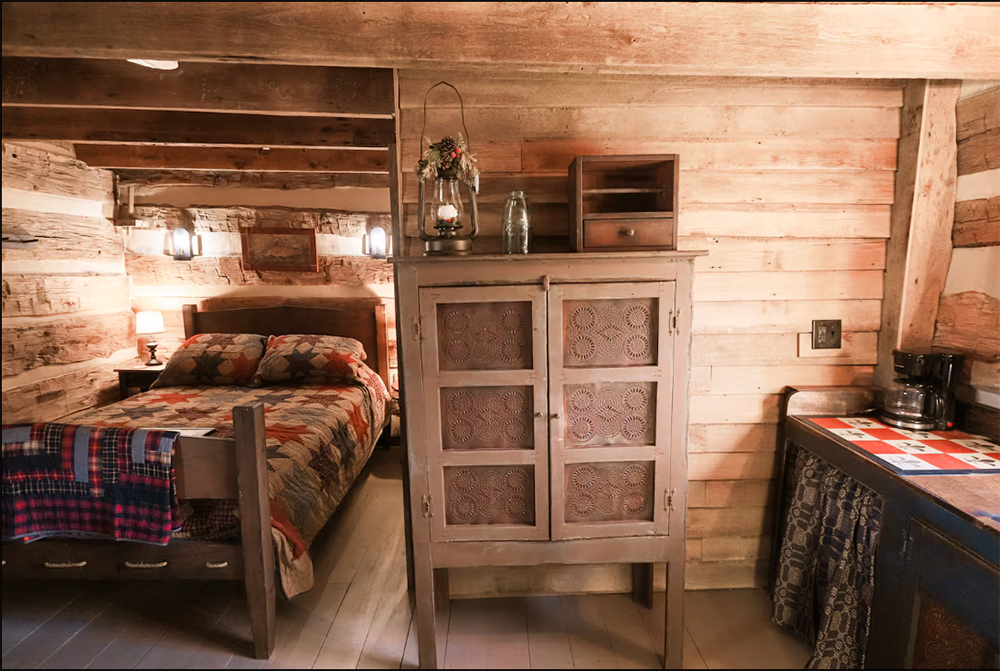
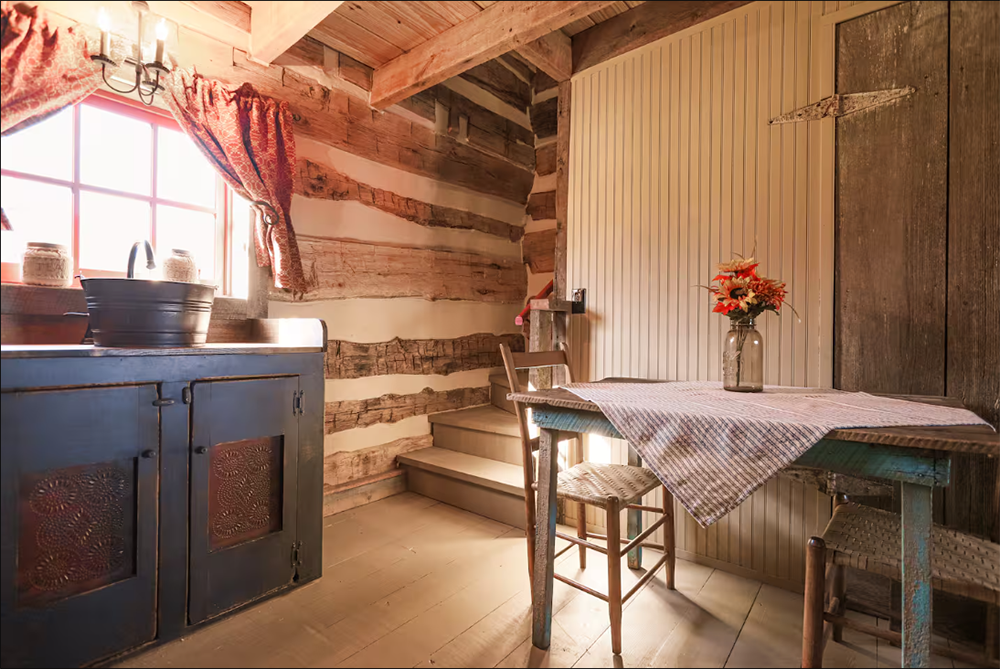
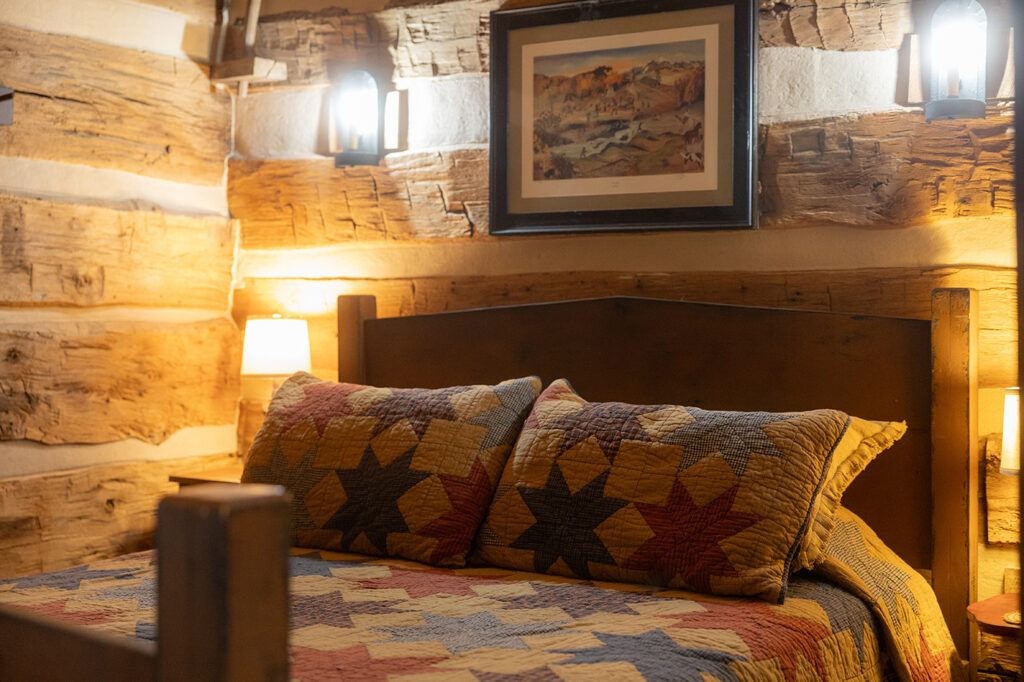
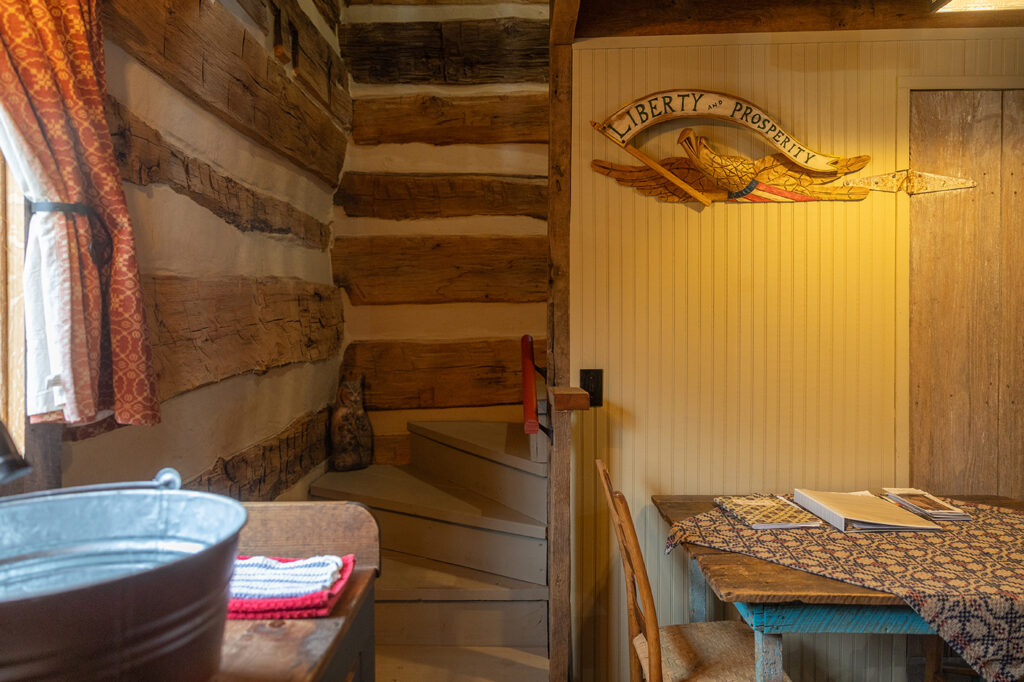
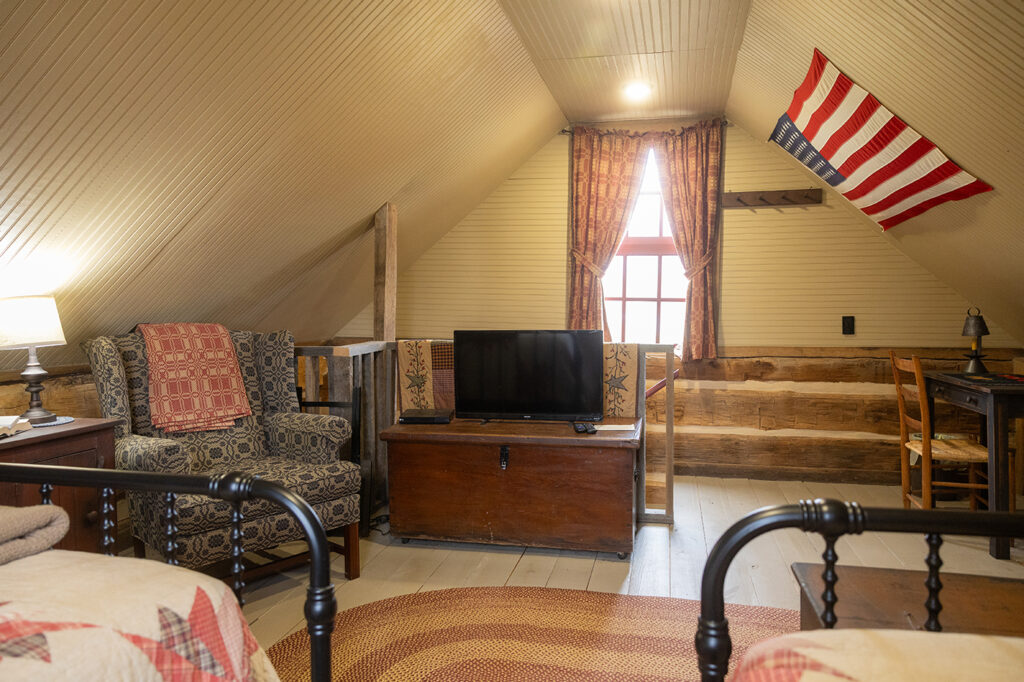
Sassafras Creek Cabin distinguishes itself through commitment to period-appropriate furnishing and decor. This isn’t log cabin with random antiques scattered among IKEA furniture and contemporary amenities. This is carefully curated interior where furniture, textiles, lighting, cooking implements, and decorative elements authentically reflect 1840s frontier domestic life.
Period furniture means reproduction or authentic antique pieces matching what 1840s cabin residents would have owned: simple wooden tables and chairs, rope beds or period-appropriate bedsteads, storage chests and cupboards, benches, stools, and utilitarian furnishings emphasizing function over decoration. The furniture isn’t necessarily fancy—frontier cabin residents weren’t wealthy—but it’s honest to the period, showing what ordinary people used for daily living rather than romanticized “rustic luxury” that never actually existed.
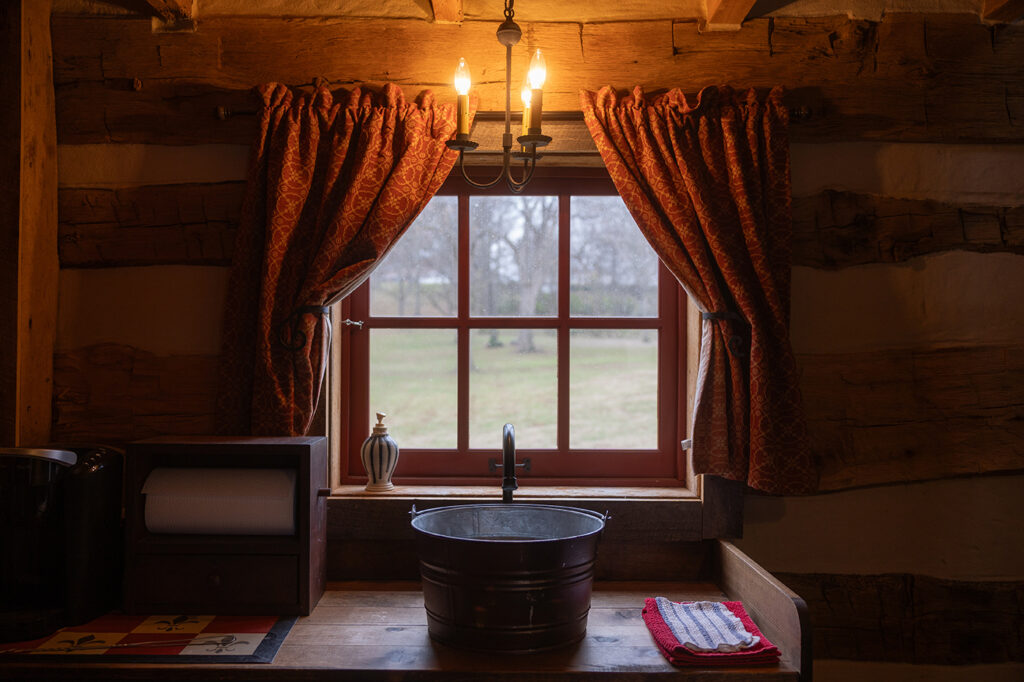
Decor choices similarly reflect historical accuracy: oil lamps or candles (even if electric lighting exists for practical use), simple textiles in period-appropriate patterns and colors, cooking implements hanging from walls or arranged on shelves, pottery and stoneware rather than modern dishware, wooden buckets and barrels, basic tools, and decorative elements (if any) limited to what 1840s residents would have actually owned—perhaps religious images, family portraits, simple curtains, or handmade items rather than mass-produced decorations.
This attention to period authenticity creates immersive atmosphere that transports guests psychologically as well as physically. Modern vacation rentals look like… modern vacation rentals, regardless of whether they’re in downtown condos or rural cabins. Sassafras Creek Cabin looks and feels genuinely different—unfamiliar in ways that make you conscious of historical distance between 2025 and 1840, teaching you through direct experience how frontier domestic spaces functioned and what life felt like before electricity, running water, central heating, and all the conveniences we now take for granted.
The period authenticity serves educational purpose even for guests not consciously seeking historical education. You learn by inhabiting the space: understanding why windows are positioned where they are (maximizing natural light before electric lighting), appreciating why fireplaces dominated interior layouts (heating and cooking in single unit), recognizing how limited furniture reflected both economic constraints and simpler material culture, and experiencing how much darker pre-electric nights were (even with modern lighting available, the cabin’s layout reveals how light scarcity shaped daily rhythms).
For history buffs, living historians, historical fiction writers researching period details, and travelers genuinely interested in experiential learning rather than superficial tourism, the period-appropriate furnishing makes Sassafras Creek Cabin valuable educational resource as well as comfortable lodging.
Location: Between Two National Park Houses, Walking Distance to Everything
Sassafras Creek Cabin’s St. Marys Road location provides extraordinary access to Sainte Geneviève’s historical and cultural resources:
Between two Ste. Genevieve National Historical Park houses means you’re literally within the protected historic district. Look out your cabin windows and you see 19th-century architecture in landscape that preserves historical character rather than modern development. Walk out your door and you’re surrounded by the same buildings, street patterns, and spatial relationships that defined 1840s Sainte Geneviève. This proximity isn’t just convenient—it’s immersive, maintaining historical context throughout your stay rather than requiring transition between “old town” and “where we’re staying.”
The National Park designation (established 2018, with park infrastructure still developing) recognizes Sainte Geneviève’s exceptional preservation of French colonial architecture and its significance as America’s first permanent European settlement west of the Mississippi River. The park includes multiple 18th and early 19th-century buildings, protected landscapes, and interpretive programming explaining French colonial history, frontier life, and cultural heritage. Staying within the park boundaries means you’re embedded in this preserved historical landscape rather than observing it from outside.
Walking distance to downtown makes car-free exploration practical. Sainte Geneviève’s compact downtown layout—remnant of French colonial town planning—concentrates shops, restaurants, galleries, and businesses within small area easily navigated on foot. From Sassafras Creek Cabin, you can walk to:
- Downtown restaurants (Stella and Me, Oliver’s, American Custard Co., etc.)
- Coffee shops (Birdie’s Coffee in Little Bohemia)
- Ste. Genevieve Antique Mall and other shops
- Historic churches still holding regular services
- Mississippi River overlooks
- Additional National Park historic houses and visitor facilities
This walkability enhances the historical immersion. You’re not driving modern car between period cabin and contemporary tourist infrastructure. You’re walking streets that follow colonial-era patterns, passing historical buildings, experiencing town scale and pedestrian rhythms similar to what 19th-century residents knew (albeit with paved streets and modern traffic rather than dirt roads and horse-drawn wagons).
Other historic tourist sites within walking distance include:
- Felix Vallé House State Historic Site
- Ste. Genevieve Museum
- Various churches with historical significance
- Southern Hotel (another lodging option, but also historical structure worth viewing)
- Memorial Cemetery (Missouri’s oldest, dating to 1787)
- French colonial houses open for tours
- Great River Road interpretive sites
For visitors planning intensive historic site touring—spending multiple days systematically visiting every available historical structure, attending ranger programs, photographing architecture, researching genealogy or local history—staying at Sassafras Creek Cabin provides base camp that’s itself part of the historical landscape you’re studying. You’re not returning to modern hotel after historical immersion; you’re continuing the experience in period-appropriate lodging that reinforces rather than disrupts your engagement with Sainte Geneviève’s heritage.
Sassafras Creek Originals: Adjoining Early American Gift Shop
The circa 1850 Brooks House—adjoining Sassafras Creek Cabin and housing Sassafras Creek Originals gift shop—extends the period experience beyond lodging into retail encounter that complements rather than contradicts the historical atmosphere.
Early American gift shop suggests merchandise aligned with cabin’s 1840s-1850s timeframe: reproduction goods, historical crafts, period-appropriate items, and merchandise that enhances rather than cheapens the historical experience. This likely includes:
- Reproduction textiles (quilts, linens, period fabric)
- Historical craft items (pottery, basketry, woodwork)
- Books about frontier life, Sainte Geneviève history, French colonial heritage
- Period-appropriate toys and games
- Reproduction tools and implements
- Historical cooking equipment or decorative items
- Handmade soaps, candles, and household goods using traditional methods
The shop provides convenient access to historically-minded merchandise without leaving the property. Forgot to pack something? The gift shop might stock period-appropriate alternative. Want souvenir that actually relates to your cabin experience? Sassafras Creek Originals likely offers options more meaningful than generic tourist trinkets.
The circa 1850 Brooks House itself adds historical value—another mid-19th-century structure preserving frontier architecture and contributing to the property’s overall period character. Walking from your 1840s cabin to 1850s house for shopping creates small journey through preserved historical landscape, maintaining immersion rather than breaking it with modern commercial intrusions.
For guests interested in frontier material culture, historical reproduction goods, or simply browsing merchandise that extends the cabin experience, the adjoining gift shop provides amenity that enhances rather than detracts from historical authenticity.
What to Expect: Balancing Historical Authenticity with Modern Comfort
Sassafras Creek Cabin faces challenge inherent to all historical lodging: balancing period authenticity with guest comfort and modern safety requirements. Understanding how this balance manifests helps set appropriate expectations:
Historical elements you’ll experience:
- Period-appropriate furniture and decor throughout
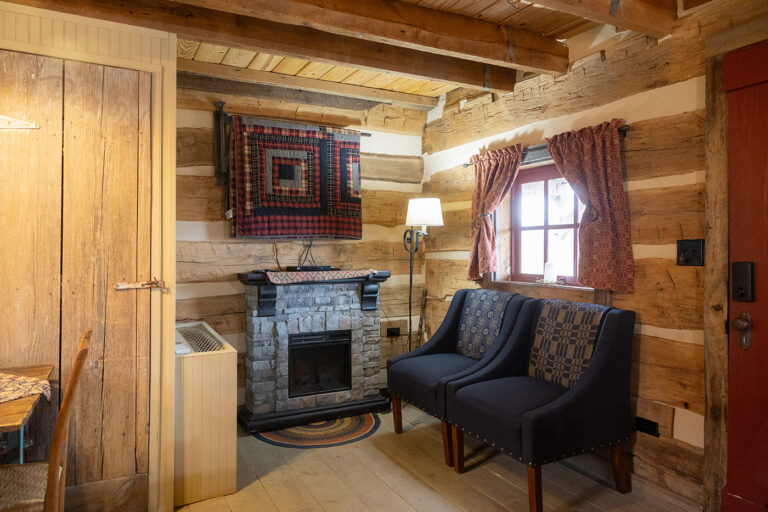
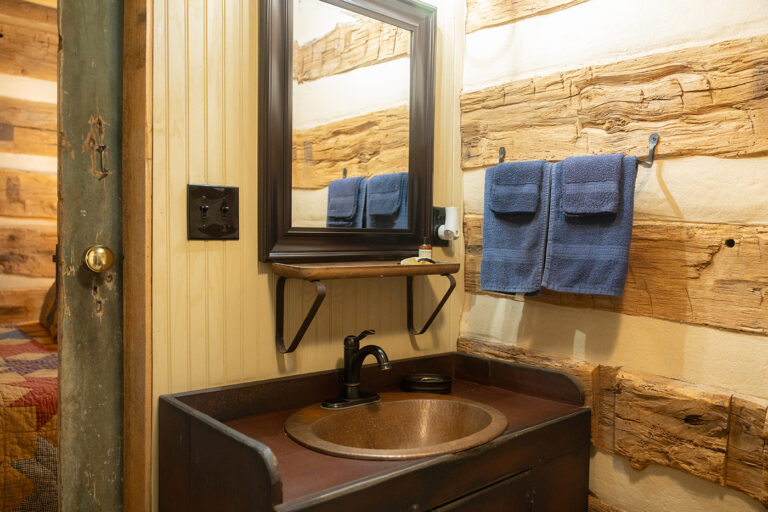
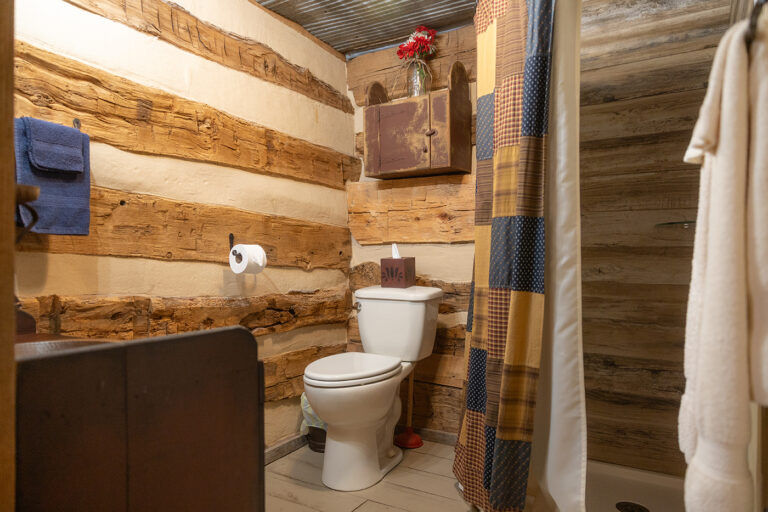
- Log cabin construction visible in walls, exposed beams, authentic materials
- Spatial layout reflecting 1840s cabin design (likely single room or simple two-room plan)
- Lighting fixtures suggesting period style (even if electric rather than actual oil lamps for safety)
- Overall atmosphere of stepping back in time
Modern conveniences likely integrated discreetly:
- Climate control (heating/air conditioning) essential for year-round comfort
- Proper bathroom with modern plumbing (chamber pots are historically authentic but nobody wants that)
- Reliable electricity for lighting, phone charging, practical needs
- Smoke detectors, carbon monoxide detectors, and other safety requirements
- Possibly WiFi for travelers needing connectivity
- Kitchen facilities (even if period-styled) with refrigeration and cooking equipment
What you probably won’t find:
- Television (would destroy period atmosphere)
- Contemporary furniture or decor breaking historical character
- Modern kitchen appliances prominently displayed
- Bright LED lighting throughout
- Extensive modern amenities prioritized over historical integrity
The goal appears to be maximum historical authenticity consistent with safe, comfortable occupation—giving guests genuine 1840s cabin experience without the dysentery, fire hazards, freezing winters, and sweltering summers that made frontier life genuinely harsh. You get the atmosphere, the education, the immersion, and the appreciation for historical domestic spaces without the suffering that actual 1840s residents endured.
Who Sassafras Creek Cabin Serves
This distinctive lodging appeals to specific traveler types:
History Enthusiasts – People genuinely interested in 19th-century American life, frontier domestic architecture, and experiential learning through immersive accommodation. These guests view the period furnishing as feature rather than quirk, appreciating authenticity over modern luxury.
National Park Visitors – Travelers specifically planning Ste. Genevieve National Historical Park exploration who want lodging consistent with the historical sites they’re touring. Staying in period cabin extends the National Park experience beyond daytime touring hours.
Restoration Road Fans – Television viewers who watched Episode 3 and want to experience the featured cabin firsthand. The show’s audience likely includes people interested in historical preservation, restoration techniques, and architectural history—exactly the demographic appreciating what Sassafras Creek Cabin offers.
Unique Experience Seekers – Travelers bored with standard hotels and generic vacation rentals who actively seek distinctive lodging with genuine character and story. People who choose accommodations based on “I’ve never stayed anywhere like this before” rather than consistency and predictability.
Couples Seeking Romantic Getaway – Partners wanting intimate, unusual setting for anniversary celebrations, special occasions, or simply memorable weekends together. The cabin’s historical character creates atmosphere that’s inherently romantic for history-minded couples.
Writers and Artists – Creative professionals seeking inspiring environment for writing retreats, artistic work, or simply getting away from contemporary distractions. The period atmosphere and historical immersion provide stimulating context for creative work.
Genealogy Researchers – People tracing family histories in Sainte Geneviève area who want to inhabit the kind of structure their 19th-century ancestors might have lived in, creating personal connection to historical research.
Living History Participants – Historical reenactors, interpreters, or enthusiasts attending regional events who want accommodation matching their historical interests and providing authentic setting for practicing period skills or simply extending reenactment experience.
Who Should Look Elsewhere
Sassafras Creek Cabin isn’t appropriate for everyone:
Luxury Seekers – People expecting high-thread-count linens, spa bathrooms, modern design aesthetic, or contemporary luxury amenities will be disappointed. This is historical authenticity, not luxury retreat.
Large Groups – Cabin size likely accommodates couples or small families rather than big groups needing multiple bedrooms and extensive space.
People Requiring Maximum Modern Convenience – Guests who want smart home technology, extensive kitchen appliances, big-screen entertainment systems, or contemporary vacation rental standard features won’t find them here.
Those Uncomfortable with “Old” – Some people feel uneasy in historical buildings, dislike antique furniture, or simply prefer contemporary spaces. No shame in this—but Sassafras Creek Cabin will feel uncomfortable rather than charming.
Travelers Uninterested in History – If you view lodging purely as sleeping space between activities and don’t care about historical character, you’re paying for features you won’t appreciate. Choose cheaper, more convenient options instead.
Practical Information and Booking
Location: St. Marys Road, Ste. Genevieve, MO 63670
Booking Platform: AirBnB
Capacity: Four guests
Amenities: kitchen facilities, pet friendly, ductless A/C, indoor fireplace, parking
Nearby:
- Ste. Genevieve National Historical Park historic houses (adjacent)
- Downtown Sainte Geneviève (walking distance)
- Sassafras Creek Originals gift shop (adjoining, in circa 1850 Brooks House)
- Restaurants, shops, historic sites within easy walk
Before You Arrive: Watch Restoration Road Season 1, Episode 3 on Max to see the cabin’s restoration and understand its story
Perfect For:
- History enthusiasts wanting immersive period experience
- National Park visitors seeking authentic historical lodging
- Couples wanting unique romantic getaway
- Restoration Road fans experiencing featured cabin in person
- Writers, artists, researchers needing inspiring retreat setting
- Anyone seeking genuinely distinctive accommodation rather than standard rental
Experience 1840s Frontier Life in Restored Television-Featured Log Cabin
Sassafras Creek Cabin offers something increasingly rare in American tourism: accommodation that’s genuinely, meaningfully historical rather than superficially “rustic” or vaguely “old-timey.” This is authentic 1840s log cabin, professionally restored with television-documented craftsmanship, furnished with period-appropriate furniture and decor, positioned within Ste. Genevieve National Historical Park boundaries, and maintained by owners committed to preservation over profit maximization.
For travelers seeking education through experience, immersion through environment, and appreciation for frontier architecture through actual inhabitation rather than museum observation, Sassafras Creek Cabin delivers exactly what its Restoration Road appearance promises: carefully preserved piece of American frontier history adapted for modern comfort while maintaining historical integrity.
Book your stay. Watch the episode beforehand. Then step back to 1840 in log cabin where authenticity isn’t marketing claim but operational reality, where period furnishing creates genuine time-travel atmosphere, and where your lodging choice actively supports historical preservation while providing base camp for exploring America’s oldest permanent European settlement west of the Mississippi River.
Welcome to Sassafras Creek Cabin—where sleeping in history means experiencing it firsthand.




Sorry, no records were found. Please adjust your search criteria and try again.
Sorry, unable to load the Maps API.