
U.S. 250 in Sainte Geneviève – Commemorating America’s Forgotten Western Front
May 30-May 31, 2026
Missouri’s oldest town becomes the center of Revolutionary War commemoration as Sainte Geneviève hosts its U.S. 250 celebration the weekend after Memorial Day, honoring the 245th anniversary of the Battle of Fort San Carlos—the westernmost engagement of the American Revolution and a pivotal moment in determining control of the Mississippi River. This two-day living history event brings to life the diverse forces that shaped America’s founding on the frontier, featuring appearances by George Washington and Spanish Governor Bernardo de Gálvez, military encampments representing French, Spanish, British, Osage, and American forces, hands-on historical experiences, period vendors, and a spectacular fireworks finale.
The Forgotten Battle That Saved the Mississippi
On May 26, 1780, the small Franco-Spanish village of St. Louis faced an assault by nearly 1,000 British-allied Native American warriors and fur traders intent on seizing control of the Mississippi River. Spanish Lieutenant Governor Fernando de Leyba had hastily constructed Fort San Carlos—a single stone tower with trenches—and desperately needed reinforcements.
Sainte Geneviève answered the call. François Vallé, a 64-year-old former French militia captain, sent his two sons and 60 well-trained militiamen north to St. Louis, along with vital lead from his mines for musket balls and cannonballs. This contingent from Sainte Geneviève tipped the balance, enabling the outnumbered defenders—Spanish regulars, French militia, enslaved people, and townspeople—to repel the British assault and maintain Spanish control of the upper Mississippi.
The battle’s significance extends far beyond this single engagement. Had the British succeeded in taking St. Louis and controlling the Mississippi, they could have flanked American forces and threatened the entire western supply base supporting the Revolution. Sainte Geneviève’s contribution proved decisive in preventing this outcome. For his service, King Carlos III of Spain later conferred upon François Vallé the rank of lieutenant in the regular Spanish army, making him a Spanish don—he became known as the “Defender of St. Louis.”
This is the story rarely taught in American history classes: how Spanish soldiers, French colonists, enslaved defenders, and American allies collaborated on the frontier to secure independence thousands of miles from the battlefields most Americans know.
Part of the National Revolutionary War Trail
The Sainte Geneviève U.S. 250 event follows the Spirit of Vincennes Rendezvous in Indiana (Memorial Day weekend, May 23-24), where George Rogers Clark’s 1779 capture of Fort Sackville is commemorated. One week after Sainte Geneviève’s event, the trail continues at Fort de Chartres in Illinois (June 6-7), site of the Midwest’s largest rendezvous featuring over a thousand participants recreating frontier life from 1740-1840. Two weeks later, Sainte Geneviève’s French Heritage Festival (June 13) celebrates the town’s deep French colonial roots with traditional music, food, crafts, and cultural programming.
This sequence of events creates unprecedented opportunity for Revolutionary War enthusiasts, history travelers, and families to experience multiple significant sites and commemorations within a concentrated timeframe, tracing the interconnected stories of French, Spanish, British, Native American, and American forces across the western frontier.
George Washington and Bernardo de Gálvez: Historic Figures Return
The U.S. 250 celebration features appearances by two pivotal Revolutionary War leaders whose stories intersect with the western campaign:
George and Martha Washington, portrayed by the same acclaimed historical interpreter, Dan Shippey, from Mount Vernon, represents the Continental command whose western strategy depended on securing the Mississippi Valley against British encroachment. While Washington never visited the region himself, his vision for American expansion and his coordination with allied forces made the defense of St. Louis part of the broader Revolutionary strategy. His appearance at Sainte Geneviève honors the interconnected nature of the Revolution—eastern and western fronts working toward common cause.
Bernardo de Gálvez, Spanish Governor of Louisiana, emerges as one of the Revolution’s unsung heroes. Gálvez is portrayed by reenactor extraordinaire, Dennis Carlos, who devotes himself to the role for historic sites across the U.S. While moving rapidly to capture British posts along the lower Mississippi and Gulf Coast—taking Baton Rouge, Natchez, Mobile, and Pensacola—Gálvez’s broader strategy protected the Revolution’s western flank and prevented British forces from threatening American positions from the rear. His leadership inspired commanders like Fernando de Leyba in St. Louis and enabled Spanish support that proved essential to American independence. Gálvez’s story demonstrates how the Revolution succeeded through international alliance rather than solely American effort.
These historical interpreters will be available throughout the weekend for interaction, education, and photo opportunities, bringing to life the command decisions and international diplomacy that shaped frontier warfare.
Thomas Jefferson will also make his appearance. Why wouldn’t he? No signing of the Declaration of Independence would be complete without its author. Ryan Williams from Virginia is a reenactor known for his acting prowess. He’s known for adept portrayals of several historical figures in their youth. Just recently, he portrayed young General Washington in the film, The American Miracle. For the U.S. 250 in Sainte Geneviève, he will play a young Thomas Jefferson and help guide visitors through the experience of adding their own name to the Declaration while providing historical reference to the thoughts and feelings around such a momentous occasion.
Marquis de Lafayette is the final man on our historical roster. While most of the above listed never set foot in Sainte Geneviève, there is evidence that alludes the potential Lafayette has graced the streets of this beautiful town on his return tour. On this rare occasion, you will get to see the first great American bromance as Lafayette reunites with his brother in arms, General Washington. Sainte Geneviève is blessed to have its own local talent to credit in playing this role for visitors. Bradley Johnson, who also works in the lab at the local MLC, will don the revolutionary colors and help welcome everyone to the two-day festival.
Military Encampments
See Colonial-era encampments in the setting the were meant for:
French Colonial Militia – Representing the habitants who formed the backbone of frontier defense and who operated willingly under Spanish control at this time, these units demonstrate the civilian-soldier tradition of French colonial settlements where every able man served in militia companies. Their equipment, tactics, and camp life reflect the French military tradition adapted to North American frontier conditions.
Spanish Colonial Infantry – The Fijo de Luisiana (Fixed Louisiana Regiment) and other Spanish forces garrisoned posts throughout Spanish Louisiana. These professional soldiers brought European military discipline to the frontier while adapting to local conditions and alliances with French inhabitants and Native American nations.
British Forces and Loyalist Rangers – British regulars and the Canadian fur traders turned militia who led Native American allies represent the forces attempting to secure the Mississippi for the Crown. Their encampment demonstrates how British strategy relied heavily on Native American allies and the established fur trade networks.
Native American Nations – Osage warriors and representatives of other nations active during the Revolutionary era present authentic encampments showing the material culture, military traditions, and strategic positions of indigenous peoples whose alliances determined frontier outcomes. These living history presentations offer respectful, educational insight into Native American perspectives during the Revolution.
American Continental and Militia Forces – Though American forces were primarily engaged east of the Mississippi at Cahokia and Kaskaskia, their presence at the commemoration represents the broader American campaign to secure the western territories and the coordination between Spanish allies and American commanders like George Rogers Clark.
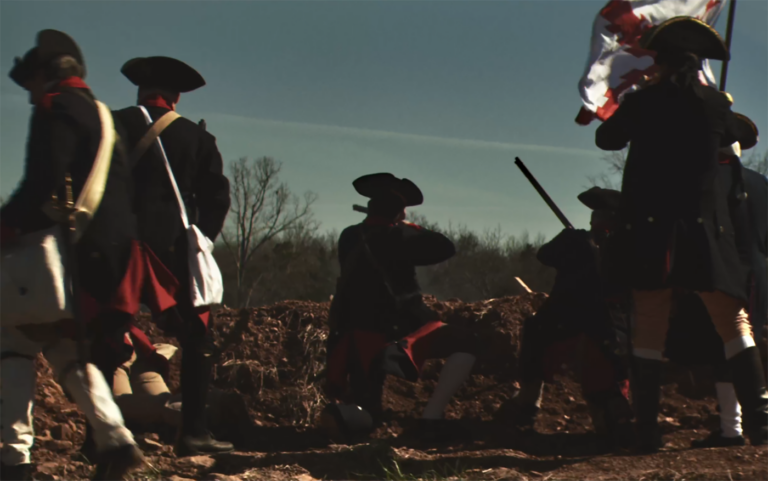
Throughout both days, these units conduct military drills, demonstrate period tactics, and interact with visitors, explaining the equipment, daily life, motivations, and experiences of soldiers and warriors on the Revolutionary frontier.
St. Charles Youth Drum & Fife Corps – Also known as the Lewis and Clark Drum and Fife Corps Festival celebrates one of America’s most beloved historical music ensembles, renowned for their authentic 18th-century sound and captivating performances. With accolades including national heritage awards and appearances at prestigious events such as Independence Day celebrations and historical reenactments across the country, the Corps has earned widespread acclaim for preserving the musical traditions of the Lewis and Clark era. Their artistry and dedication have drawn audiences from coast to coast, making this festival a must-attend event for history enthusiasts and music lovers alike.
Hands-On History: Touch, Try, Experience
The U.S. 250 event emphasizes participatory experience over passive observation:
Fire a Musket – Under supervision of experienced reenactors, visitors can safely fire authentic reproduction flintlock muskets, experiencing the weight, kick, smoke, and sound that defined 18th-century warfare. This hands-on activity creates visceral connection to how battles were fought and the courage required to stand in formation exchanging volleys.
Sign the Declaration of Independence – A reproduction of America’s founding document invites visitors to add their signatures beside the Founders’, creating tangible connection to the ideals of liberty that motivated the Revolution. This interactive element particularly engages younger visitors in understanding why the war was fought.
Historic Foods Sampling – Period food vendors prepare dishes authentically recreated from 18th-century recipes and ingredients. Taste what frontier soldiers ate, sample Native American traditional foods, try Spanish colonial dishes, and discover French colonial cuisine. Food history provides accessible entry point into understanding daily life and cultural diversity on the frontier.
Children’s Games and Activities – Historical games, colonial-era toys, and period crafts give children hands-on engagement with history. These activities transform abstract historical concepts into concrete experiences kids remember.
Meet the Soldiers – Unlike many events where reenactors remain in character behind barriers, Sainte Geneviève’s U.S. 250 encourages interaction. Ask questions, handle equipment, learn about motivations and daily life, and discover the human stories behind the uniforms.
Colonial Market: Special Guests
The event features prominent period vendors: blacksmiths, tinsmiths, potters, paper marblers, painters, et. al. whose commitment to historical accuracy and education elevates the entire experience. Among the amazing talents bringing their wares is special guest Samson Historical and Ryan Kerr from Townsends.
Samson Historical – Known throughout the reenacting community for museum-quality reproductions of 18th-century military equipment, clothing, and accoutrements, Samson Historical brings items rarely available to the public. Their products serve reenactors demanding authenticity and history enthusiasts seeking accurate period items for collections or display.
Townsends – Ryan Kerr, resident food expert and coffee roaster with Townsends, will be bringing his colonial coffee roasting demo, Blue Lion Coffee, to town. With nearly 3 million YouTube subscribers, Townsends has become one of the most recognized names in 18th-century living history education. Their videos exploring colonial American foodways, material culture, and daily life have introduced millions to hands-on history.
Additional vendors offering books, artwork, period-inspired jewelry, handcrafted items, and educational materials create marketplace atmosphere reminiscent of historical gatherings where frontier inhabitants acquired goods from traveling merchants.
Saturday Evening Frontier Social
After the day’s military demonstrations and historical activities conclude, the U.S. 250 celebration continues with an authentic 18th-century dance social on Saturday evening. Step back in time as a live period band fills the air with the melodies that animated Revolutionary-era gatherings—reels, jigs, minuets, and contra dances that brought together soldiers, settlers, and townspeople across the frontier. A professional dance caller guides participants through each dance, calling out steps and formations so that even first-timers can join the fun. No dance experience necessary—these are community dances designed for participation rather than performance, where learning the steps becomes part of the evening’s enjoyment.
Colonial dress is warmly encouraged for those who want to fully immerse themselves in the 18th-century atmosphere—ladies in gowns and gentlemen in waistcoats create visual authenticity that transforms the dance into living history. However, modern attire is perfectly acceptable, ensuring everyone feels welcome to participate regardless of whether they own period clothing, though there will be ample opportunity to put together your outfit at vendor booths throughout the day. The inclusive spirit mirrors the actual frontier social gatherings where formal wear mixed with everyday clothing, and people from all backgrounds came together for rare opportunities to celebrate, socialize, and momentarily set aside the hardships of frontier life.
Refreshments will be available throughout the evening, providing sustenance for dancers and observers alike. Whether you’re an experienced historical dancer, curious about trying something new, or simply want to enjoy live period music and watch others dance, the Saturday evening social offers perfect conclusion to a day immersed in Revolutionary history—connecting to the past not just through military displays and historical facts, but through the joy, community, and human connection that music and dance have always provided.
Fireworks Finale: Lighting Up the Night
Saturday evening culminates with spectacular fireworks displays over Missouri’s oldest town—a fitting celebration of independence and commemoration of the battle that helped secure it.
The fireworks serve multiple purposes: providing family-friendly entertainment that keeps visitors engaged through evening hours, creating memorable conclusion to each day’s programming, and symbolically representing the battle’s “rockets’ red glare and bombs bursting in air” that would later inspire Francis Scott Key during the War of 1812.
Find comfortable viewing spots throughout Sainte Geneviève’s historic district, where the contrast between 18th-century architecture and modern pyrotechnics creates visual reminder of continuity between Revolutionary-era past and present-day celebration.
Why This Matters: Remembering the Frontier Revolution
American Revolution education typically focuses on Boston, Philadelphia, Yorktown—the eastern seaboard battlefields where most engagements occurred and where the Continental Congress and Continental Army operated. This eastern focus, while understandable, creates incomplete picture of how independence was won.
The western frontier—the vast territories between the Appalachians and the Mississippi—represented crucial theater where control of waterways, alliances with Native nations, and cooperation among diverse European colonial powers determined whether the Revolution could succeed. The Battle of Fort San Carlos at St. Louis represents this complex, multicultural, strategically vital western campaign.
Sainte Geneviève’s U.S. 250 event reclaims this forgotten chapter, reminding Americans that:
- Independence required international alliance – Spanish forces and French colonists fought alongside American revolutionaries, demonstrating that victory emerged from cooperation rather than solely American effort.
- The frontier was multicultural – French habitants, Spanish soldiers, enslaved Africans, Native American nations, British traders, and American settlers all shaped frontier outcomes through their choices, alliances, and conflicts.
- Geographic scope mattered – Controlling the Mississippi meant controlling trade, communication, and military movement. Western victories prevented British flanking maneuvers that could have crushed the Revolution.
- Ordinary people made extraordinary contributions – François Vallé and the 60 militiamen from Sainte Geneviève weren’t professional soldiers or famous leaders, yet their willingness to march north and fight alongside strangers proved decisive.
By commemorating the Battle of Fort San Carlos and Sainte Geneviève’s role, this event honors overlooked aspects of Revolutionary history and ensures that western contributions receive recognition alongside more famous eastern campaigns.
Practical Information
Dates: May 30-31, 2026 (Saturday-Sunday)
Location: Market Street and Historic District, Sainte Geneviève, Missouri
Admission: Free and open to the public
Parking: Available throughout downtown with shuttle service from remote lots
Event Schedule (specific times to be announced):
- Military encampments open for viewing
- Scheduled drill demonstrations and tactical presentations
- George Washington and Bernardo de Gálvez appearances
- Musket firing opportunities
- Children’s activities and games
- Period vendor marketplace
- Historic food sampling
- Fashion Show
- Period Dance
- Evening fireworks display (Saturday Night)
What to Bring:
- Comfortable walking shoes (you’ll cover significant distance exploring encampments)
- Sun protection (hats, sunscreen) for daytime outdoor activities
- Cash for vendor purchases and food
- Cameras for photos with historical figures and reenactors
- Water bottles (refilling station in nearby Welcome Center)
Nearby Accommodations: Sainte Geneviève offers multiple lodging options including historic bed and breakfasts (Main Street Inn, Inn St. Gemme Beauvais, Audubon’s Hotel), the Ste. Genevieve RV Park for those traveling by RV, and various vacation rentals. Book early as U.S. 250 events draw significant crowds.
Beyond the U.S. 250 Event: Extend your visit to explore Ste. Genevieve National Historical Park (free ranger-guided tours of 1790s French colonial houses), downtown shops and galleries, local wineries, the Ste. Genevieve Antique Mall, restaurants serving French and German cuisine, and the Sainte Geneviève-Modoc Ferry crossing to Illinois’s French historic sites.
Information and Updates: continue to check this website for updates.
Join Us in Remembering
Two hundred forty-five years ago, Sainte Geneviève sent 60 of its best men north to defend St. Louis against overwhelming odds. Their courage, combined with Spanish resolve, French colonial solidarity, and the determination of enslaved defenders, secured the Mississippi River for the cause of independence.
This Memorial Day weekend and the following Saturday and Sunday, we gather in Sainte Geneviève to honor their sacrifice and remember the forgotten western front of the American Revolution. Walk among military encampments representing all the forces that shaped frontier destiny. Fire a musket and feel history’s weight. Sign the Declaration and connect to founding ideals. Taste period foods and imagine frontier life. Meet George Washington and Bernardo de Gálvez. Watch fireworks illuminate Missouri’s oldest town.
Most importantly, remember that American independence emerged from diverse people—French, Spanish, African, Native American, and early American—working together against common threat on a frontier far from Philadelphia’s halls where the Continental Congress met.
The Battle of Fort San Carlos saved the Mississippi. Sainte Geneviève’s 60 militiamen helped save the Revolution. Come honor their memory and discover the history you were never taught.

Sorry, no records were found. Please adjust your search criteria and try again.
Sorry, unable to load the Maps API.