



The Bauvais-Amoureux House
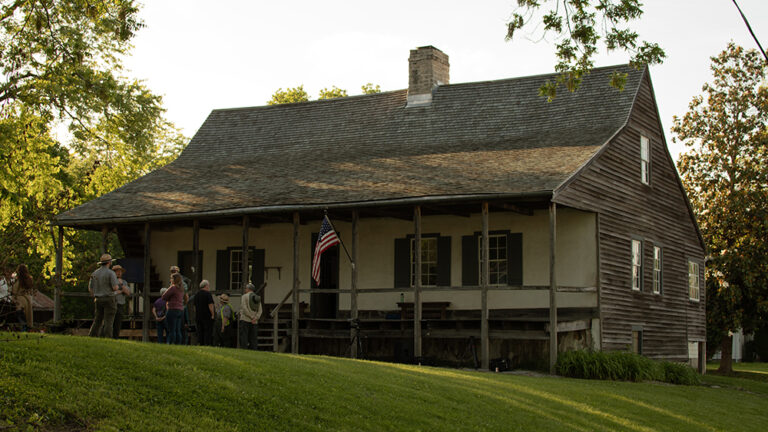
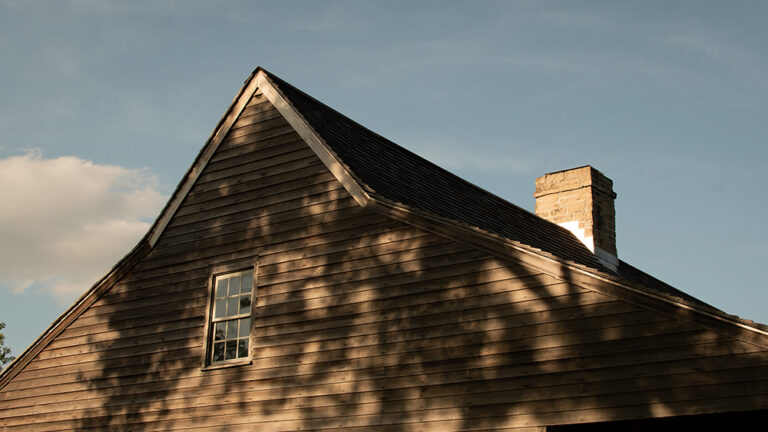
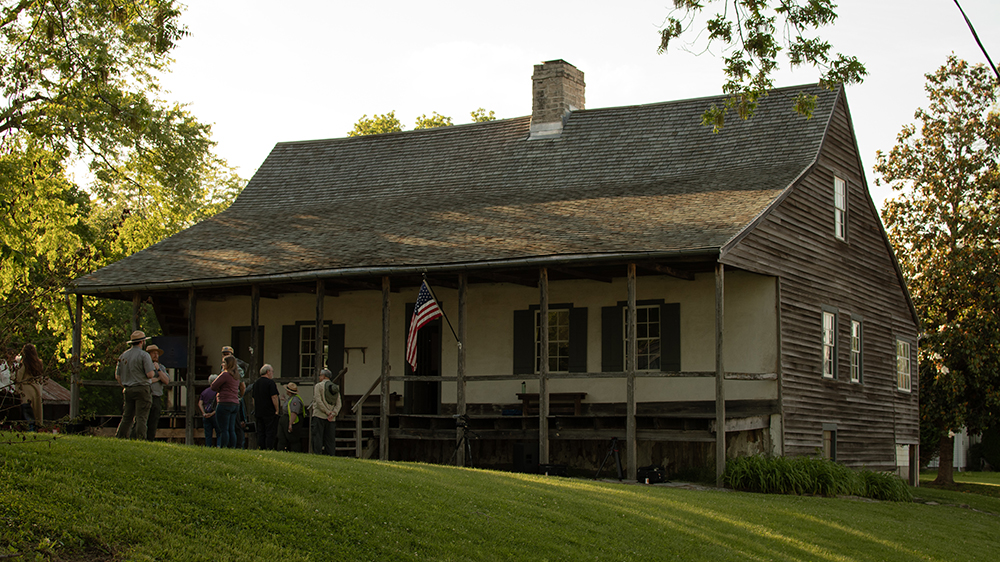
Overlooking le Grand Champ—those communal fields that once sustained entire village harvests—the Bauvais-Amoureux House rises from Missouri earth with quiet architectural courage. Built around 1792 by Jean Baptiste St. Gemme Beauvais, this rare structure speaks through its most distinctive feature: poteaux-en-terre construction, in which upright cedar logs are set directly into ground itself, as if determined to anchor French memory into frontier soil. Hand-hewn timbers form a Norman truss system beneath a steeply-pitched roof echoing early French Canadian farmhouses. Here, in this marriage of Old World tradition and New World necessity, stands one of the few surviving examples across the United States of this ancient building technique.
A Woman’s Story: Pelagie Amoureux
Benjamin Amoureux purchased this house in 1852, claiming it as his own. When he died, his wife Pelagie inherited it—becoming keeper of its stories, guardian of what endures when buildings outlast their builders. Her story, long latent, was recently uncovered by a remarkable serendipity: a long-lost relative living in California discovered connections to Pelagie and fought to ensure her voice reached across time. Academy Award-winning Breakwater Studios created a short film about Pelagie’s life, part of a new resource library allowing descendants of enslaved peoples to access genealogical records. During your visit, you can watch this film and meet Pelagie directly—understanding through her life how women shaped this community, how they carried memory forward through daily choices about what to preserve.
Explore at Your Own Pace
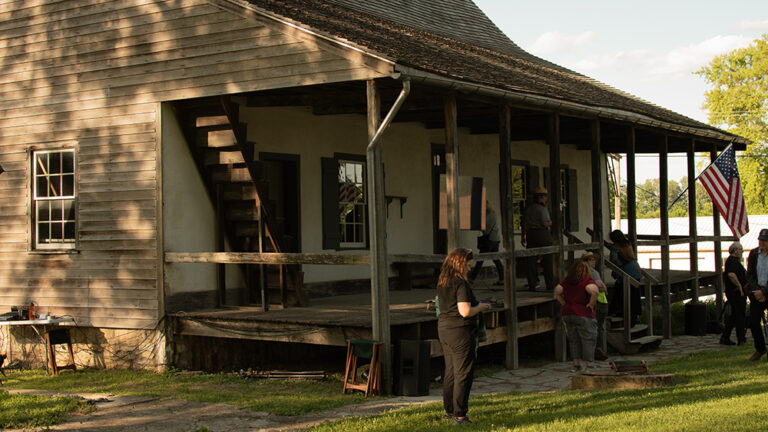
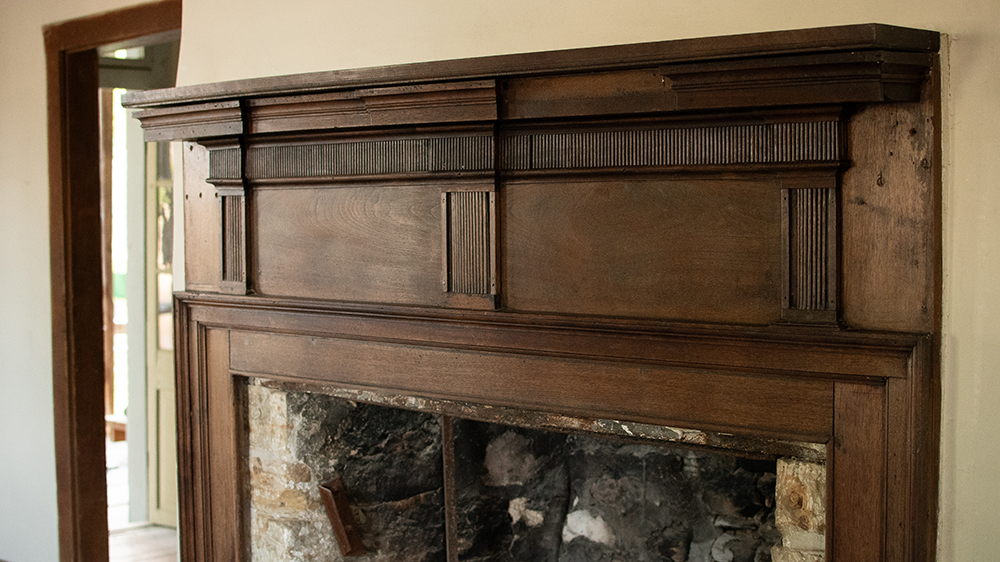
The National Park Service maintains this house for self-guided exploration, honoring the principle that history should meet visitors on their own terms. Whether you arrive at dawn or drift through in afternoon light, the house welcomes you—25 to 35 minutes allowing time to absorb its atmosphere, study the hand-hewn timbers, examine how light moves across these cedar walls that have sheltered generations.
Steps from Downtown, Centuries from Today
Located just steps from downtown’s Historic District, the Bauvais-Amoureux House sits within walking distance of shops, restaurants, bed and breakfasts, other historic sites. You can park once, explore on foot, breathe the river air that French colonists breathed, walk streets much as earlier generations walked them. That proximity transforms visit into immersion rather than isolated historical observation.
Practical Information
- Name: Bauvais-Amoureux House (Ste. Genevieve National Historical Park)
- Location: Historic District, Ste. Genevieve, Missouri
- Built: Circa 1792 by Jean Baptiste St. Gemme Bauvais
- Architecture: Poteaux-en-terre (posts-in-earth) construction, upright cedar logs, hand-hewn timber, Norman truss system, steeply-pitched roof
- Historical Owners: Benjamin Amoureux (1852), inherited by wife Pelagie Amoureux
- Current Status: National Park Service property
- Hours: Daily 9:00 AM-5:00 PM
- Admission: Free
- Exploration Time: 25-35 minutes self-guided
- Parking: Free, across street at boathouse
- Accessibility: Steps to enter; contact Welcome Center for mobility accommodations
- Photography: Welcome (personal use; standard NPS policies for commercial)
- Open: Year-round
Perfect For:
- Architecture enthusiasts understanding rare French colonial construction
- Those exploring how tradition adapts to frontier conditions
- Visitors meeting historical figures through film and interpretation
- Families combining National Park sites for comprehensive perspective
- Anyone understanding that buildings embody the stories of those who inhabited them
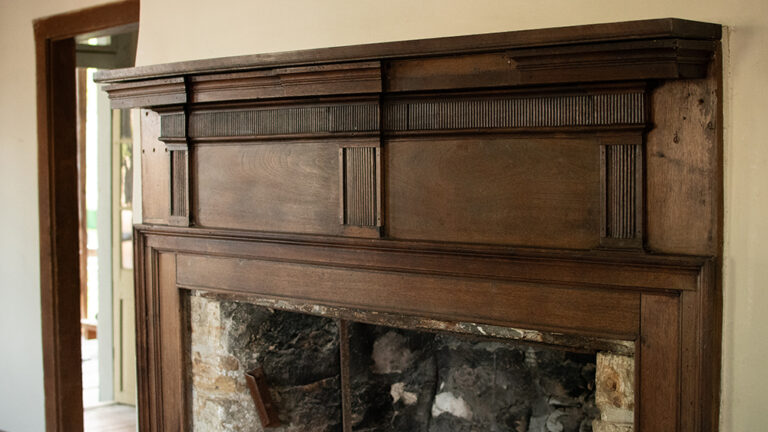
- Photographers capturing timber construction details
- Wanderers seeking to walk between centuries
Combine Your Visit
The Jean-Baptiste Vallé House lies just 0.4 miles away—an easy walk through historic streets. Together, these two National Park properties reveal different expressions of French colonial architecture and social life: poteaux-en-terre construction versus poteaux-sur-solle, ordinary dwelling versus commandant’s residence. Roughly an hour covers both houses, plus the walk connecting them.
Start at the Great River Road Welcome Center first (66 S. Main Street, daily 9 AM-5 PM)—rangers and tourism staff orient you toward what you’ll experience, provide maps, answer questions about hours and accessibility.
Why This House Endures
The Bauvais-Amoureux House doesn’t celebrate colonial dominance or European supremacy. Instead, it demonstrates adaptation—how French builders chose to root themselves in Missouri earth, how they transformed tradition into something unmistakably shaped by this particular place. Pelagie’s story reminds us that preservation requires human commitment, that history lives through the choices present generations make about what to honor and pass forward.
These cedar walls have sheltered multiple families across centuries of transformation. They contain multitudes—French colonial memory, American adaptation, the daily labor of those whose names history often forgets, and now, through Breakwater Studios’ film, the voice of a woman determined that her story wouldn’t disappear into silence.
Visit the Bauvais-Amoureux House on your own schedule. Study how hand-hewn timbers bear weight across time. Meet Pelagie Amoureux through film. Walk through downtown streets connecting past to present. Stand within these cedar walls and understand that history isn’t something museums contain—it’s something you experience by moving through spaces where real people made real lives, where they chose to remain, where they left traces of their determination for you to discover.



Sorry, no records were found. Please adjust your search criteria and try again.
Sorry, unable to load the Maps API.