

The Bossier-Shaw House Site Office and Interpretive Center – Missouri Department of Natural Resources’ Gateway to Sainte Geneviève’s Layered History
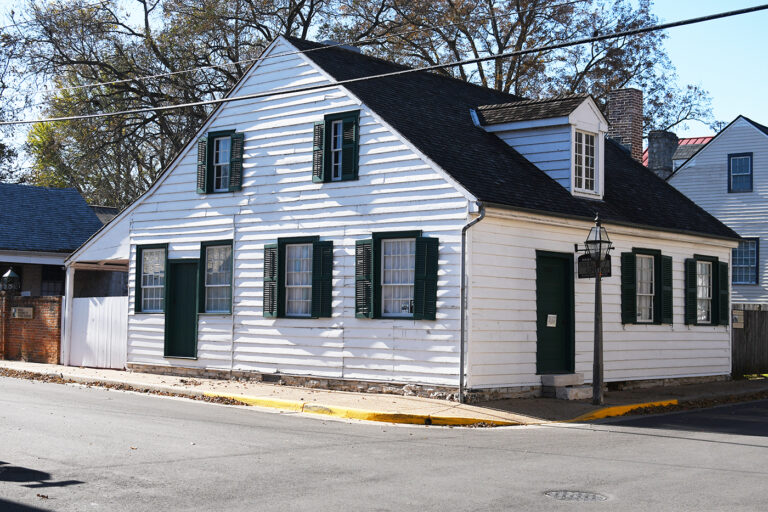
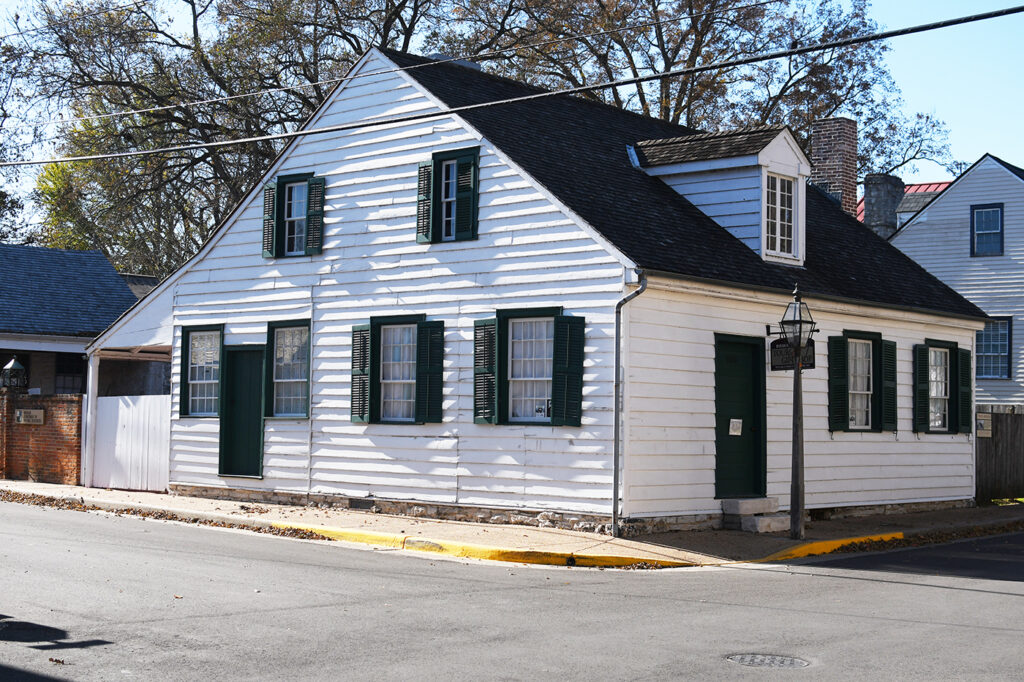
Most historic site visitor centers occupy modern buildings constructed specifically for administrative functions—climate-controlled boxes with exhibit spaces designed from the beginning for interpretive displays. The Bossier-Shaw House operates differently. This is a genuine 1819 building constructed by Jean-Baptiste Bossier as a storehouse for his mercantile business, later expanded by Dr. Benjamin Shaw into a residence, and transformed in the 1930s into the headquarters for the Ste. Genevieve Art Colony—a radical gathering of Depression-era artists including Thomas Hart Benton, Joe Jones, Jessie Beard Rickly, and Aimee Schweig who captured tenant farmers’ encampments, lime kiln workers, sharecroppers, and the human condition in ways that established this small Missouri river town as “the Mecca of Midwestern art.” Today, operated by the Missouri Department of Natural Resources as the site office and interpretive center for the Felix Vallé State Historic Site complex, the Bossier-Shaw House hosts rotating exhibits throughout the year that explore the area’s history in the context of broader Missouri heritage, maintains a small gift shop featuring books on French Colonial history and colonial period items, and presides over the coolest feature of the entire site: the brick courtyard that separates the Shaw House from the old Dufour-Bossier Indian Trading Post and the Ziegler Gallery, creating an open-air space where three centuries of architectural styles and historical functions visually converge.
Located just across Second Street from the Felix Vallé House in downtown Sainte Geneviève’s National Historic Landmark District, the Bossier-Shaw House serves as the entry point for visitors exploring Missouri’s French colonial past. But the building itself represents something more complex than simple French heritage—it’s an American Federal-style structure built during the transition period when Sainte Geneviève was shifting from French colonial village to American town following the Louisiana Purchase. The architecture demonstrates American influence on the community in the decades after 1803, showing how new residents brought different building traditions, commercial practices, and aesthetic preferences that coexisted with—and gradually transformed—the older French colonial culture. The 1930s Art Colony chapter adds another layer: Progressive artists attracted to Sainte Geneviève’s “picturesque architecture and landscapes” used this very building as their headquarters, creating works that defined American Regionalism and Social Realism movements while capturing a world that was quickly disappearing in an increasingly industrialized America.
For visitors, the Bossier-Shaw House provides the practical function of orientation—starting tours, purchasing tickets, getting information—but it also offers the conceptual introduction to Sainte Geneviève’s remarkable characteristic: the layers of history that coexist rather than replacing each other. The French colonial past survives in vertical-log houses. The American transition appears in Federal-style buildings like this one. The Depression-era art movement left paintings and murals. And all these periods remain visible, accessible, and relevant to understanding how the small Missouri river town evolved across 275+ years from French agricultural settlement to Spanish colonial outpost to American frontier town to artist colony to tourist destination preserving its own history.
The Building: From Bossier’s Store to Shaw’s Residence to Art Colony Headquarters
Understanding the Bossier-Shaw House requires tracing its evolution through multiple owners and functions across 200+ years:
1818-1819: Jean-Baptiste Bossier’s Mercantile Storehouse
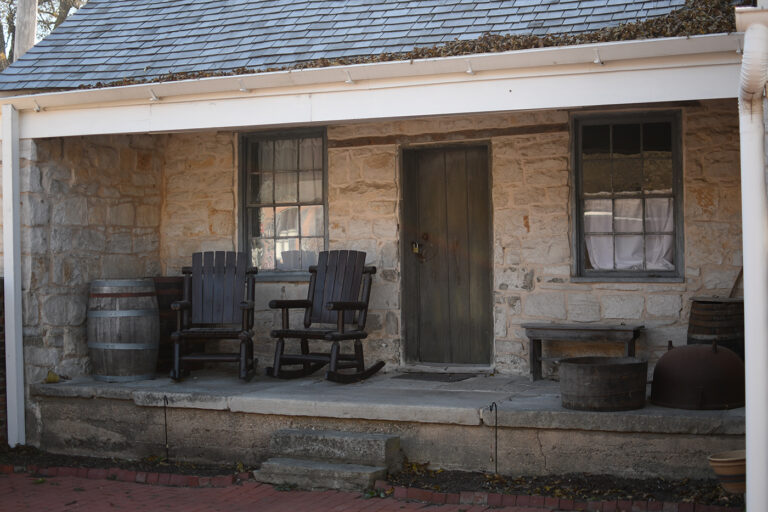
Jean-Baptiste Bossier, a French merchant who served in Missouri’s first state legislature, purchased the lot from Parfait Dufour in November 1818 and constructed the original portion of the building—a 20-foot by 33-foot structure—as a storehouse and office for his mercantile business. The building’s Federal-style architecture (common in American construction of the period) used locally-quarried limestone rather than the vertical-log construction (poteaux-sur-sole or poteaux-en-terre) typical of French colonial buildings just a few blocks away. This architectural choice signals Bossier’s participation in the town’s transformation: even French merchants were adopting American building styles in the decades following the Louisiana Purchase.
The original building served commercial function—storing goods for Bossier’s mercantile operation and providing office space for business transactions. Silhouettes of the original counters and shelves still appear on the painted wallboards, ghostly outlines revealing where merchandise was displayed and commercial activities occurred nearly 200 years ago. These traces allow visitors to visualize the building’s first function: a frontier general store serving Sainte Geneviève’s residents with imported goods, local products, and the commercial infrastructure that connected the small river town to broader trade networks.
1824-1837: The Valle Family and Menard & Valle Trading Firm
In 1824, Bossier sold the building to the prominent Valle family of Sainte Geneviève—descendants of François Valle, the first Spanish commandant when the town was under Spanish rule. The building became a location for the trading firm of Menard & Valle, continuing its commercial function but now under the management of one of Sainte Geneviève’s most influential French families. Felix Valle, who would later own the magnificent limestone house across Second Street that now anchors the historic site complex, was involved with this building during the Valle family’s ownership.
The Valle family’s use of the building demonstrates how Sainte Geneviève’s French elite adapted to American commercial practices while maintaining their French cultural identity. They embraced “modern” features of life including American-style architecture and American goods brought by steamboat—cloth, glass, housewares, manufactured products from eastern cities—while holding firmly to their French traditions, language, and Catholic religion. The Bossier-Shaw building represents this cultural negotiation: a French family operating from an American-style building, selling American goods to a still-predominantly-French customer base.
1837: Dr. Benjamin Shaw’s Acquisition and Expansion
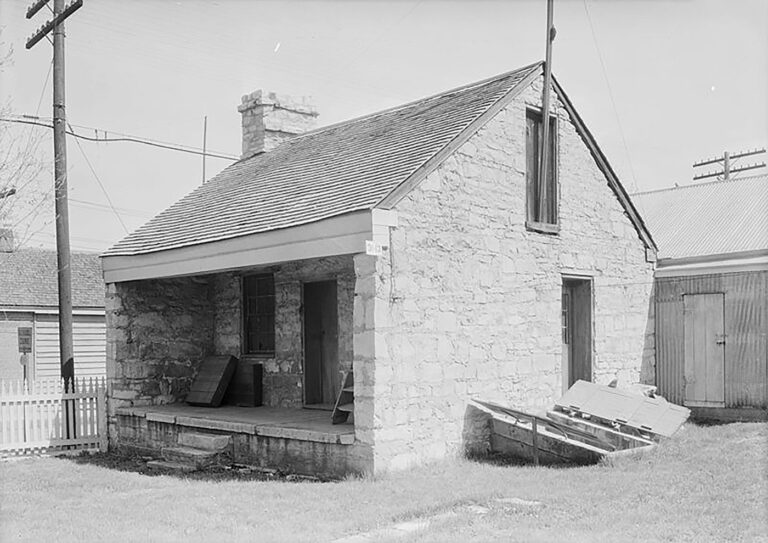
Dr. Benjamin Shaw, a physician, purchased the building from the Valle family in 1837. Shaw made significant additions to Bossier’s original small structure, converting it from commercial building to residence suitable for his professional and family needs. He built additions across the back, added fireplaces, and constructed a separate stone kitchen building (common practice in the era to keep cooking heat and fire risk separate from the main house). A widower when he purchased the property, Shaw married Emilie Janis Lecompte in 1845, and the expanded residence accommodated the family through the mid-19th century.
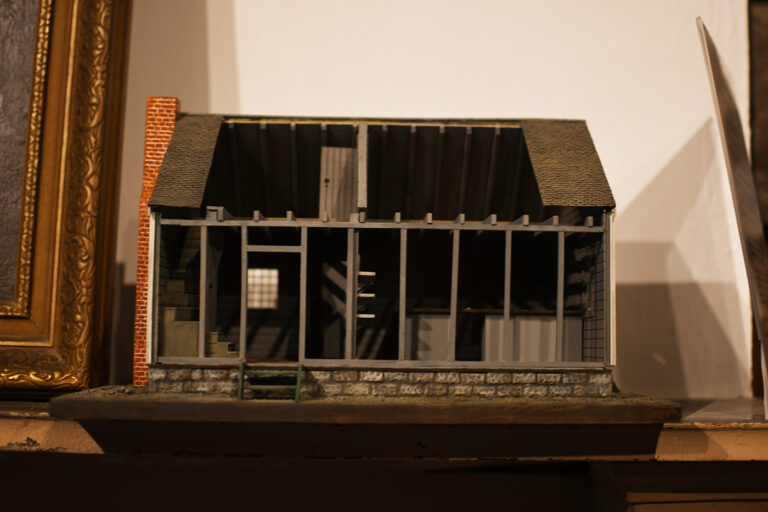
The Shaw-era additions transformed the building’s function and appearance while preserving the original Bossier storefront sections. Today’s visitors can read this architectural evolution in the building’s footprint—the original 1819 mercantile section, the Shaw-era residential additions, and the separate stone kitchen forming a complex that reveals how buildings adapted to changing needs rather than being demolished and replaced.
1930s: Headquarters for the Ste. Genevieve Art Colony
The building’s most culturally significant period came in the 1930s when it became headquarters for the Ste. Genevieve Art Colony—a gathering that transformed this small Missouri river town into what contemporaries called “the Mecca of Midwestern art.”
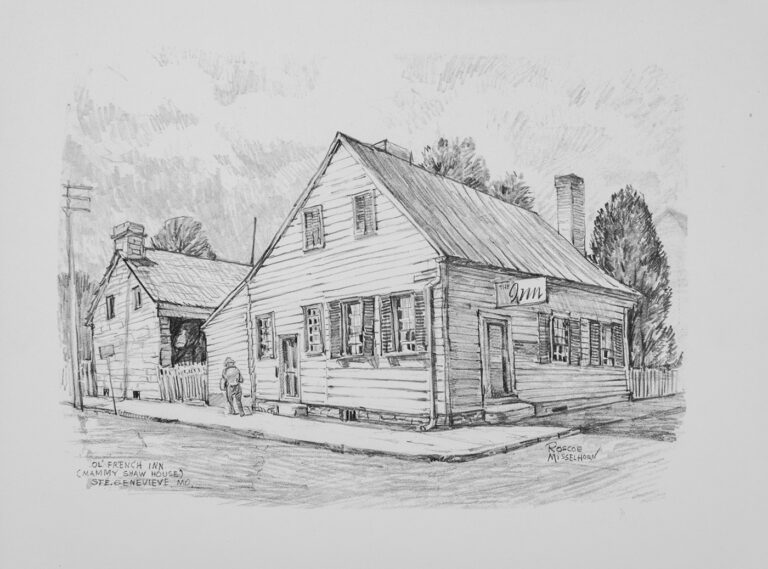
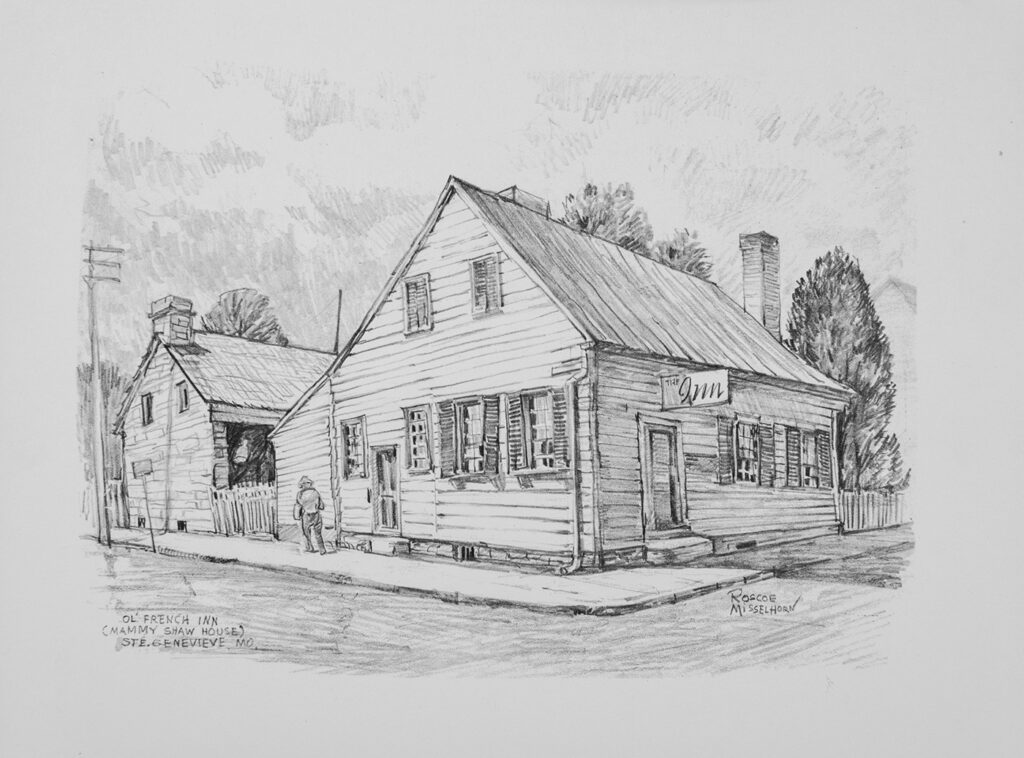
The story began in 1932 when St. Louis artists Bernard Peters, Frank Nuderscher, and Peters’ wife Ord drove to Sainte Geneviève seeking painting subjects. At a roadside stand, their conversation was overheard by Matthew Ziegler, whose aunts owned the “Mammy Shaw House” (the building’s nickname referencing a previous occupant). Ziegler mentioned the property was available for rent. Peters described the charming town to fellow artist Jessie Beard Rickly, and soon two families had rented the Shaw House to share studio space. The Ste. Genevieve Art Colony was born.
Rickly and Aimee Schweig emerged as the colony’s leaders. Both had studied at the Cape Cod School of Art in Provincetown, Massachusetts, but grew tired of traveling to New England every summer. They saw the Depression as both practical reason (Provincetown was expensive) and philosophical motivation for establishing a Midwestern art colony. As Rickly told the St. Louis Post-Dispatch: “There were enough things worth painting in the Middle West, particularly at Ste. Genevieve, to make it worthwhile.”
The colony attracted remarkable talent:
- Thomas Hart Benton – Missouri’s most famous Regionalist painter, who taught at the colony in 1936
- Joe Jones – Radical social realist whose paintings depicted workers, strikes, and Depression-era struggles
- Jessie Beard Rickly – Member of “The New Hats,” a St. Louis group so progressive they kicked out members who didn’t constantly produce new work
- Aimee Schweig – Co-founder who directed the Summer School of Art
- Bernard Peters – Early founder who maintained lifelong friendship with Matthew Ziegler
- Matthew Ziegler – Local artist who provided hospitality and became the colony’s longest-lasting presence, remaining in the Shaw House for the rest of his life
In 1934, Rickly and Schweig established the Ste. Genevieve Summer School of Art, bringing 25-30 high school students (on scholarship from the St. Louis Art Museum and Washington University) to board with townspeople while studying art. Classes occurred in the Shaw House or outdoors, with faculty critiquing student work on Saturday mornings. The sessions ended with grand parties, including on one occasion a ferry trip up and down the Mississippi River.
The artists’ vision diverged from traditional art colony subjects. Instead of painting “rolling hills or flowers,” they portrayed the human condition and Depression-era events: tenant farmers’ encampments, lime kiln workers, sharecroppers, gravediggers, industrial strikes, and the harsh realities of economic collapse. These works embodied American Regionalism and Social Realism movements—art that reflected who and where the artists were, that engaged with contemporary social conditions rather than escaping into idealized landscapes or abstract aesthetics.
The colony attracted tourists and played a significant role in establishing Sainte Geneviève as a tourist destination. Initially, townspeople “stood around in a curious staring group” when Rickly set up her easel in the town square and “marveled the more” upon discovering she painted with a putty knife rather than a brush. But reservations melted away as residents were asked to sit for paintings and the economic benefits of artist-driven tourism became apparent.
The colony survived the depths of the Depression but couldn’t survive the social upheaval that preceded World War II. After an ugly, protracted strike at Mississippi Lime in 1938—in which Joe Jones reportedly helped organize workers—town attitudes toward the radical artists seemed to change. The colony lost momentum as the 1930s closed and artists left separately to pursue their careers. Matthew Ziegler remained as Sainte Geneviève’s resident artist in the Shaw House, briefly attempting to revive the art school in the late 1940s before it permanently dissolved.
The colony’s legacy includes the art produced (including murals in 20 post offices throughout the region), the artists who learned and created during the sessions, and the lasting contribution to establishing Sainte Geneviève’s identity as a place where history and art converge.
Today: Missouri Department of Natural Resources Site Office and Interpretive Center
The building now functions as the administrative and interpretive center for the Felix Vallé State Historic Site complex operated by the Missouri Department of Natural Resources. Visitors begin their tours here, purchasing tickets, receiving orientation, and accessing the rotating exhibits that explore the area’s history in the broader context of Missouri’s development.
The exhibits change throughout the year, ensuring repeat visitors encounter fresh perspectives and new historical explorations. The rotating format allows the Missouri Department of Natural Resources to:
- Highlight specific aspects of French colonial life (agriculture, religion, domestic practices, trade networks)
- Explore the Spanish colonial period (1762-1800) that often gets overshadowed by French heritage
- Examine the American transition following the Louisiana Purchase
- Feature the 1930s Art Colony and its national significance
- Address broader Missouri history topics connecting Sainte Geneviève to state-level historical narratives
- Showcase new research, archaeological findings, or archival discoveries
- Coordinate with special events, anniversaries, or commemorative occasions
The interpretive focus emphasizes placing local history in larger contexts—how Sainte Geneviève’s experience reflected (or diverged from) broader patterns in French colonial North America, Spanish borderland administration, American frontier settlement, and regional economic development.
The Gift Shop: French Colonial History and More
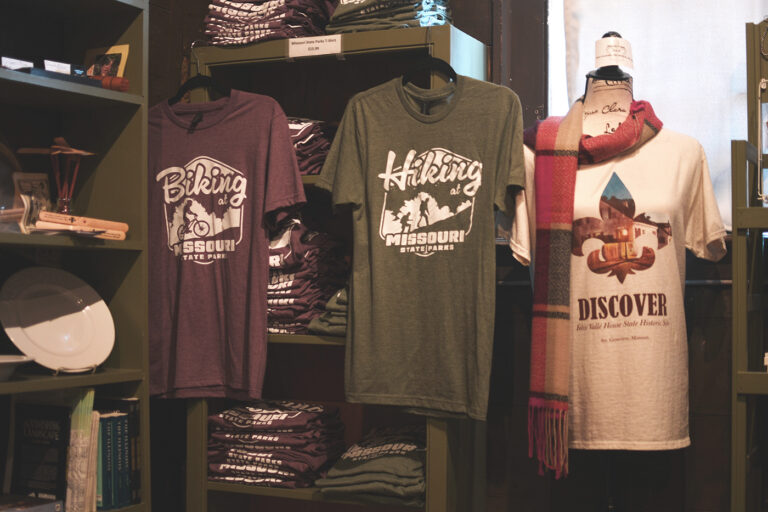
The small gift shop in the Bossier-Shaw House provides the practical service of offering visitors books, souvenirs, and educational materials related to what they’ve seen, while generating revenue that supports the site’s operation.
Book selections emphasize French Colonial history, including:
- General histories of Sainte Geneviève and Missouri’s French colonial period
- Architectural guides explaining vertical-log construction and French building traditions
- Children’s books in French (supporting language education and French cultural preservation)
- Local history volumes covering specific families, buildings, or historical events
- The definitive An American Art Colony: The Art and Artists of Ste. Genevieve, Missouri, 1930-1940 by R.H. Dick and Scott Kerr
Colonial period items likely include:
- Reproduction crafts and trade goods
- Traditional French colonial decorative items
- Soaps, candles, and household products using historical methods
- Educational toys and games with historical themes
- Postcards and prints featuring the historic buildings
The gift shop serves multiple functions: generating support revenue, providing educational materials visitors can take home, offering tangible connections to the history they’ve experienced, and creating souvenirs that extend the visit’s impact beyond the few hours spent touring the site.
The Brick Courtyard: Where Three Centuries Converge
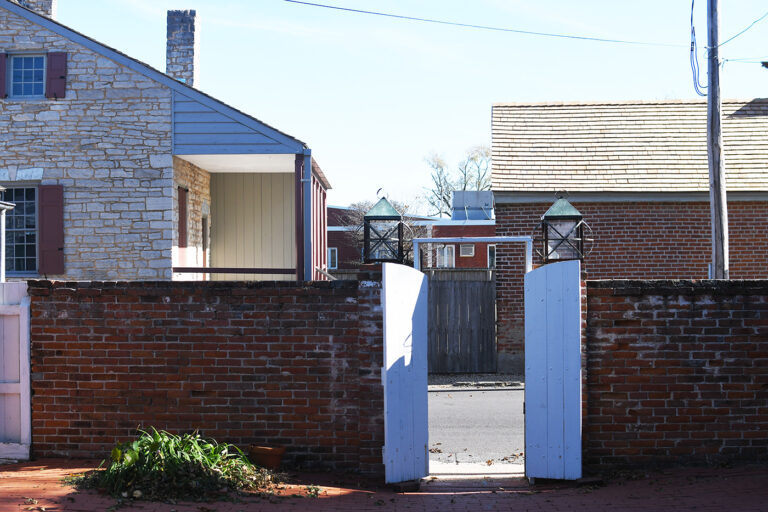
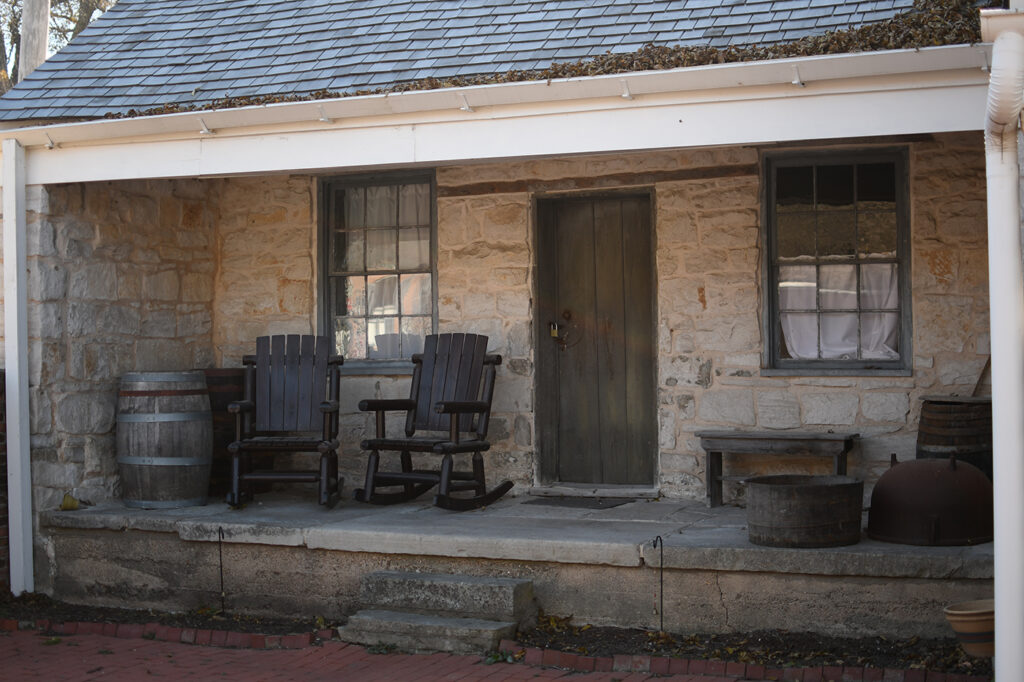
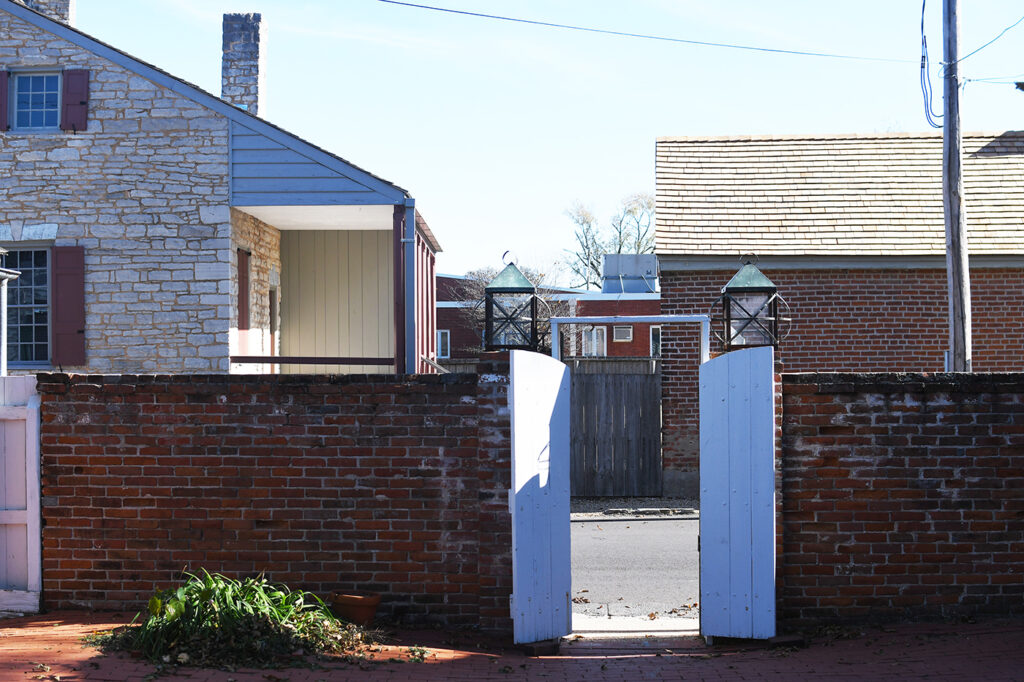
The coolest feature of the entire Bossier-Shaw House site is the brick courtyard that separates the Shaw House from the old Dufour-Bossier Indian Trading Post and the Ziegler Gallery. This isn’t just a pleasant outdoor space—it’s an architectural and historical convergence point where three distinct buildings from different eras and functions create visual dialogue about Sainte Geneviève’s layered past.
The Shaw House (1819, American Federal-style, originally mercantile storehouse, later residence, then Art Colony headquarters) represents the American transition period.
The Dufour-Bossier Indian Trading Post (earlier construction, French colonial era) represents the frontier trade economy connecting French merchants, Indigenous peoples, and the commercial networks that sustained Sainte Geneviève’s early development. The trading post recalls when Sainte Geneviève functioned as a commercial hub for the lead mining districts, salt springs, and agricultural production that made the region economically valuable. Indigenous traders brought furs, hides, and other products to exchange for European manufactured goods, creating the cultural exchange and economic relationships that characterized frontier commerce.
The Ziegler Gallery (stone building behind the Shaw House) houses works from the Ste. Genevieve Art Colony. This structure—originally built as the separate stone kitchen for the Shaw residence—now serves as a exhibition space for paintings, documents, and artifacts from the 1930s Art Colony period. Matthew Ziegler, the local artist who remained in Sainte Geneviève after the colony dissolved, maintained a studio in the space between the Shaw House and this building. The gallery preserves and displays the artistic legacy that made the Shaw House nationally significant beyond its architectural and commercial history.
The brick courtyard unites these three structures, creating an outdoor room where visitors can visually appreciate how different architectural styles, historical periods, and functional purposes coexist in a single site. The courtyard provides:
Visual Contrast – American Federal-style limestone construction (Shaw House) versus French colonial building traditions (Trading Post) versus utilitarian stone kitchen building (now Ziegler Gallery). The architectural differences teach visitors how to read building styles and recognize the cultural influences shaping construction methods.
Interpretive Opportunity – The open courtyard allows unobstructed views of all three buildings simultaneously, facilitating understanding of how the site complex evolved through additions, adaptations, and functional changes over 200+ years.
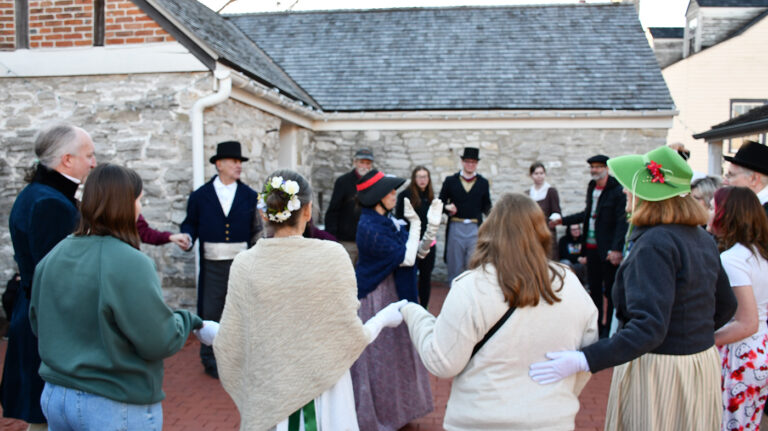
Event Space – The courtyard likely hosts special events, interpretive programs, outdoor exhibits, and gatherings that bring the historical spaces to life with contemporary activity echoing the social functions these buildings served historically.
Contemplative Setting – The brick courtyard provides a quiet outdoor space where visitors can pause, reflect, and absorb what they’ve learned before continuing tours or departing the site. The courtyard serves as transitional space between intense indoor exhibit viewing and the broader exploration of Sainte Geneviève’s historic district.
Photographic Appeal – The courtyard, framed by three historic buildings with distinctive architectural character, provides visually compelling background for photography that captures the site’s complexity better than single-building images could.
The courtyard represents thoughtful historic site design that doesn’t hide the complexity of how places evolve through time. Rather than presenting a single “frozen” historical moment, the courtyard reveals the palimpsest—the layered accumulation of history where each period leaves marks, additions, and transformations that subsequent eras inherit and adapt.
The Art Colony Legacy: Why It Matters
The Bossier-Shaw House’s role as the Ste. Genevieve Art Colony headquarters deserves particular attention because this chapter elevates the building from local historical significance to national cultural importance.
American Regionalism, the art movement that flowered in the 1930s, rejected both European modernist abstraction and the dominance of New York as America’s art center. Artists like Thomas Hart Benton, Grant Wood, and John Steuart Curry argued that American art should depict American scenes, American people, and American life—particularly rural and small-town experiences that defined the nation’s character beyond coastal urban centers.
The Ste. Genevieve Art Colony became a crucial Regionalism center, described by contemporaries as “the Mecca of Midwestern art.” The artists weren’t painting idealized pastoral scenes or nostalgic rural romanticism. They depicted the Depression’s harsh realities: workers, strikes, poverty, industrial labor, and social struggle. As Bernard Peters articulated the colony’s goals: “to create a center for the Midwest region that could draw from New England and European traditions, with which the artists were familiar, but be left free enough to develop an independent artistic tradition.”
Social Realism, the related movement emphasizing working-class subjects and social conditions, found expression in Joe Jones’s radical paintings of lime kiln workers and Joe’s reported involvement in organizing the 1938 Mississippi Lime strike. The colony’s artists weren’t detached observers documenting quaint small-town life—they were engaged participants in social struggles, using art as a tool for social commentary and change.
The colony produced tangible legacy:
- Post Office Murals – Twenty post offices throughout the region received murals created by colony artists through New Deal art programs
- Institutional Collections – Works by Schweig, Rickly, Martyl, and other colony artists now reside in the Sainte Geneviève Welcome Center, museums, and private collections
- Artistic Lineage – Matthew Ziegler instructed Charles Rhinehart, who taught art in the area for years, creating multi-generational transmission of artistic knowledge and practice
- Documentation – Robert Dick’s 2005 book An American Art Colony rescued the story from oblivion, preserving photographs, paintings, and documents that survived in a carriage house through decades of neglect
The colony’s dissolution following the 1938 strike and the onset of World War II represents more than just an art movement’s natural conclusion. It reflects how social conflicts (labor strikes pitting workers against industrialists) and global upheaval (the approaching war) shattered the conditions that allowed the colony to flourish. The artists who’d captured Depression-era struggles were themselves caught in those struggles, and the small-town Missouri setting that seemed ideal for independent artistic tradition couldn’t remain isolated from national and international conflicts.
For visitors to the Bossier-Shaw House today, the Art Colony chapter adds crucial dimension to the site’s interpretation. This isn’t just a building from the 1820s-1840s transition period. It’s also the place where nationally-significant artists gathered in the 1930s to create a body of work that defined American Regionalism and Social Realism. The building witnessed both French-to-American cultural transition (1819-1840s) and the Depression-era artistic flowering that made a small Missouri town nationally significant in American art history (1932-1941).
Practical Information
Location: Just across Second Street from the Felix Vallé House, downtown Sainte Geneviève
Hours:
- April 1 – October 31: Wednesday-Saturday 10:00 AM – 4:00 PM, Sunday 12:00-5:00 PM
- November 1 – March 31: Thursday-Saturday 10:00 AM – 4:00 PM, Sunday 12:00-5:00 PM (Hours may vary; call ahead to confirm)
Admission: Covers access to the Felix Vallé State Historic Site complex including the Felix Vallé House, Bauvais-Amoureux House, and Bossier-Shaw House interpretive center
Group Tours: Available year-round with advance reservations
Contact: Missouri Department of Natural Resources – Felix Vallé State Historic Site
What to Experience:
Rotating Exhibits – Check what’s currently displayed; exhibits change throughout the year focusing on different aspects of local and Missouri history
Gift Shop – Browse books on French Colonial history, children’s books in French, colonial period items, and local history volumes
The Brick Courtyard – Don’t miss the outdoor space connecting the Shaw House, the Indian Trading Post, and the Ziegler Gallery—the visual convergence of three centuries of architecture
Ziegler Gallery – View works from the 1930s Art Colony in the stone building behind the Shaw House
Architectural Details – Examine the building’s Federal-style limestone construction, the original wallboard silhouettes of Bossier’s store counters and shelves, and the Shaw-era additions
Orientation for Site Tours – Use the Bossier-Shaw House as the starting point for exploring the broader Felix Vallé State Historic Site complex
Begin Your Journey Through Sainte Geneviève’s Layered History
The Bossier-Shaw House Site Office and Interpretive Center provides more than administrative convenience—it offers conceptual introduction to how Sainte Geneviève’s history accumulates in layers rather than replacing itself. The 1819 building preserves the American transition following the Louisiana Purchase. The 1930s Art Colony chapter demonstrates how history continues being made, not just preserved. The brick courtyard connecting the Shaw House to the Indian Trading Post and Ziegler Gallery creates visual lesson in how places evolve across centuries while maintaining physical evidence of each transformation.
Visit the Bossier-Shaw House first when exploring the Felix Vallé State Historic Site complex. Orient yourself with the current exhibits. Browse the gift shop for books that will deepen your understanding. Step into the brick courtyard and appreciate how three buildings from different eras create dialogue about commerce, art, cultural transition, and the remarkable preservation that makes Sainte Geneviève’s National Historic Landmark District one of America’s most intact French colonial townscapes.
The building isn’t just administrative office—it’s historical document in limestone and wood, it’s art colony memorial preserving the legacy of artists who made this small Missouri town “the Mecca of Midwestern art,” and it’s gateway to understanding how Sainte Geneviève’s past remains present, visible, and relevant to contemporary visitors seeking authentic encounters with American history beyond the familiar narratives of eastern colonial settlements and western expansion.
This is where the tour begins, where the context forms, and where the complex, layered, fascinating story of Sainte Geneviève starts to unfold.






Sorry, no records were found. Please adjust your search criteria and try again.
Sorry, unable to load the Maps API.