
Living History at the Linden House – Step Into the Past
Every Saturday from late March through early November, the Linden House opens its doors to offer something rare and wonderful: the chance to experience French Creole colonial life not as distant history locked behind velvet ropes, but as living, breathing, tactile reality. This isn’t passive observation—it’s active engagement with the past, where visitors of all ages can touch history and truly understand how people lived, worked, and entertained themselves in early 19th-century Ste. Genevieve.
A House That Tells Many Stories
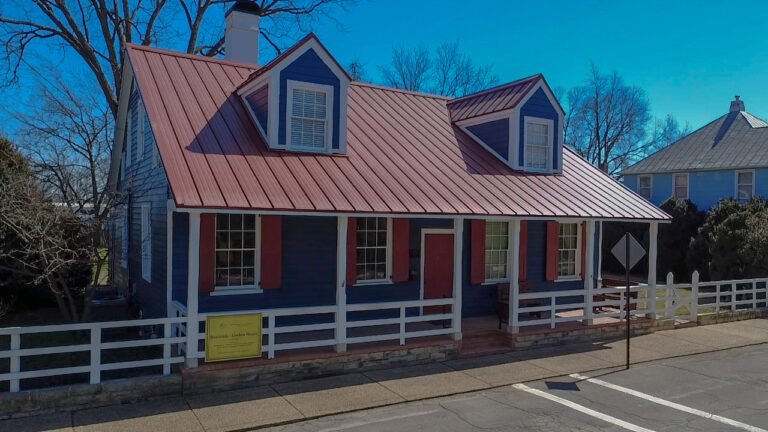
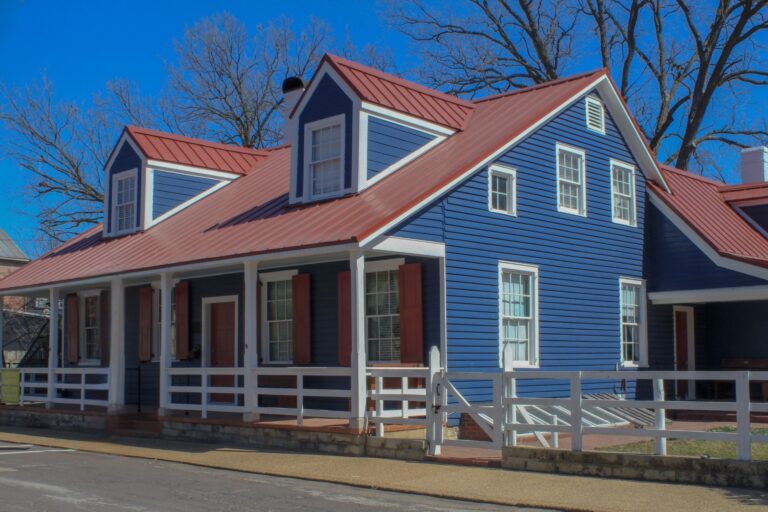
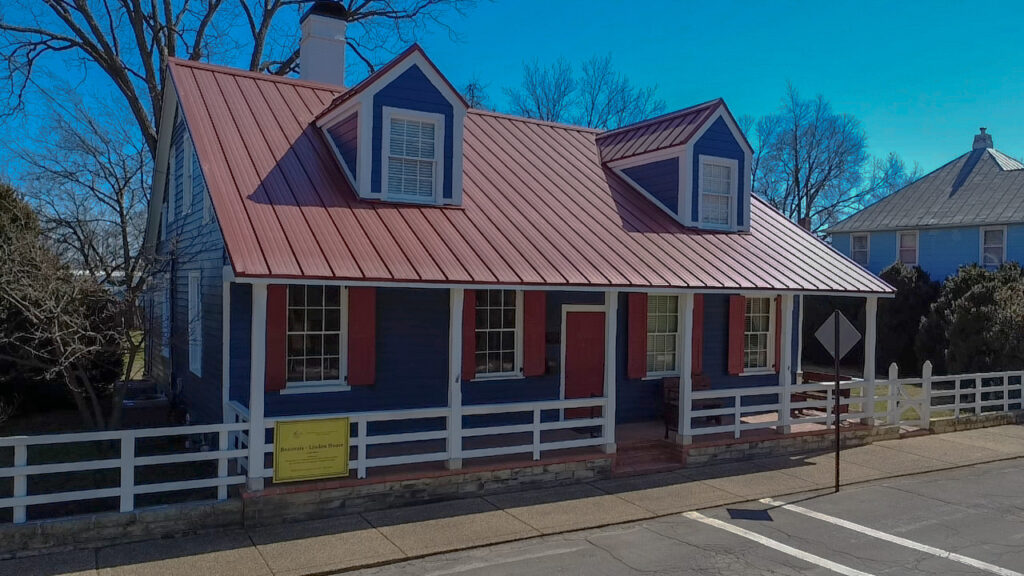
The Linden House itself embodies the layered history of Ste. Genevieve. Built in stages from 1811/1812 through the 1930s, the structure reflects how families adapted and expanded their homes across generations, responding to changing needs, prosperity, and architectural fashions. The earliest portions date to just after the Louisiana Purchase, when French Creole families were navigating the transition from Spanish and French rule to American governance. Later additions show how the property evolved as the 19th century progressed and eventually entered the 20th century.
This architectural mixture —where different eras exist within a single structure—makes the Linden House particularly well-suited for living history interpretation. It’s not frozen at a single moment but rather represents the continuity of domestic life across time.
Three Spaces, Three Perspectives
The living history experience at the Linden House revolves around three distinct spaces, each offering a different window into French Creole life:
The Recreated Store
In the early 19th century, many French Creole homes doubled as commercial spaces, with merchants conducting business from their residences. The recreated store at the Linden House brings this entrepreneurial reality to life, showing visitors the kinds of goods that were bought, sold, and traded in frontier Ste. Genevieve.
You’ll see the variety of goods that frontier merchants stocked: fabrics, hardware, spices, tools, household items, and luxury goods that made life on the frontier more comfortable and connected residents to wider commercial networks. The store demonstrates that even in what we might think of as a remote frontier settlement, French Creole residents had access to surprisingly sophisticated goods and participated in complex economic systems.
The Merchant’s Living Quarters
Step beyond the commercial space and enter the private family realm. The merchant’s living quarters show how relatively prosperous French Creole families actually lived—the furnishings they used, how rooms were arranged, where and how they cooked, ate, and slept.
Living history interpreters bring these spaces to life through period-appropriate activities. You might encounter someone demonstrating cooking techniques using period methods and equipment, showing how meals were prepared without modern conveniences. Or perhaps someone engaged in needlework, candle-making, or other domestic tasks that were essential to household management.
The “Common Room”
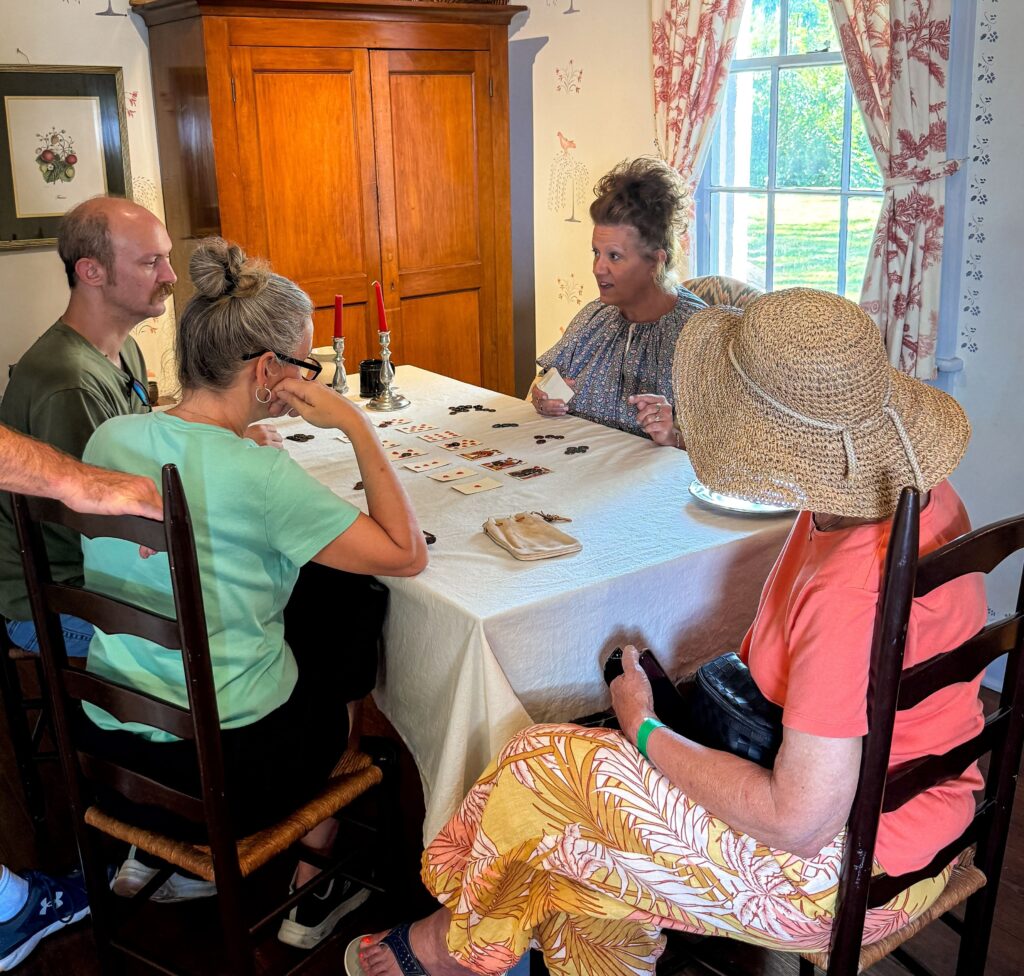
As the modestly-sized living spaces in these houses offered limited space for social activities, the town’s residents often utilized the “common room” of a nearby tavern or inn to meet with neighbors, to converse, share stories, or play games.
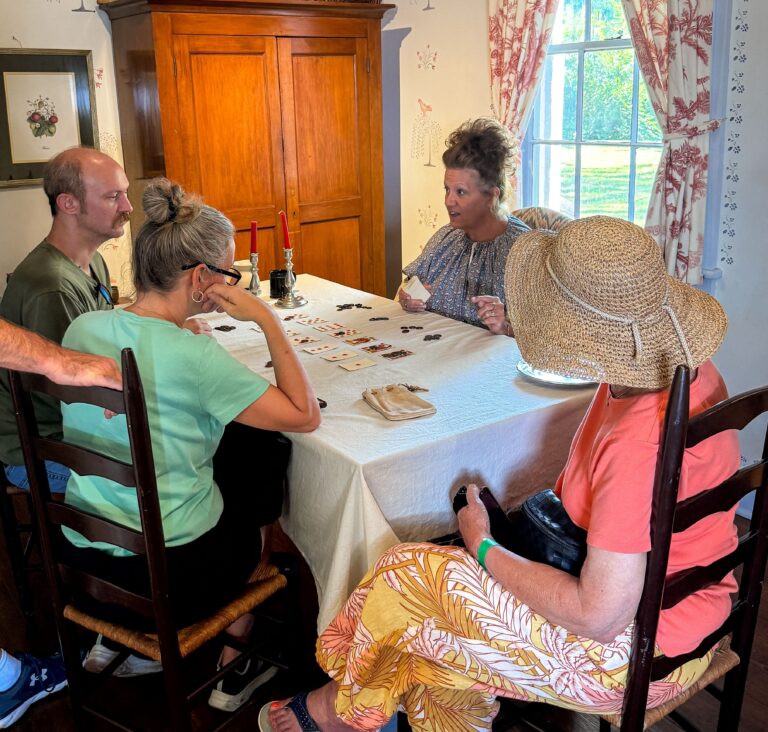
The common room serves as the setting for demonstrations of entertainment, recreation, and social interaction. This is where you’re most likely to experience the fun side of living history.
Colonial-era games invite participation. Try your hand at games that French Creole children and adults played for entertainment—simple games using materials readily available on the frontier, or more elaborate pastimes that wealthier families enjoyed. These aren’t just quaint curiosities; they’re windows into how people created joy, competition, and community without television, internet, or commercial entertainment.
Music might fill the air if interpreters are demonstrating period instruments or songs. Storytelling—oral tradition being crucial in an era when books were expensive and literacy not universal—might transport you to the world of French folktales and local legends.
French Creole History and Culture
Throughout your visit, interpreters weave in broader context about French Creole history and culture—the unique blend of French, Canadian, Native American, African, and Spanish influences that created something distinctive in the Mississippi Valley.
You’ll learn about:
- How French settlers adapted Old World traditions to New World realities
- The role of the Catholic Church in community life
- Relationships between French colonists and Native peoples
- The presence and contributions of enslaved and free people of African descent
- How the Louisiana Purchase and American rule changed (and didn’t change) French Creole communities
- Language, foodways, celebrations, and customs that persisted across generations
This cultural interpretation helps visitors understand that Ste. Genevieve’s French heritage isn’t just about old buildings—it’s about a whole way of life, a worldview, a set of values and practices that shaped this community and left lasting legacies.
Admission: Free to All
Admission to the Linden House living history program is completely free, made possible by generous donors who believe this experience should be accessible to everyone regardless of ability to pay.
Of course, the program depends on continued donor support, so visitors who are able might consider making voluntary donations to help ensure this valuable programming continues.
Every Saturday Is Different
Because living history is performed by real people rather than automated displays, every Saturday offers a slightly different experience. The specific crafts being demonstrated, the particular games available, the stories being told, and the seasonal activities all vary.
Plan Your Visit
When: Every Saturday from late March through early November
Where: The Linden House (part of the French Colonial America museum campus) on Main Street across from the Bolduc and LeMeilleur Houses
Admission: FREE (thanks to generous donors)
Duration: Plan for at least an hour, though you can stay longer if activities particularly engage you
A Living Connection to the Past
In an increasingly digital world where so much of life happens on screens, there’s something profoundly grounding about spending time on a Saturday at the Linden House.
Whether you’re a local resident looking for a meaningful weekend activity, a tourist seeking authentic historical experiences, a parent wanting to give children educational fun, or simply someone curious about how people actually lived in frontier America, the Linden House welcomes you every Saturday to step into the past and discover connections that span centuries.

Sorry, no records were found. Please adjust your search criteria and try again.
Sorry, unable to load the Maps API.