

Ste. Genevieve Catholic Church
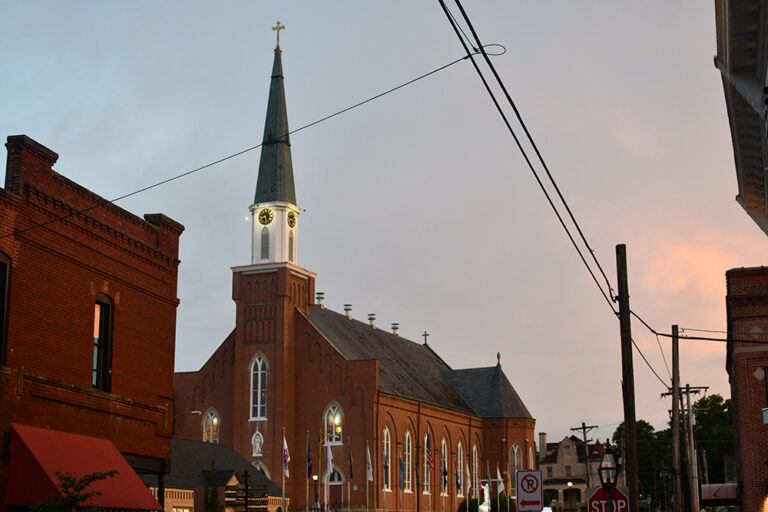
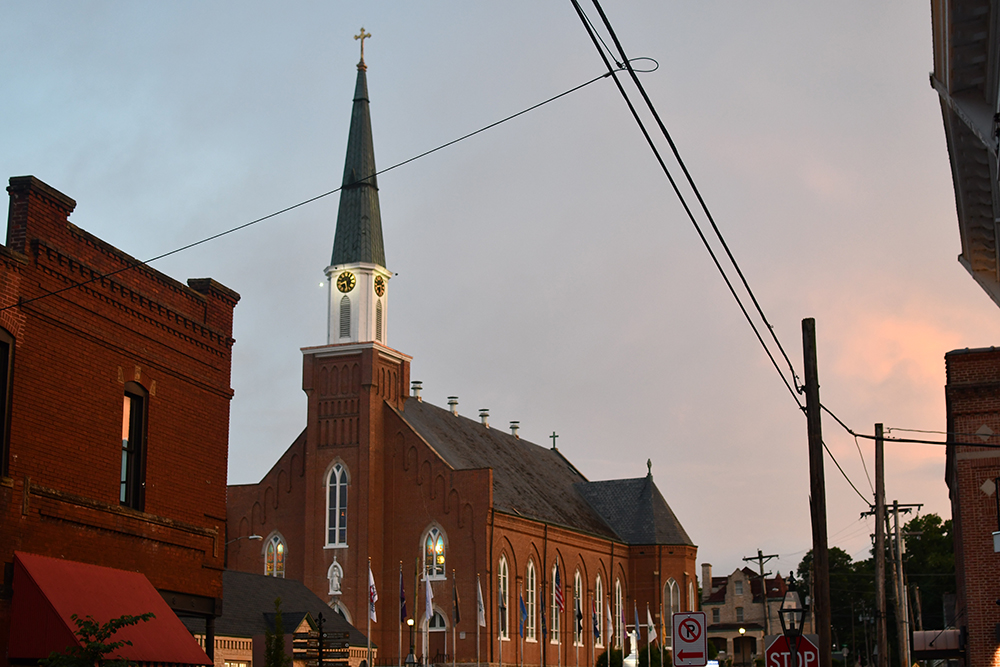
At 49 DuBourg Place in downtown Ste. Genevieve, the current brick Ste. Genevieve Catholic Church is the third Catholic church erected on this block—a physical manifestation of how faith, community need, and architectural ambition evolve across generations. The Catholic faith first came to the Ste. Genevieve area when Jacques Marquette traveled down the Mississippi River in 1673, with the parish officially started in January 1759 by Jesuits who came from Quebec. But the building you enter today tells a more complex story: the original log church was moved here in 1794 as Ste. Genevieve relocated to higher ground due to flooding, a stone structure replaced that log building and was consecrated in 1837, and as the congregation grew, a larger church was required, with a brick building constructed around the stone one. The result is a Gothic Revival structure designed by Francis Xavier Weiss, a legendary pastor who served the parish from 1865 until 1900, representing commitment to both architectural excellence and spiritual growth that deserves encounter on its own terms.
Three Churches in One: Visible Faith Across Two Centuries
The building embodies spiritual and practical history simultaneously. When the brick church was completed, the stone church was dismantled and carried out the doors of the present church, though the pillars of the present structure are part of the old stone church, and the foundation was left in place to help support the brick church. The walls literally contain their predecessors. The foundations of the previous log and stone churches are still visible in the basement of the present church. Walking through Ste. Genevieve Catholic Church means moving through layered history—standing on foundations laid in 1752 or 1754, within walls supported by stone from 1837, under a brick roof completed in 1880.
Gothic Revival Architecture: Immigrant Influence and Aspiration
The church was built in Gothic Revival style, representing architectural ambition unusual for small frontier towns. Gothic Revival emerged as 19th-century Americans attempted to reclaim perceived legitimacy through medieval architectural idiom. In Ste. Genevieve—a French colonial settlement adapting to American dominance—that architectural choice signaled something specific: community pride, spiritual commitment, and determination to create permanent institutional presence.
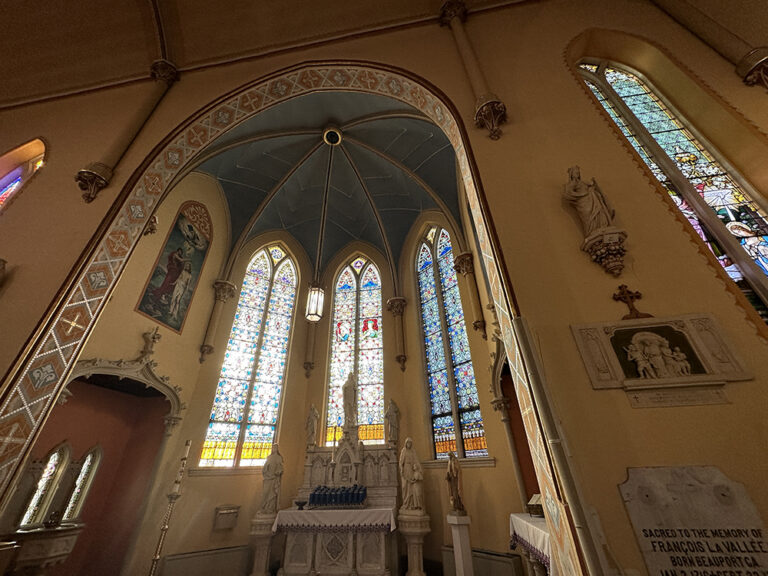
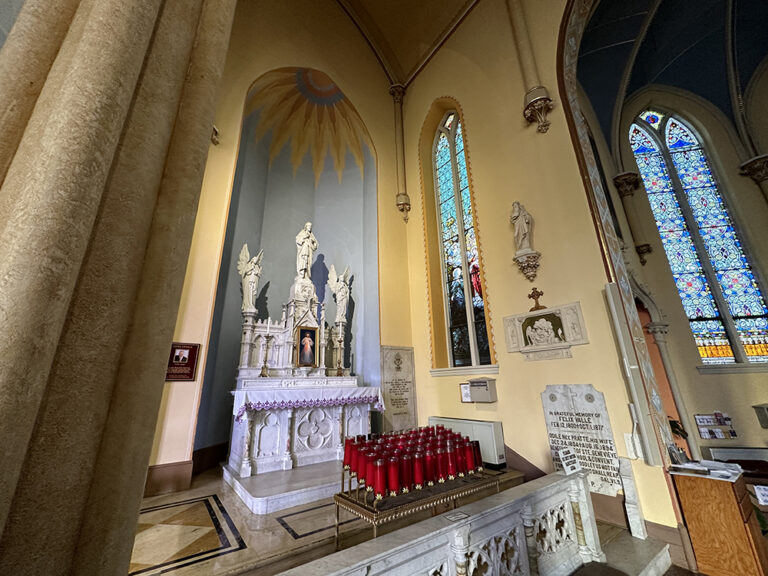
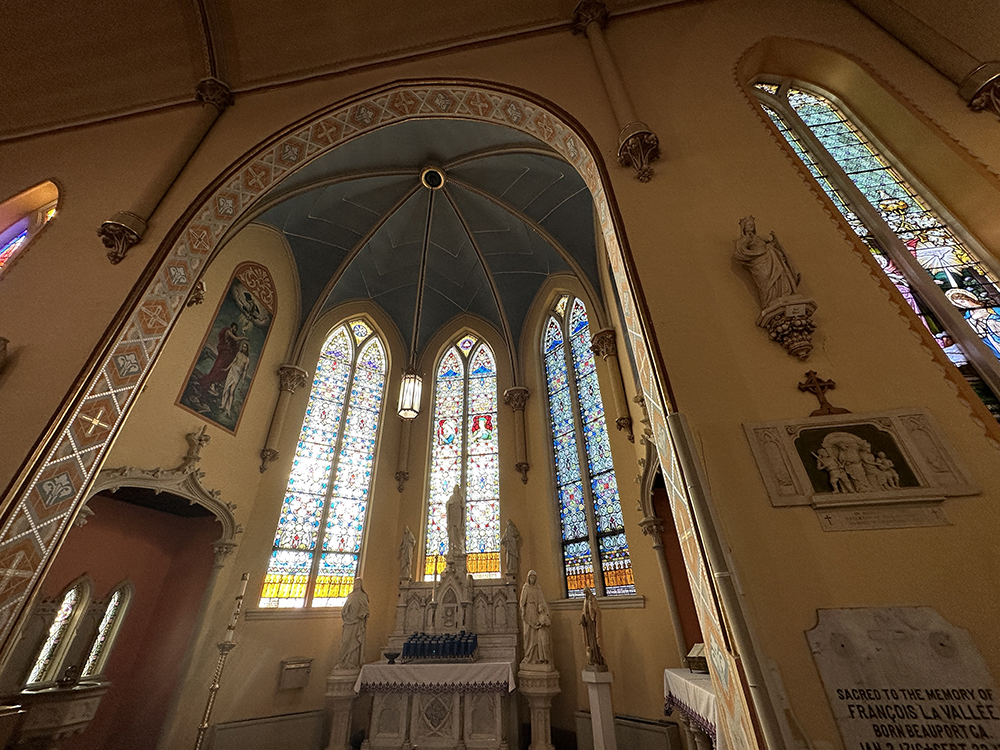
The building itself reveals cultural layering. The stained glass windows are clearly from two separate eras: the windows along the two long walls of the church were created in the French style when the current structure was finished in 1880, and the windows in the side chapels were built in the German style when these areas were constructed in 1911. You can literally trace cultural demographics through architectural evolution—French stained glass from 1880 reflecting original settlement patterns, German style from 1911 reflecting immigration waves shaping Missouri communities.
Funding Through Collective Commitment
The total cost of the church was $24,000.00, with $18,000.00 donated by Mrs. Odile Valle. That donation was remarkable for era and region. Odile Valle, widow of Felix Valle (grandson of French colonial leader François Valle I), possessed wealth unusual in post-colonial frontier society. Her contribution transformed aspiration into reality—an act of faith that literally built the structure visitors enter today. That generosity created something larger than individual piety: it created community gathering place where strangers become congregation.
1911 Expansion: Growth Through Continued Commitment
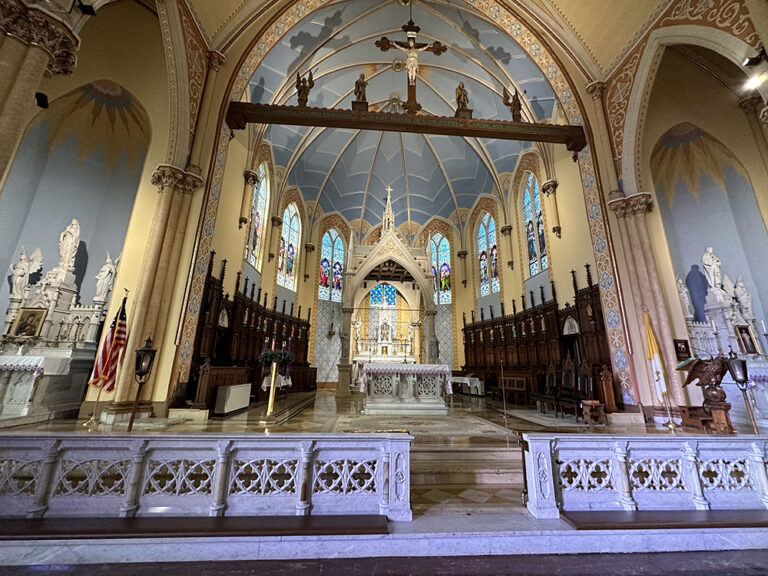
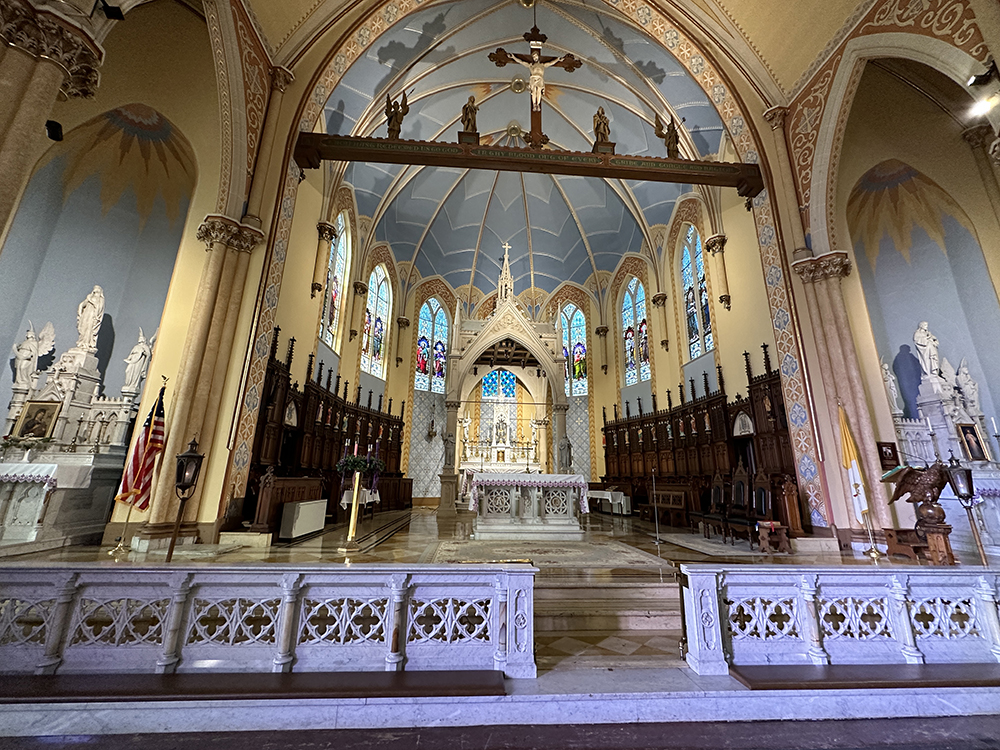
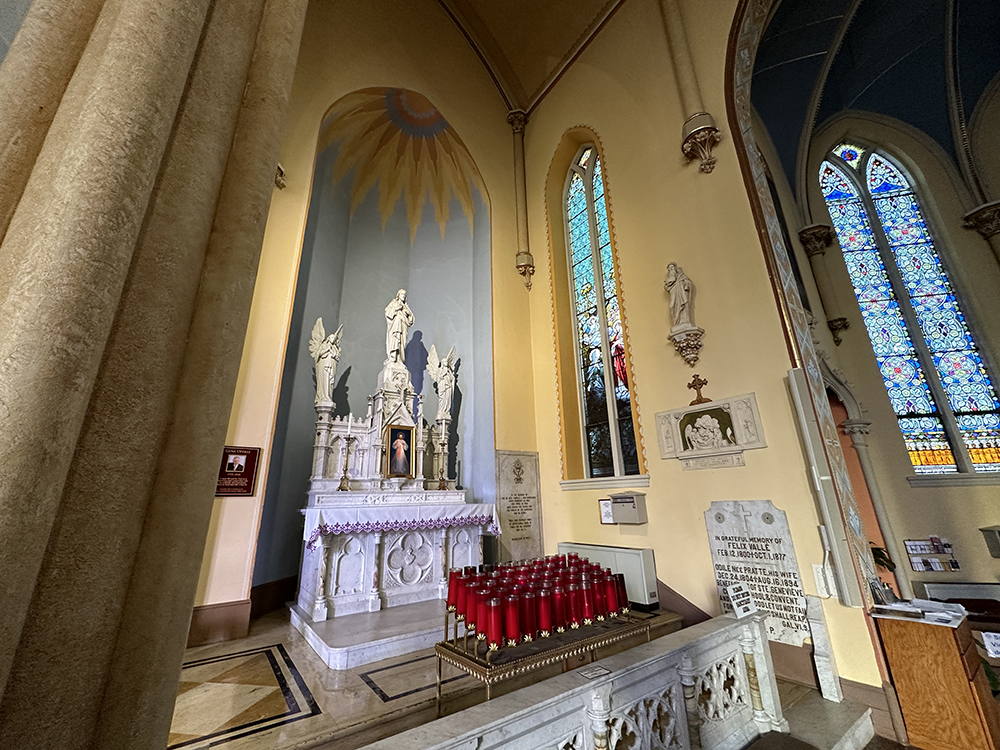
In 1911 the church was enlarged to its present size, under the leadership of Father Charles L. Van Tourenhout, who served this parish for 58 years. The hexagonal apse containing the present sanctuary was added, along with two transepts containing the shrines of Ste. Genevieve and St. (The name is cut off, but likely Saint Joseph based on Catholic tradition). That 1911 expansion demonstrates commitment continuing beyond the 1880 dedication—community reinvesting in sacred space, adapting architecture to serve growing congregation, adding shrine space honoring saints central to French colonial Catholic identity.
Architectural and Spiritual Integration
The church is linked to a 1925 rectory of American Foursquare and Spanish Colonial style, creating compound of sacred and residential spaces supporting parish operations. Commandant Francois Valle II and a few of his family members and pastors are buried below the church nave, creating sacred ground quite literally beneath modern worship space.
Stained Glass Windows: Artistic Expression Across Eras
The stained glass represents two distinct artistic traditions. Come inside to admire the stain-glass windows and marble adornments. The French-style windows from 1880 reflect original aesthetic choices by community leaders most connected to French colonial heritage. The German-style windows from 1911 reflect evolving community demographics and artistic preferences. Together they create visual history: glass telling stories of cultural change through color and design.
Practical Information
- Name: Ste. Genevieve Catholic Church
- Location: 49 DuBourg Place, Ste. Geneviève, Missouri 63670
- Phone: (573) 883-2731
- Architecture: Gothic Revival (designed by Father Francis Xavier Weiss)
- Original Cornerstone: April 30, 1876
- Dedication: September 29, 1880
- Cross Placed on Steeple: November 1, 1879
- 1911 Expansion: Hexagonal apse and side transepts added
- Original Cost: $24,000 (1880); $18,000 donated by Odile Valle
- Features: Stained glass windows (French style 1880, German style 1911), marble adornments, visible steeple from most of downtown
- Historic Burials: Commandant François Valle II and family members
- Linked Rectory: 1925 American Foursquare and Spanish Colonial style building
Perfect For:
- History enthusiasts understanding faith’s role in settlement and community building
- Architecture students studying Gothic Revival adaptation to frontier conditions
- Those exploring French colonial heritage and immigrant influences
- Visitors seeking spiritual and cultural immersion in historic setting
- Photography enthusiasts documenting stained glass and architectural detail
- Anyone understanding how communities maintain sacred spaces across generations
- Those learning how immigrant populations shaped Missouri’s cultural landscape
- Visitors combining religious site touring with Ste. Genevieve’s broader historic experience
Ste. Genevieve Catholic Church is a Roman Catholic church located in Ste. Genevieve, Missouri, the first organized European settlement west of the Mississippi River in the United States of America. That positioning—oldest European settlement west of Mississippi, continuously Catholic community from 1673 through present day—matters deeply. Faith shaped Ste. Genevieve’s founding. The building you encounter represents 250+ years of collective commitment to sacred space, architectural evolution, cultural adaptation, and community identity.
Visit Ste. Genevieve Catholic Church to see where Catholic faith took root in American frontier. Admire Gothic Revival architecture reflecting 19th-century ambition and cultural pride. Study stained glass windows from two eras, literally seeing artistic and demographic change. Stand in space containing foundations from 1752, walls incorporating 1837 stone, brick structure from 1880, expanded transepts from 1911. Understand how small communities sustain sacred institutions across challenging centuries. That’s what the church offers: not just spiritual space but tangible evidence of persistent faith, architectural excellence, and community commitment enduring through generations.
Sorry, no records were found. Please adjust your search criteria and try again.
Sorry, unable to load the Maps API.