

Featured
1 4th Street,
Ste Genevieve, Missouri, 63673
Ste Genevieve, Missouri, 63673
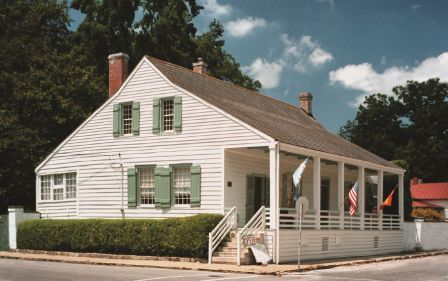
Guibourd-Vallé House – Where You Can Touch History’s Framework In a town filled with exceptional French Creole architecture, the Guibourd-Vallé House claims a unique distinction: this is the only place in Ste. Genevieve where visitors can climb into the attic and actually touch the massive Norman truss system—those impressive hewn log beams and wooden pins that have held up the roof for more than two centuries. This rare access transforms what could be merely observational history into something tactile and immediate, allowing you to literally lay hands on the engineering genius of early 19th-century French colonial builders. A House with Distinguished Origins Constructed in 1806 for Jacques Jean Rene Guibourd de Luzinais, the house carries a name that signals its owner’s elite status within French colonial society. His full, formal French name speaks to European aristocratic traditions and suggests someone of education, means, and social standing. This wasn’t a rough frontier cabin thrown together for basic shelter; it was a proper residence for someone who brought Old World expectations and resources to the New World. The year 1806 is itself significant—just three years after the Louisiana Purchase. Guibourd de Luzinais was building his house at a moment of tremendous transition, Read more…
: 9:15 am – 2:15 pm
Mon
9:15 am – 2:15 pm
Tue
Closed
Wed
Closed
Thu
9:15 am – 2:15 pm
Fri
9:15 am – 2:15 pm
Sat
9:15 am – 2:15 pm
Sun
9:15 am – 2:15 pm
198 2nd Street,
Ste Genevieve, Missouri, 63673
Ste Genevieve, Missouri, 63673
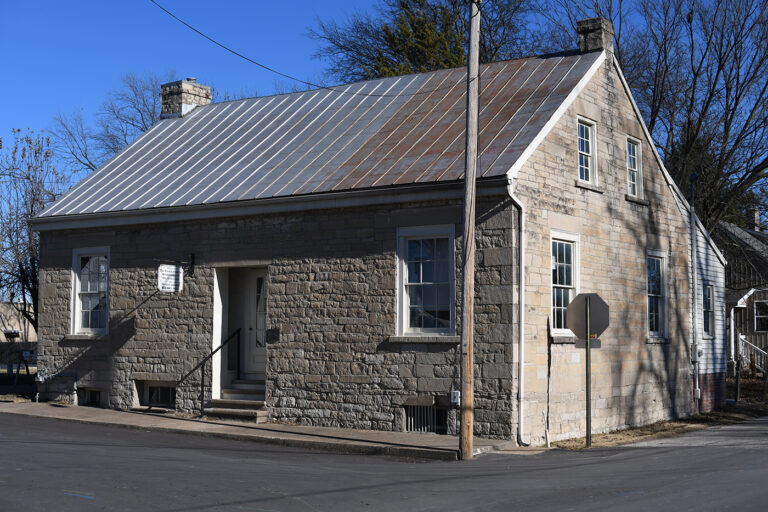
Mecker Research Library – Where Robert and Odile Mecker’s Vision Created the Central Repository for French American Colonial History Most research libraries are institutional creations—university collections, government archives, museum repositories established through official channels with dedicated budgets and professional staffs. The Mecker Research Library emerged from something more personal: the passionate commitment of Robert and Odile Mecker, a retired St. Louis couple who bought and restored an 1820 house in Sainte Geneviève, became life members of the Foundation for Restoration of Ste. Genevieve, and recognized that scattered historical materials concerning the town’s French colonial heritage needed a central location where researchers could access books, papers, and documents—some rare—pertaining to the history of French and Spanish colonization in the Louisiana Territory. Robert Mecker, a CPA who spent 45 years with Price Waterhouse as an audit manager, served as president of the Foundation and helped bring national recognition to both the town and to Memorial Cemetery, Missouri’s oldest burial ground. As a result of his efforts, the Mecker Research Library was established in 2004 and housed in the Foundation’s historic 1813 Kiel-Schwent House at 198 South 2nd Street, where it has functioned ever since as the essential starting point for anyone researching Read more…
35 North 5th Street,
Sainte Genevieve, Missouri, 63670
Sainte Genevieve, Missouri, 63670
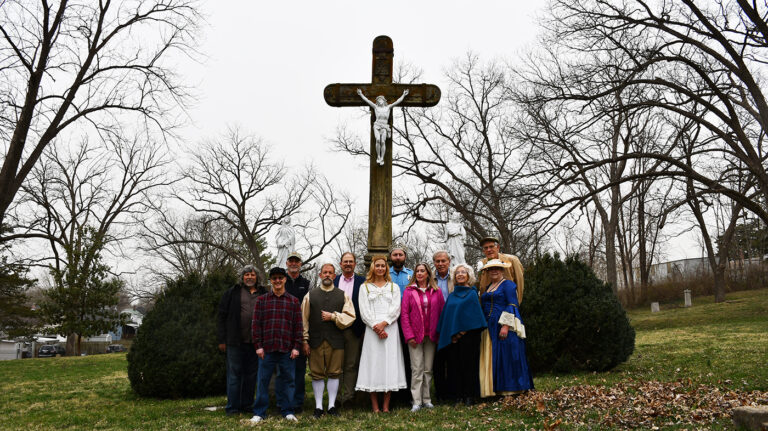
Sainte Genevieve Memorial Cemetery – Missouri’s Oldest Cemetery Most historic cemeteries offer orderly rows of weathered headstones, carefully maintained grounds, and clear boundaries separating the living from the dead. Memorial Cemetery operates differently. This is a 5th and Merchant Streets hillside where more than 3,500 people—perhaps up to 5,000—lie in graves that are mostly unmarked, their wooden crosses having rotted away over the 235+ years since the cemetery’s establishment in 1787. The oldest marked grave belongs to Louis Le Clere (dated 1796, though burials certainly occurred earlier), and remarkably, burials continued 15 years after the official 1882 closure when the cemetery had become so crowded and weedy that it posed a health hazard. This is where Missouri’s territorial representative John Scott rests alongside French commandant Jean Baptiste Vallé, where Revolutionary War soldier Jacques Misse sleeps near Civil War Colonel killed at Shiloh, where enslaved people lie in their enslavers’ plots while free African Americans and Native Americans occupy the uphill section, and where Senator Lewis Linn was buried three times—the third interment occurring in 1938 when his nearly 100-year-old corpse was found remarkably preserved in its air-tight, lead-lined coffin, and people lined up to view his face through the window Read more…