

Fort de Chartres State Historic Site
Stone Testament to French Imperial Ambition
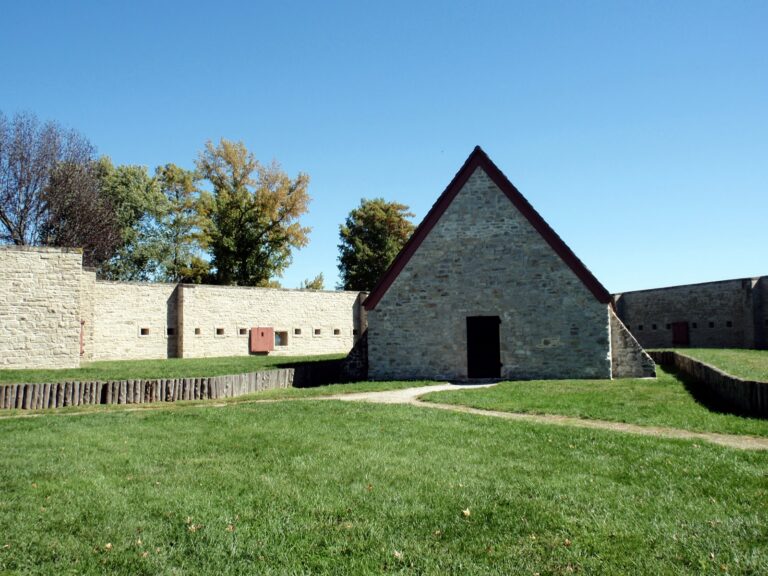
Four miles west of Prairie du Rocher, Illinois, where the American Bottom widens toward the Mississippi River, stands a partially reconstructed stone fort that once embodied French imperial authority across the Illinois Country—Fort de Chartres, named for the infant son of the French regent, erected in the 1750s as the seat of French government and chief military installation in Upper Louisiana. The massive stone structure, built after two successive wooden forts proved inadequate to French ambitions, served for barely a decade before the Treaty of Paris (1763) ceded French territories to Britain, before British occupation itself ended in abandonment, before the river whose presence justified the fort’s location began its patient erosion—collapsing the south wall in 1772 and leaving only ruins to mark where colonial power had been concentrated and then forgotten. Today, within the reconstructed fort walls and the grounds of Fort de Chartres State Historic Site, the powder magazine stands—that original 1750s stone structure widely considered the oldest building in Illinois—proof that some things endure even when empires don’t.
The Three Forts: Ambition’s Evolution
The story of Fort de Chartres encompasses three distinct structures reflecting French colonial adaptation to frontier reality. The first wooden fort, erected in 1720 by Pierre Dugué de Boisbriand leading a French contingent from New Orleans, consisted of palisaded logs with corner bastions and a surrounding dry moat—adequate for the immediate needs of the Compagnie des Indes (Indies Company) seeking to protect its commercial interests in the Mississippi Valley.
Yet frequent flooding and seasonal damage rendered the initial structure vulnerable. Around 1725, work began on a larger, more substantial fort located farther inland from the river’s destructive reach. By the 1750s, French colonial ambition demanded something more imposing: a massive stone structure designed to project permanent authority, to signal through its very materiality that France intended to govern this territory indefinitely.
The third fort, began in the early 1750s and operational by 1754, represented French confidence at its zenith—a substantial stone fortification with walls, bastions, barracks, and support buildings arranged within its perimeter. Improvements continued through 1760 as French authorities invested in making the fort reflect their imperial vision.
The Powder Magazine: Endurance Through Stone
Within that third fort, a powder magazine was constructed—a small stone building designed to withstand explosions, to protect military supplies, to survive what wood could not. That magazine survives today, standing as the oldest building in Illinois, proof that stone and purpose can outlast empires, that a building designed to protect explosive force ironically became the building most capable of surviving time itself.
The guard house, reconstructed on original foundations, contains a Catholic chapel furnished in 1750s style, alongside a priest’s room, a gunner’s room, an officer-of-the-day room, and a guard’s room—spaces revealing how French colonial military life intertwined with Catholic practice, how spiritual authority accompanied imperial governance.
The British Occupation: Brief Interlude, Hastened Decline
In 1763, through diplomatic negotiation rather than military defeat, France ceded vast North American territories to Britain as part of the peace settlement following the Seven Years’ War. British troops occupied Fort de Chartres from 1765 until 1772—merely seven years, yet sufficient to assess the fort’s value and conclude it had little strategic advantage under British control. The Mississippi River, which had justified the fort’s location as a river-controlling installation, proved more enemy than ally as riverbank erosion accelerated.
By 1772, the south wall and its bastions collapsed into the river. Subsequent years brought further decay—flooding, continued erosion, the slow entropy that claims all things abandoned. By 1900, only the powder magazine remained above ground, that solitary stone structure testifying to what the fort had been.
The Reconstruction: The Imaginative Recovery of Lost Space
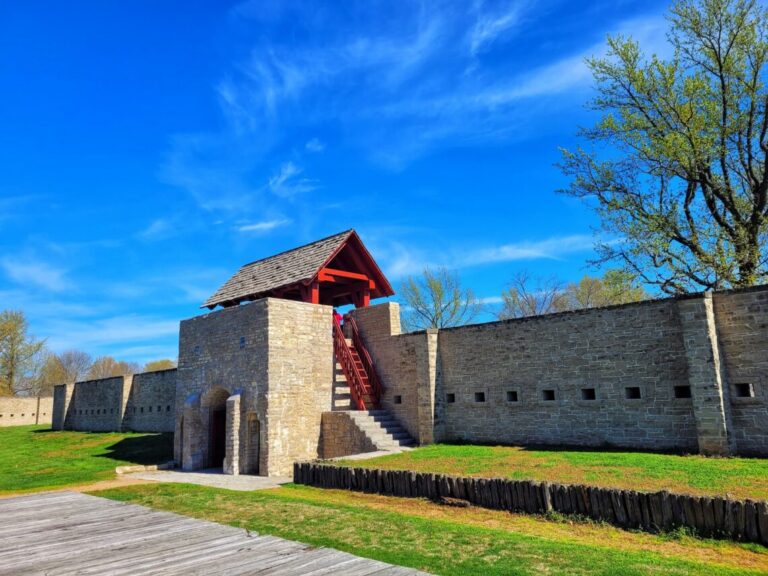
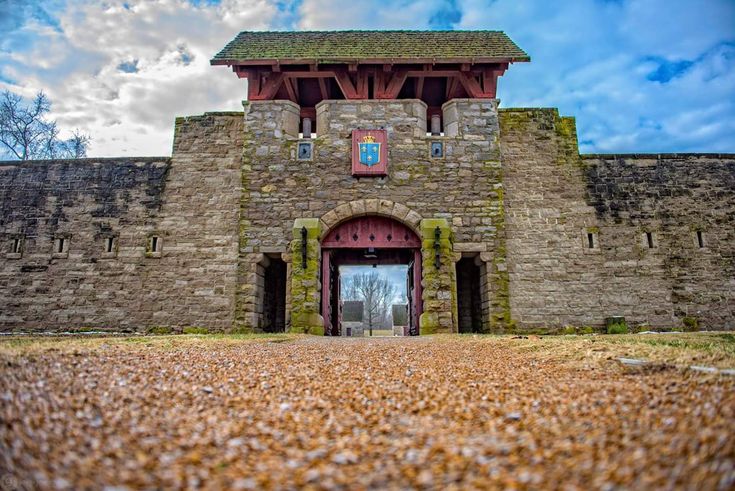
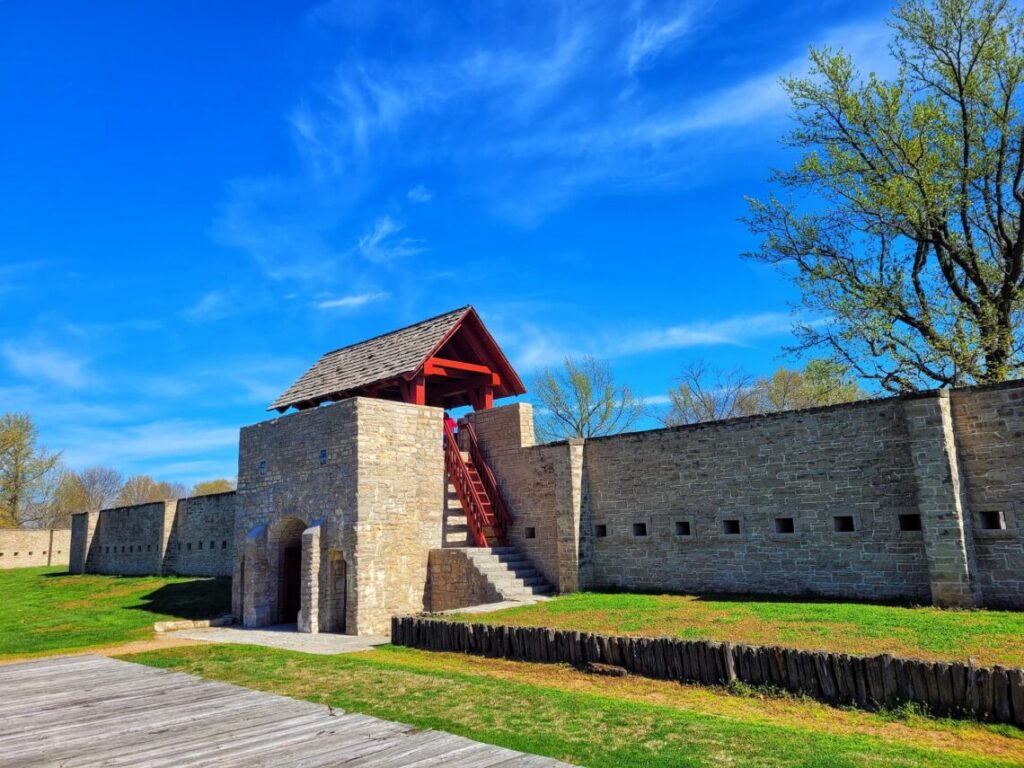
The Fort de Chartres State Historic Site features “an imaginative reconstruction” of portions of the third fort—not slavish reproduction but rather scholarly interpretation, educated guessing about how garrison life functioned, what spaces held, how daily existence unfolded within stone walls. The gatehouse, rebuilt in the 1920s and remodeled several times since, provides entry. Reconstructed portions of walls rest on original foundations, allowing visitors to walk within stone boundaries while understanding through architectural memory what the fort contained.
The Piethman Museum houses exhibits depicting French life at the fort, displays of colonial-era material culture, period furnishings. The grounds include “ghosted” buildings—outlines marking structure locations, visible absence indicating presence, the landscape itself becoming readable text for those willing to learn its vocabulary.
A typical French colonial farm occupies the site, allowing understanding of how military personnel supplemented rations through agriculture, how sustenance emerged from frontier enterprise.
Living History: When the Past Becomes Performance
Throughout the year, Fort de Chartres hosts living history events where interpreters in period costume demonstrate colonial-era military drills, conduct trades in eighteenth-century goods, prepare food using historical methods, occupy the spaces as those garrison members once did. The French and Indian War Assemblage (first weekend in October) portrays life during 1754-1763—the era when the fort served as French headquarters. Spring events include the Colonial Trade Faire and Musket & Rifle Frolic—gatherings sponsored by Les Amis du Fort de Chartres, the society dedicated to preserving knowledge of the fort and the French colonial period it represents.
These events transform static archaeology into embodied experience, allowing visitors to encounter history not as distant abstraction but as lived practice, to understand through direct observation how people navigated daily existence within colonial military hierarchy.
Practical Information
- Name: Fort de Chartres State Historic Site
- Location: 1350 State Route 155, Prairie du Rocher, Illinois 62277 (4 miles west of Prairie du Rocher)
- Phone: 618-284-7230
- Website: fortdechartres.us
- Facebook: Les Amis du Fort de Chartres
- Operated By: Illinois Department of Natural Resources, Illinois Historic Preservation
- Hours: Grounds open sunrise to sunset, 7 days weekly; Museum and display buildings typically open Tuesday-Sunday 9:00 AM-4:00 PM (depending on staff availability); closed all holidays
- Built: First fort 1720 (wooden); Third fort 1750s (stone, operational 1754)
- Historic Significance: French seat of government and chief military installation in Illinois Country
- Key Structure: Powder magazine (oldest building in Illinois, original 1750s stone construction)
- Designated: National Historic Landmark (1960), U.S. National Register of Historic Places (1966)
Perfect For:
- French colonial history enthusiasts
- Military history researchers understanding frontier fortifications
- Those exploring Upper Louisiana territorial governance
- Families wanting living history interpretation and events
- Architecture students studying colonial military construction
- Visitors understanding French American heritage in the Mississippi Valley
- Teachers bringing students on field trips (grants available for Illinois schools)
- Reenactors and historical interpreters
The fort succeeds as historical site because it doesn’t hide the complexity: French ambition met practical limitation; stone outlasted the empire that built it; reconstruction acknowledges what was lost while honoring what survives. The powder magazine stands as witness—oldest building in Illinois, proof that things designed for explosive protection can paradoxically survive centuries.
The living history programming transforms the site from ruin into living education, allowing contemporary visitors to encounter what daily life actually involved, how garrison members spent their time, what military hierarchy demanded.
The Experience
You arrive at Fort de Chartres as morning light illuminates reconstructed walls standing on original foundations. You walk through the gatehouse into space where French military authority once concentrated, where imperial governance emanated outward toward a vast territory. The powder magazine—that original stone structure—greets you with physical evidence that some things endure.
If visiting during a living history event, you encounter interpreters demonstrating colonial crafts, conducting military drills, occupying the spaces as garrison members once did. You witness how French colonials maintained imperial presence on a frontier, how military life intertwined with daily sustenance, how community formed within military hierarchy.
You walk the grounds imagining the fort in its glory, understanding through excavated foundations where buildings stood, what purposes they served. You stand at the river’s edge recognizing why the river that justified the fort’s location also destroyed it.
You leave understanding that empires are temporary but stone endures, that imagination can recover lost spaces, that France’s American dream persisted here in this stone fort for barely a generation before yielding to British rule and the river’s patient erosion.
Visit Fort de Chartres State Historic Site seeking what colonial architecture and living history can teach: how frontier settlements functioned, what military life required, how French imperial ambition expressed itself in stone and garrison. Walk reconstructed walls on original foundations. Enter the chapel housed within the guard house. Stand before the powder magazine—oldest building in Illinois, proof of how carefully built things survive. Attend a living history event and encounter the past as performance, as embodied practice, as people choosing to inhabit colonial roles. Leave understanding that Fort de Chartres represents not triumphant empire but rather failed ambition—French authority concentrated here briefly before ceding to British rule, before the river erased what stone had built, leaving only this archaeological memory of what once was imagined as permanent.

Sorry, no records were found. Please adjust your search criteria and try again.
Sorry, unable to load the Maps API.