123 Main Street,
Sainte Genevieve, Missouri, 63670
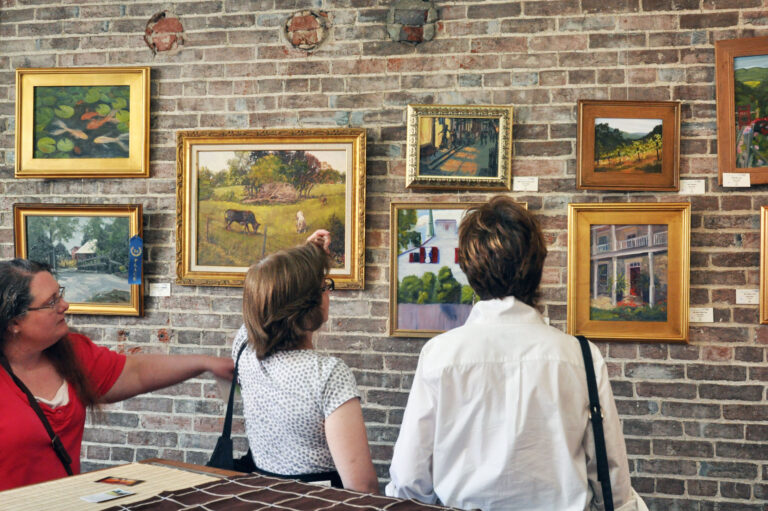
ART COLONY Post Marked! A wall in the local post office was the canvas for a special mural commissioned by the federal government. As post offices were being built around the country in the early 1900s, 10% of the budget was directed towards art. Around the same time, Ste. Geneviève established its own Art Colony similar to the one in Providence, Rhode Island. Members included: Jessie Beard Rickly, Thomas Hart Benton, Aimee Schweig, Miriam McKinnie, Martyl Schweig Langsdorf, Sister Cassiana Marie, Joseph Meert, Bernard E. Peters, E. Oscar Thalinger, and Matthew E. Ziegler Today, Ste. Geneviève has an Art Guild. There are also art galleries, art walks, opportunities to participate in Plein Air, “in the open air” painting, and a variety of art-related activities throughout the year. Read more…


123 Main Street,
Sainte Genevieve, Missouri, 63670
The Roads Less Traveled Ste. Geneviève County is home to three historic roads. Three Notch Road: The earliest was the Three Notch Road that went from Ste. Geneviève to the lead mines at Mine la Motte. The King’s Road: The second road was started in 1779 and became known as the King’s Road, or El Camino Real in Spanish, and eventually Kingshighway. There is a rural portion of this road north of downtown Ste. Geneviève that visitors can drive. The Plank Road: The third historic highway was the 1852 Ste. Geneviève, Iron Mountain, and Plank Road. Constructed of wood, it was the longest such road built in Missouri and was used primarily to haul iron products from Iron Mountain west of present-day Farmington to Ste. Genevieve for transshipment on the river. Visitors can drive a rural portion of Lime Kiln Road west of Ste. Geneviève. Read more…
123 Main Street,
Sainte Genevieve, Missouri, 63670
Following Nature In Her Walks “During all these years there existed within me a tendency to follow Nature in her walks.” ~ John James Audubon That “tendency” inspired the naturalist and ornithologist, John James Audubon to follow Nature when he came to Ste. Geneviève in 1812. After a brief stint as a storekeeper with his business partner Ferdinand Rozier, Audubon soon abandoned that venture for the work that would define his life. Visitors can learn more about this visionary in the lobby of the hotel named after him. Hikers can “follow Nature in her walks” in the same scenic areas Audubon did – Hawn State Park, Pickle Springs, Hickory Canyon, and Magnolia Hollow. And closer to town, visit the Ste. Geneviève Levee Wildlife Refuge and Lake Audubon in Ste. Geneviève. Read more…
123 Main Street,
Sainte Genevieve, Missouri, 63670
The Walls Do Talk In Ste. Geneviève While not known as the birthplace of any literary figures, Ste. Geneviève has hosted its fair share of authors. The Green Tree Tavern was once the destination for writers passing through town. Henri Brackenridge, a 7-year-old boy from Pittsburgh was sent to Ste. Geneviève in 1793 for three years to learn French. He describes Ste. Geneviève in his book Recollections of Person and Places in the West and on his return to Ste. Geneviève in 1811, commented, “A sign on the other side of the Gabarie having caught my eye, I resolved to make for it – in former times private hospitality was the only dependence of the traveler.” Other authors who enjoyed the “private hospitality” of Ste. Geneviève were Thomas Ashe and John Maley. Read more…
35 North 5th Street,
Sainte Genevieve, Missouri, 63670
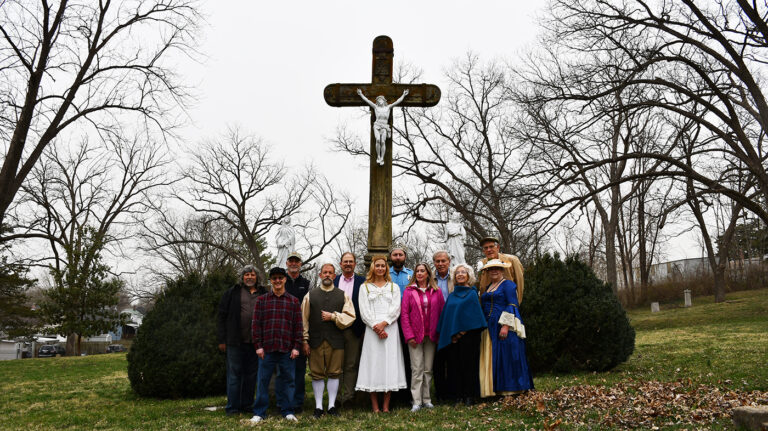
Sainte Genevieve Memorial Cemetery At 5th and Merchant Streets, where a hillside slopes toward what was once open prairie, Memorial Cemetery holds more than 3,500 known burials and perhaps 1,500 additional unmarked graves—a total approaching 5,000 souls whose wooden crosses rotted away over 235+ years, leaving most graves anonymous. This is not the orderly, manicured cemetery of contemporary imagination but rather something more honest: crowded ground where 235 years of deaths compressed themselves into earth, where French colonists buried in 1787 rest beneath Confederate soldiers buried in 1881, where the absence of markers tells its own profound story about mortality, memory, and what happens when time erases deliberate effort to remember. A Cemetery That Remembers Through Absence Established in 1787, Memorial Cemetery was formally blessed in 1791 according to Church records and functions as physical archive of Sainte Genevieve’s entire post-contact history. The oldest existing tombstone belongs to Marie Theres St. Gemme, who died in 1807—though earlier burials certainly occurred between 1787 and 1807, marked then by wooden crosses now long consumed by earth and time. This cemetery contains physical remains of people who lived under French rule, Spanish administration, and American governance—people who witnessed the Louisiana Purchase transform their Read more…