

Featured
198 Market St.,
Sainte Genevieve, Missouri, 63670
Sainte Genevieve, Missouri, 63670
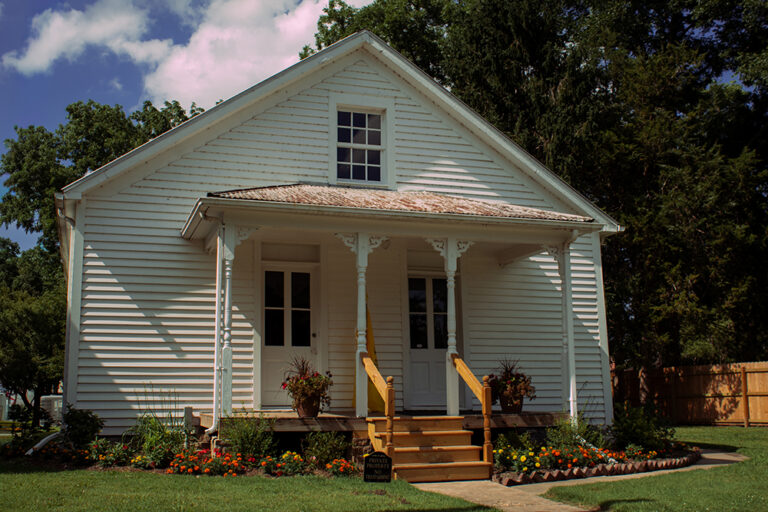
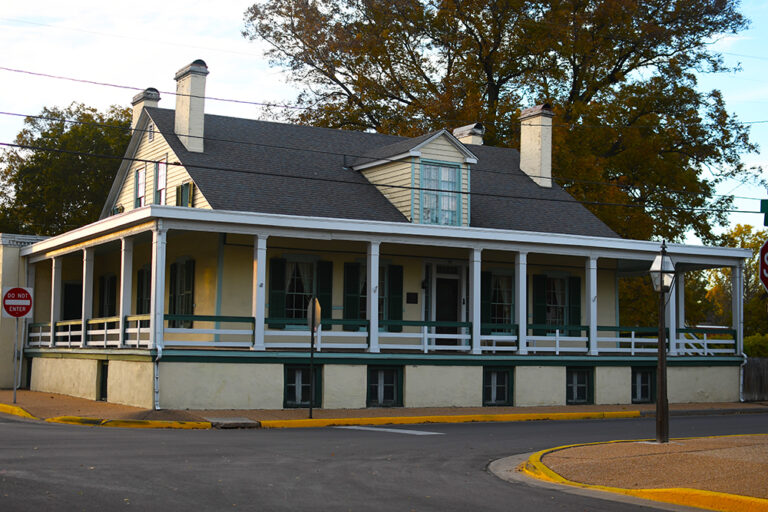
The François Vallé, fils House Built around 1794 within Ste. Genevieve’s evolving landscape, this house carries the story of a young man who lived through revolutionary transformation—François Vallé, fils, son of colonial merchants, militia officer witnessing the Battle of Fort San Carlos during America’s uncertain birth, resident of a structure that would outlast empires and survive through decades of ordinary family life. Now opened to public interpretation through guided tours, the François Vallé, fils House becomes portal into multiple histories layered within timber and brick: the young officer’s role in Revolutionary-era conflict, the archaeology revealing what earlier centuries deposited within this ground, the Sexauer family’s twentieth-century inhabitation and their quiet determination to preserve what others might have demolished. This is not museum display but rather living interpretation—a tour guide accompanying you across threshold, answering questions as exhibits unfold, honoring both the building’s original significance and the ordinary families who sustained it across generations. A Young Officer’s Revolutionary Moment François Vallé, fils inherited more than property from his merchant father. He inherited a family positioned within Ste. Genevieve’s colonial hierarchy, connections threading through French and Spanish governance networks, responsibility for maintaining family prosperity through revolutionary upheaval. When the American Revolution reached Read more…
: 10:00 am – 4:00 pm
Mon
10:00 am – 4:00 pm
Tue
10:00 am – 4:00 pm
Wed
10:00 am – 4:00 pm
Thu
10:00 am – 4:00 pm
Fri
10:00 am – 4:00 pm
Sat
10:00 am – 4:00 pm
Sun
10:00 am – 4:00 pm
198 Market Street,
Sainte Genevieve, Missouri, 63670
Sainte Genevieve, Missouri, 63670
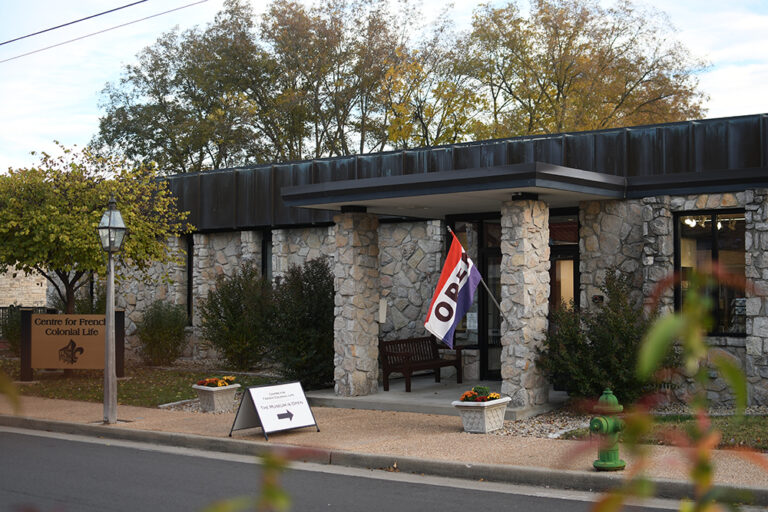
Centre for French Colonial Life At the corner of 2nd and Market Streets, where Ste. Genevieve’s Historic District pulses with the accumulated stories of generations, stands an institution devoted to making the invisible visible: the Centre for French Colonial Life. This modern facility serves as gateway to something increasingly rare in America—authentic, tangible connection to a multicultural past where French colonists, Spanish administrators, African Americans both enslaved and free, Native peoples, and eventually Anglo-Americans negotiated their shared existence within a Mississippi River Valley crossroads. Beginning Your Journey The Centre exists precisely for this moment: to prepare your eyes and mind before stepping into historic homes, to provide context transforming old buildings into living narrative, to answer the questions that emerge when you stand within spaces where real people made real lives. Thoughtfully curated changing exhibits provide depth. A well-stocked gift shop offers books and items extending your understanding beyond these walls. Friendly staff help you navigate not just the Centre but the entire museum campus—orienting you toward questions you didn’t know you carried, connecting you to stories your family might inhabit. Here, you’ll purchase tickets for guided tours through the Bolduc and LeMeilleur Houses. Here, you’ll learn about programs and Read more…
: 10:00 am – 4:00 pm
Mon
10:00 am – 4:00 pm
Tue
10:00 am – 4:00 pm
Wed
10:00 am – 4:00 pm
Thu
10:00 am – 4:00 pm
Fri
10:00 am – 4:00 pm
Sat
10:00 am – 4:00 pm
Sun
12:00 pm – 4:00 pm
2006, 1350 State Route 155,
Randolph County, Illinois, 62277
Randolph County, Illinois, 62277
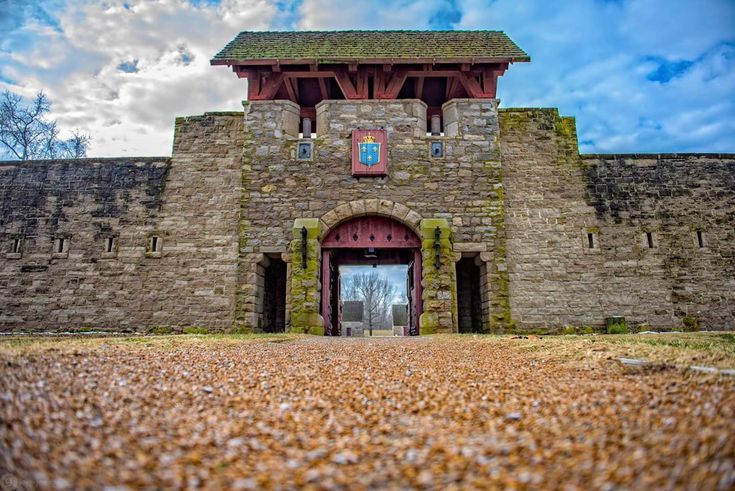
Fort de Chartres State Historic Site Stone Testament to French Imperial Ambition Four miles west of Prairie du Rocher, Illinois, where the American Bottom widens toward the Mississippi River, stands a partially reconstructed stone fort that once embodied French imperial authority across the Illinois Country—Fort de Chartres, named for the infant son of the French regent, erected in the 1750s as the seat of French government and chief military installation in Upper Louisiana. The massive stone structure, built after two successive wooden forts proved inadequate to French ambitions, served for barely a decade before the Treaty of Paris (1763) ceded French territories to Britain, before British occupation itself ended in abandonment, before the river whose presence justified the fort’s location began its patient erosion—collapsing the south wall in 1772 and leaving only ruins to mark where colonial power had been concentrated and then forgotten. Today, within the reconstructed fort walls and the grounds of Fort de Chartres State Historic Site, the powder magazine stands—that original 1750s stone structure widely considered the oldest building in Illinois—proof that some things endure even when empires don’t. The Three Forts: Ambition’s Evolution The story of Fort de Chartres encompasses three distinct structures reflecting French Read more…
: 9:00 am – 4:00 pm
Mon
Closed
Tue
9:00 am – 4:00 pm
Wed
9:00 am – 4:00 pm
Thu
9:00 am – 4:00 pm
Fri
9:00 am – 4:00 pm
Sat
9:00 am – 4:00 pm
Sun
9:00 am – 4:00 pm
4372 Park Road,
Randolph County, Illinois, 62241
Randolph County, Illinois, 62241
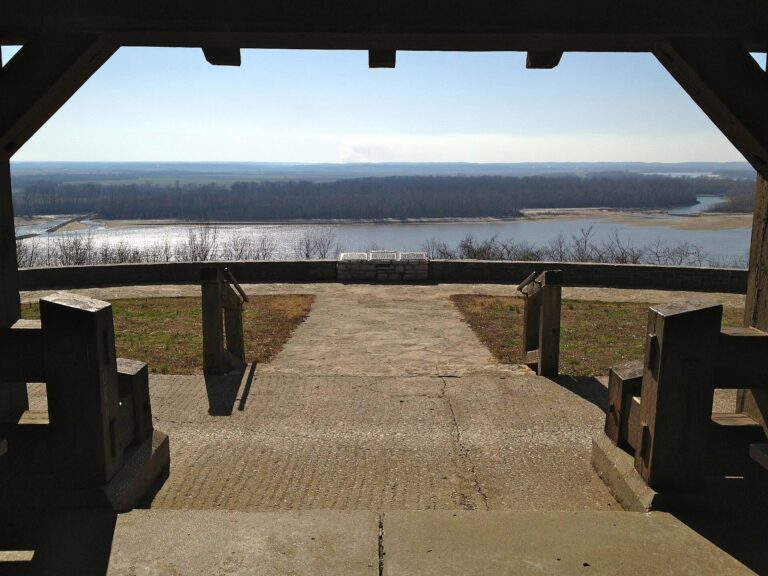
Fort Kaskaskia State Historic Site Near Ellis Grove, Illinois, where the Kaskaskia River meets the Mississippi in a confluence of currents and history, a 200-acre bluff overlooks a landscape that tells a story of grandeur surrendered to nature’s patient theft. Fort Kaskaskia State Historic Site preserves earthen remains—ramparts in rough square formation with bastions at corners—of a small French fort built around 1759 to defend a town that had become, by then, the principal commercial center of the Illinois Country. Yet the river that once made Kaskaskia valuable through commerce eventually made it expendable through erosion: the original town of Old Kaskaskia, thriving on river-rich bottomland, occupied an island that the Mississippi gradually claimed until, by the 1880s-1890s, it was gone—washed away, leaving only memory and earthen traces on a bluff overlooking what had been taken. The Town: From Jesuit Mission to Colonial Capital Kaskaskia begins not as fort but as faith. Jesuit missionaries established a mission at the mouth of the Kaskaskia River in 1703, choosing location for access to the Illinois Confederation peoples whose lands, hunted and farmed for generations, offered spiritual opportunity. Shortly after, French settlers from Quebec and Louisiana began trickling toward the rich, alluvial farmland Read more…
: 7:00 am – 10:00 pm
Mon
7:00 am – 10:00 pm
Tue
7:00 am – 10:00 pm
Wed
7:00 am – 10:00 pm
Thu
7:00 am – 10:00 pm
Fri
7:00 am – 10:00 pm
Sat
7:00 am – 10:00 pm
Sun
7:00 am – 10:00 pm
99 South Main Street,
Sainte Genevieve, Missouri, 63670
Sainte Genevieve, Missouri, 63670
Jean-Baptiste Vallé House – Ste. Genevieve National Historical Park Standing as one of the most architecturally significant and historically important structures in Ste. Genevieve, the Jean-Baptiste Vallé House represents both the architectural sophistication of French Creole building traditions and the political power that once resided in this Mississippi River community. Now part of the Ste. Genevieve National Historical Park and operated by the National Park Service, this imposing residence tells the story of colonial governance, architectural evolution, and the dedicated preservation efforts that saved it for future generations. Architectural Significance: Poteaux-sur-Solle at Its Finest The Jean-Baptiste Vallé House stands as a large and impressive example of “poteaux-sur-solle” (post on sill) construction—one of the distinctive French Creole building methods that make Ste. Genevieve architecturally unique in the United States. Unlike the rarer “poteaux-en-terre” (posts in earth) construction where vertical logs are set directly into the ground, the poteaux-sur-solle method places vertical log posts on a horizontal wooden sill beam that rests on a stone foundation. This elevation above ground level protects the wooden posts from moisture and rot, resulting in far greater durability—which explains why this particular house has survived for more than two centuries. The house’s size alone commands attention. Read more…
: 9:00 am – 5:00 pm
Mon
9:00 am – 5:00 pm
Tue
9:00 am – 5:00 pm
Wed
9:00 am – 5:00 pm
Thu
9:00 am – 5:00 pm
Fri
9:00 am – 5:00 pm
Sat
9:00 am – 5:00 pm
Sun
9:00 am – 5:00 pm